
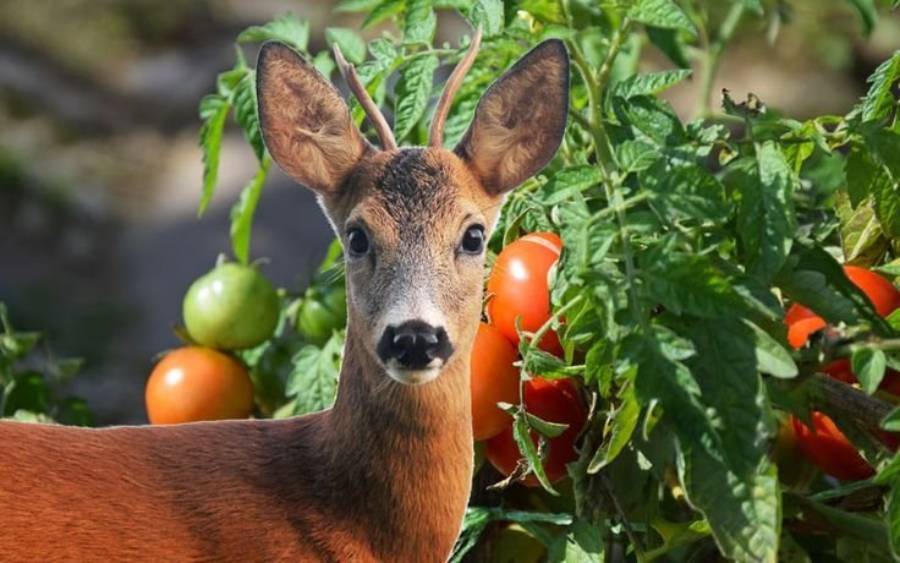
Yes, deer eat tomatoes, including the fruit and accessible parts of the tomato plant. Deer are opportunistic feeders, so a tomato plant within reach can become a food source when deer move through gardens, food-producing areas, or properties near their habitat. However, tomatoes are not a major component of a deer’s natural diet, and finding damaged tomato plants does not mean deer specifically sought out tomatoes over other available foods.
Deer can feed on more than the tomato fruit itself. They may browse leaves, tender shoots, and other reachable plant growth, which can leave recognizable damage on tomato plants. Tracks, droppings, and additional browsing around the area can provide stronger evidence that deer caused the damage rather than another animal.
For hunters and property owners, tomato browsing can also provide information about local deer activity. A damaged plant indicates a potential feeding visit, but it should be evaluated alongside deer sign, surrounding food sources, seasonal food availability, and habitat conditions. This article explains what parts of tomato plants deer eat, why they eat them, when feeding is more likely, how to identify deer damage, and how tomatoes fit into the broader diet and feeding behavior of deer.
Do Deer Eat Tomatoes?
Yes, deer eat tomatoes when the fruit or plants are accessible within their feeding area. Deer consume a varied diet and can use garden plants and agricultural crops as supplemental food sources when they encounter them. A tomato plant therefore represents an available food opportunity rather than a food source that deer depend on for their normal diet.
Deer feeding on tomatoes is part of their broader browsing behavior. They move between food sources and select accessible vegetation according to factors such as location, seasonal availability, and the presence of alternative foods. A garden located along an established travel route, near bedding cover, or close to other feeding areas gives deer an opportunity to encounter tomato plants during normal movement.
Tomatoes should not be treated as a major natural food for deer simply because deer will eat them. Natural deer diets include a much broader range of vegetation, and the importance of each food changes with habitat and season. For hunters, the useful distinction is between a food deer will eat when available and a food source that consistently influences feeding patterns across a property.
What Parts of Tomato Plants Do Deer Eat?
Deer can eat the fruit, leaves, tender shoots, and other accessible growth on tomato plants. Their feeding is not limited to ripe tomatoes. Because deer browse vegetation rather than feeding exclusively on fruit, damage can occur across several parts of the same plant.
Tomato fruit is an obvious food source because it is exposed and easy for a deer to reach. A deer can remove an entire tomato or bite part of the fruit, depending on its position on the plant. Both fruit hanging directly on the plant and tomatoes within normal browsing height can be encountered while deer feed through a garden.
Leaves and tender shoots can also be browsed. Deer feeding on vegetation can remove clusters of foliage or the softer growth at the ends of stems. This type of feeding matters when identifying the animal responsible because the evidence may include missing vegetation in addition to missing tomatoes.
Stems can be damaged as deer pull or bite accessible plant material, although stem damage alone does not establish that deer were responsible. A stronger identification comes from combining plant damage with physical deer sign around the site. Hoofprints, droppings, trails, and similar browsing on nearby vegetation provide additional evidence that a deer visited and fed in the area.
For hunters, the specific plant part that was eaten is less important than the complete pattern of feeding evidence. Missing tomatoes establish that an animal accessed the fruit, while browsed foliage, deer tracks, droppings, and nearby vegetation damage provide a stronger basis for identifying deer activity. This distinction prevents a single damaged tomato plant from being treated as definitive evidence of a regular deer feeding location.
Do Deer Eat Ripe and Unripe Tomatoes?
Deer can eat both ripe and unripe tomatoes when they encounter accessible fruit. The presence of green tomatoes does not make a tomato plant unavailable as a potential food source. Deer browse plants according to the feeding opportunities they encounter, so fruit maturity is only one factor affecting whether a tomato is eaten.
Ripe tomatoes are soft, exposed, and contain substantial moisture, making them easy for deer to consume when feeding around a garden. Unripe tomatoes can also be accessible during the same feeding visit, particularly when deer browse the surrounding leaves and shoots rather than targeting individual fruits. As a result, a tomato plant can show damage before all of its fruit has ripened.
The presence of ripe or unripe fruit alone does not establish which type deer prefer. A preference requires evidence showing that deer consistently select one option when both are available under comparable conditions. Without that evidence, the more accurate conclusion is that deer can consume tomatoes at different stages of ripeness rather than that they consistently prefer ripe or green tomatoes.
For hunters and property owners, the more useful information is whether deer repeatedly visit the location rather than which tomatoes disappear first. Tracks, droppings, repeated browsing, trail-camera observations, and damage to nearby vegetation provide more information about deer use of an area than tomato ripeness alone.
Why Do Deer Eat Tomatoes?
Deer eat tomatoes because tomato plants can provide an accessible food opportunity within an area they already use. Deer do not need tomatoes as part of their diet, but they can add garden vegetation and fruit to the range of foods they consume when those resources are easy to reach.
Food availability is one factor that influences this behavior. A deer moving between bedding, cover, water, and feeding areas encounters different food sources along its route. An unfenced garden containing tomato plants gives the animal another feeding opportunity. This means deer may discover tomatoes as part of normal movement rather than traveling specifically to a property because tomatoes are present.
Accessibility also determines whether tomato plants are used. Fruit, leaves, and tender shoots within browsing height require little effort for a deer to reach. Once a deer enters a garden or similar growing area, it can browse several plant types during the same visit. Tomato damage should therefore be evaluated alongside damage to surrounding vegetation instead of being considered an isolated feeding event.
Alternative food availability can change the relative importance of garden plants. Deer diets shift as different natural and agricultural foods become available throughout the year. A tomato plant is one potential food source within this larger feeding environment, and its importance depends on what else deer can access in the surrounding habitat.
This distinction is especially important in a hunting context. A deer eating tomatoes confirms a feeding opportunity, but it does not by itself prove that tomatoes are driving deer movement. Repeated visits, fresh tracks, droppings, established trails, trail-camera records, and other feeding sign provide stronger evidence that deer regularly use the location. Hunters should therefore interpret tomato browsing as one piece of deer sign rather than as a complete explanation for a deer’s feeding pattern.
When Are Deer Most Likely to Eat Tomato Plants?
Deer are most likely to eat tomato plants when the plants are accessible and deer are already feeding or traveling through the surrounding area. Tomato availability, local deer movement, surrounding habitat, and the availability of alternative foods all affect whether deer encounter and browse the plants. There is no single time when every deer population will feed on tomatoes because local food conditions differ by habitat and season.
Tomato plants become a potential food source during their active growing and fruiting period. At this stage, plants provide leaves, tender growth, and eventually fruit within the same location. Deer moving through a property can encounter these plant parts while browsing other vegetation. A garden near cover, an established deer trail, or another regularly used area creates more opportunities for deer to discover the plants than an isolated garden outside normal deer movement.
Seasonal food availability also affects the feeding opportunities deer encounter. The composition of a deer’s diet changes as natural vegetation and other foods become available or decline. Tomatoes should therefore be considered one component of the local food environment rather than a food source that automatically determines deer activity. The presence of tomato plants alone does not establish that deer will regularly visit a property.
Hunters can determine whether tomato feeding is recurring by looking for evidence across multiple visits. Fresh browsing damage appearing repeatedly, new tracks, droppings, established trails, and trail-camera observations provide stronger evidence of continued deer activity. A single damaged plant confirms less than a repeated pattern of deer sign in the same location.
How Can You Tell If Deer Ate Your Tomato Plants?
You can identify probable deer feeding by combining browsing damage on tomato plants with deer-specific signs such as hoofprints, droppings, trails, or direct trail-camera observations. Plant damage alone is not always sufficient because other animals can also eat tomatoes or damage tomato plants.
What Does Deer Damage on Tomato Plants Look Like?
Deer damage can include missing tomatoes, browsed leaves, damaged shoots, and vegetation removed from accessible portions of the plant. The damage can extend beyond the fruit because deer browse plant material while feeding. A plant with missing foliage and tender growth therefore provides more information than missing fruit alone.
The surrounding vegetation should also be examined. Deer moving through a feeding area can browse more than one plant during the same visit, so similar damage on nearby vegetation strengthens the case for deer activity. Conversely, one missing tomato without tracks, droppings, additional browsing, or another form of deer sign provides limited evidence about which animal caused the damage.
Damage height can provide additional context because deer browse vegetation while standing rather than feeding exclusively at ground level. However, height should not be used as the only identification method. Plant structure, animal movement, and the condition of the site can change where damage appears.
What Deer Signs Should You Look for Around Tomato Plants?
Look for hoofprints, droppings, trails, repeated browsing, and trail-camera evidence to determine whether deer have visited tomato plants. Multiple signs found together provide a more reliable identification than plant damage by itself.
Deer tracks are particularly useful in exposed soil, mud, or other surfaces capable of retaining hoofprints. Finding fresh tracks leading toward or through the damaged area establishes a stronger connection between deer movement and the feeding site. Repeated tracks along the same route can also indicate that the garden lies near an established travel path rather than being the location of a single accidental visit.
Droppings provide another physical sign of deer presence. Their value increases when they occur alongside fresh browsing and tracks because the evidence comes from multiple independent observations. A trail camera can provide even stronger confirmation by recording the animal responsible and showing when deer enter, leave, or feed around the property.
For hunters, these signs provide information beyond identifying what ate a tomato. Repeated feeding damage combined with fresh deer sign can identify an area deer are using, but it does not automatically establish a primary feeding area or predictable hunting location. Interpreting deer activity requires additional context from travel routes, cover, other food sources, habitat conditions, and repeated observations over time.
What Other Garden Plants Do Deer Eat Besides Tomatoes?
Deer eat a range of garden plants besides tomatoes when those plants are accessible within their feeding range. A garden can concentrate several potential food sources in a small area, allowing deer to browse different vegetables, fruits, and leafy plants during the same visit rather than feeding exclusively on tomatoes.
Garden feeding reflects the flexible nature of a deer’s diet. Deer browse available vegetation as they move through their habitat, and cultivated plants can become part of that feeding pattern when a garden overlaps with an area deer already use. Damage to multiple plant species within the same garden can therefore provide stronger evidence of broad browsing activity than damage limited to a single tomato.
For hunters, garden browsing can help reveal how deer are using a property, but the surrounding habitat remains important. A garden located near cover, travel routes, natural browse, or other feeding areas may receive deer visits because of its position within the animal’s existing movement pattern. The presence of several edible garden plants does not establish that those plants are the primary reason deer entered the property.
Examining damage beyond the tomato plants can also improve identification. Similar browsing on nearby vegetation, combined with tracks, droppings, or trail-camera observations, creates a more complete picture of deer activity. This evidence is more useful than assuming every missing vegetable or damaged plant was caused by deer.
Read more: Rice Bran for Deer: Is It Good and How to Use It
Are Tomatoes a Major Part of a Deer’s Natural Diet?
No, tomatoes are not a major part of a deer’s natural diet. Deer can eat tomatoes when they encounter them, but the ability to consume a food does not make that food a staple or nutritionally important component of the animal’s normal feeding pattern.
A deer’s diet is much broader than the cultivated foods it encounters around gardens. Natural feeding behavior involves browsing vegetation and using food resources that change with habitat and availability. Tomatoes should therefore be classified as an opportunistic food source in this context rather than treated as a defining component of deer diet.
This distinction matters because evidence that deer ate tomatoes answers one question—whether deer will consume them—but does not establish that deer prefer tomatoes over their normal food sources. Preference requires evidence that animals consistently select one available food over alternatives. Tomato damage alone cannot demonstrate that relationship.
The distinction is also useful for hunters interpreting feeding sign. A tomato plant can show that deer accessed food at a particular location, but broader feeding patterns require evidence from the surrounding property. Natural browse, other available foods, travel routes, cover, tracks, droppings, and repeated observations provide additional context for determining how important the location is to deer.
For this reason, tomatoes are best understood as one possible food encountered within a much larger deer feeding system. Their value to a hunter is not that they represent a major natural deer food, but that browsing on tomato plants can contribute to a broader collection of evidence about where and how deer are using a property.
What Does Deer Eating Tomatoes Tell You About Deer Activity on Your Property?
Deer eating tomatoes confirms that deer have access to a potential food source on the property, but tomato damage alone does not establish a regular feeding pattern. For hunters, the most useful information comes from combining browsing evidence with tracks, droppings, trails, trail-camera observations, surrounding food sources, and nearby cover.
Repeated tomato damage can provide more information than a single feeding event. Fresh browsing that appears on multiple occasions suggests deer are returning to the area or that multiple deer are using it. Repeated activity becomes more meaningful when new hoofprints, droppings, or trail-camera images appear during the same period. These observations help distinguish an isolated encounter from recurring property use.
The location of the damaged plants also provides context. Tomato plants positioned near an established deer trail, cover, or another regularly used area may be encountered as deer move through the property. In this situation, tomatoes can function as an opportunistic feeding stop within a larger movement pattern rather than the primary destination. This is why hunters should examine how the damaged area connects with surrounding habitat instead of focusing only on the plants.
Trail cameras can provide stronger evidence because they add the animal and time of visit to the physical feeding sign. Images or video can confirm that deer are responsible for the damage and reveal whether visits occur repeatedly. When camera observations correspond with fresh browsing and tracks, the combined evidence provides a clearer picture of deer activity than any single sign.
Tomato browsing should therefore be treated as one piece of deer sign, not as proof of a dependable hunting location. A stronger assessment comes from repeated observations showing how deer use food, cover, and travel routes across the property. Tomatoes can reveal that deer have fed at a specific location, while the surrounding sign helps determine whether that location is part of a broader and recurring movement pattern.