
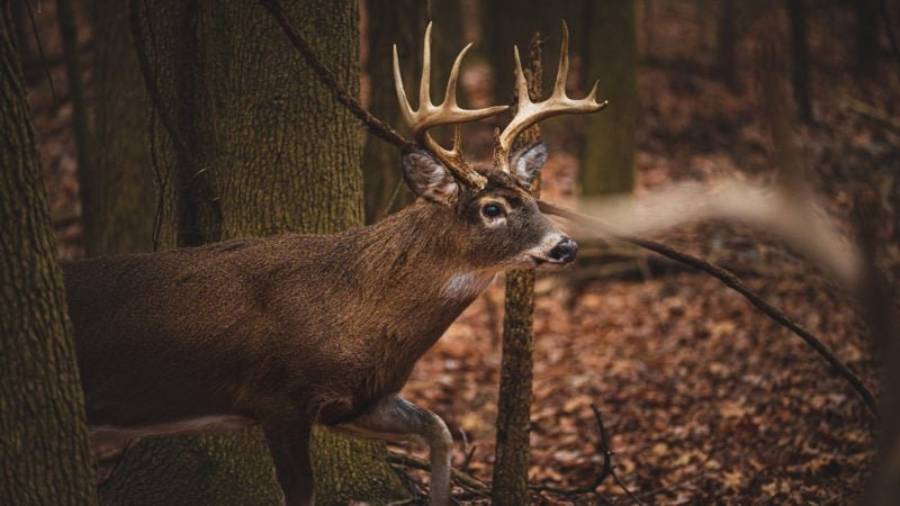
Yes, deer can smell blood because their highly developed sense of smell allows them to detect blood and other odors in their environment. However, detecting blood does not automatically cause a deer to recognize danger or leave an area. A deer’s response depends on the source of the blood, other scents present, recent disturbance, and whether the animal associates those odors with a threat.
For hunters, this distinction between scent detection and behavioral response is important. Blood from another deer may occur alongside the scent of a wounded animal, while human blood can be accompanied by sweat, clothing odor, ground scent, and other signs of human presence. A blood trail or kill site can also contain multiple odors, making it difficult to attribute a deer’s reaction to blood alone.
This article explains whether blood scares deer, whether deer can distinguish human blood from deer blood, how other deer may react to a blood trail or kill site, and how wind affects blood-scent detection. It also examines whether hunters should be more concerned about blood or other odors when managing scent in deer hunting.
Can deer smell blood?
Yes, deer can smell blood, but detecting the odor does not mean they automatically interpret blood as a sign of danger. Deer rely heavily on scent to monitor their surroundings, so blood is one of many odors they can encounter and investigate. What matters to a hunter is not simply whether a deer detects blood, but how the animal interprets the complete scent environment around it.
Blood produces an odor that becomes part of the surrounding scent profile. Once airborne odor molecules move away from the source, a deer positioned where those molecules travel may detect them. The same process allows deer to detect other odors associated with animals, vegetation, predators, and people. Wind direction, air movement, terrain, and the distance between the deer and the odor source therefore influence whether the scent reaches the animal.
A deer also encounters blood in situations that do not involve hunters. Blood can originate from an injured deer, fighting between deer, wounds, or other natural events. For this reason, the presence of blood alone should not be treated as proof that a deer will immediately flee. The animal is responding to a combination of odors and environmental information rather than to the word or concept of “blood” as a human understands it.
For hunting purposes, it is useful to separate the process into 3 stages: detection, interpretation, and response. First, the deer detects an odor. Second, it evaluates that odor together with other environmental cues. Third, its behavior changes only if those cues justify a response such as increased alertness, investigation, avoidance, or flight. This distinction explains why a deer can smell blood without necessarily being spooked by it.
Does the smell of blood scare deer?
The smell of blood alone does not necessarily scare deer; the surrounding scent and disturbance provide additional information that can make the situation threatening. A deer that encounters blood from another deer is not encountering an odor that exists only after a hunting event. The behavioral response therefore depends on what accompanies the blood and what the deer detects in the immediate environment.
For example, a hunting-related blood source can occur alongside several additional cues. A wounded deer leaves its own body odor as it moves. A hunter following the blood trail can leave human scent on vegetation and the ground. Walking through an area can disturb leaves, soil, and vegetation. A kill site can also accumulate human odor while the animal is recovered or handled. A deer approaching later is consequently exposed to a collection of scent information rather than an isolated blood odor.
Human-associated scent can change the meaning of the situation more than blood alone. Deer use scent as part of threat detection, and evidence of recent human activity can indicate hunting pressure. This is particularly relevant when blood occurs together with human odor and physical disturbance. If a deer becomes alert or leaves such an area, attributing the response exclusively to blood ignores the other scent cues present at the same location.
The practical distinction is therefore between smelling blood and being spooked by the conditions surrounding blood. Hunters should not assume that every blood trail automatically creates an area deer will avoid. The stronger question is whether the blood trail is accompanied by recognizable threat cues, especially recent human presence. This distinction becomes even more important when comparing human blood with blood originating from another deer.
Can deer smell human blood?
Yes, deer can smell human blood when its odor reaches them, but human blood should not be treated as the only human scent that matters while hunting. A bleeding cut on a hunter, blood transferred to clothing, or blood left on equipment adds another odor to the environment. At the same time, the hunter can leave sweat, body odor, clothing odors, and scent on vegetation or the ground.
This distinction matters because a deer does not encounter human blood in isolation in most hunting situations. For example, a hunter who cuts a hand while climbing into a stand may leave a small amount of blood, but that same person has already walked through vegetation, touched equipment, and released normal body odors. If a deer becomes alert after moving downwind of that location, there is no reliable reason to attribute its reaction specifically to the blood.
The source of the scent also changes its hunting significance. Blood originating from a human can occur together with other evidence of human presence, whereas blood from another deer belongs to a different scent context. The deer does not need to identify blood in the same conceptual way a person does; it only needs to detect odors and use them with other environmental cues when evaluating its surroundings.
For this reason, a small amount of human blood should be considered part of the hunter’s overall scent profile rather than a uniquely powerful deer repellent. Hunters concerned about being detected should pay attention to the complete scent environment, especially whether their odor is being carried toward approaching deer.
Can deer smell blood from another deer?
Yes, deer can smell blood from another deer, including blood associated with an injured or wounded animal. Blood on the ground, vegetation, or the animal itself contributes odor to the area, while the wounded deer also leaves other body scents along its path. A blood trail is therefore more accurately understood as a combination of scent sources rather than a line containing only the smell of blood.
Blood from another deer is also different contextually from obvious human-associated odor. Deer can encounter blood from members of their own species without a hunter being involved. Injuries and physical interactions can produce blood naturally, so deer blood does not inherently provide proof that a person or immediate threat is nearby. This helps explain why detecting another deer’s blood and fleeing from it should be treated as separate behaviors.
A hunting blood trail introduces additional variables. After a shot, a wounded deer may move through vegetation while depositing blood and other scent. When a hunter later tracks that animal, the hunter adds human odor and physical disturbance along much of the same route. Another deer encountering the trail may consequently detect the wounded animal, blood, disturbed vegetation, and the tracking hunter’s scent within the same area.
The presence of deer blood alone is therefore not enough to predict whether another deer will spook. The more useful hunting question is what other cues accompany that blood and whether those cues indicate recent danger. This becomes particularly important when hunters follow a wounded deer, because the resulting blood trail can contain substantially more scent information than blood alone.
Will a blood trail spook other deer?
A blood trail does not automatically spook other deer because blood scent alone is not enough to establish that an immediate threat is present. Another deer can detect odors associated with the wounded animal and its blood, but its response depends on the complete scent environment. Human odor, recent tracking activity, disturbed vegetation, and other unfamiliar scents can make the same trail more significant than blood by itself.
A fresh blood trail contains more than blood. A wounded deer moves through an area while leaving body odor, hair, saliva, glandular odors, and blood on vegetation or the ground. Its movement can also disturb leaves and plants. Once a hunter begins tracking the animal, additional human scent is deposited along the route. These overlapping odors make it difficult to identify blood as the single cause when another deer becomes alert or avoids the trail.
The timing of the encounter also matters. A trail that has just been followed by a hunter contains stronger evidence of recent human activity than an older trail that has remained undisturbed. Wind and air movement determine whether those odors reach another deer before it reaches the physical trail. A deer approaching from downwind may detect the combined scent environment without ever stepping onto the blood trail itself.
For hunters, human disturbance along a blood trail deserves more attention than the assumption that deer are inherently afraid of blood. Tracking a wounded animal can spread human scent through bedding areas, travel corridors, and feeding areas. If preserving activity in a hunting location matters, unnecessary movement while tracking can create additional disturbance beyond the blood left by the wounded deer.
Will deer avoid an area where another deer was shot?
Deer may avoid an area after another deer is shot, but blood should not automatically be considered the cause of that avoidance. A kill site can contain blood, deer odor, human scent, disturbed vegetation, and signs of recovery activity at the same time. The combined disturbance provides more information about recent activity than blood scent alone.
A typical recovery illustrates the difference. After a deer is shot, the hunter may leave the stand, return to the area, follow the blood trail, locate the animal, and remove it. These actions increase foot traffic and spread human odor across the location. Retrieving equipment or returning with another person can add further disturbance. If deer activity changes afterward, several variables have changed simultaneously.
Whether deer continue using the location also depends on what the area provides. A feeding location, travel corridor, bedding area, or other regularly used habitat does not lose its biological value simply because blood was deposited there. Deer must balance access to resources and cover against perceived risk. The presence of blood is only one piece of information within that decision.
Deer can return to a hunting area after blood has been present, especially when the location continues to provide resources or cover and the associated disturbance declines. Hunters should therefore distinguish between a temporary response to recent activity and permanent abandonment of an area. Blood scent, human scent, recovery activity, and continued hunting pressure should not be treated as interchangeable causes.
This distinction is especially important when evaluating a stand or hunting location after a successful shot. Seeing fewer deer immediately after substantial tracking and recovery activity does not demonstrate that blood has contaminated the area or made it permanently unusable. The more relevant variables are the amount of disturbance, continued human presence, environmental conditions, and how deer normally use that location.
What smells are more likely to spook deer than blood?
Human-associated odors are generally more important for hunters to manage than blood scent alone because they can indicate the recent presence of a person. Blood can occur naturally around deer, whereas human body odor, sweat, contaminated clothing, and scent deposited while walking through an area can provide additional evidence of hunting activity. The combination of these odors can influence how a deer evaluates risk.
Human scent is not limited to what comes directly from a hunter’s body. Boots can leave odor along an access route, hands can transfer scent to branches or equipment, and contact with vegetation can create a scent trail through a hunting area. Foreign odors from equipment, fuel, smoke, food, or strongly scented personal products can also become part of the local scent environment. A deer encountering several unfamiliar odors at once has more information to evaluate than it would from blood alone.
Recent disturbance can further strengthen these scent cues. Walking through vegetation changes the immediate environment while leaving ground scent along the route. Repeated entry into a stand, bedding area, or travel corridor also creates recurring human presence. This is why a deer reacting near a blood trail should not automatically be described as reacting to blood when human scent and recent disturbance are present in the same location.
For hunters, blood scent should be treated as one component of a much larger scent environment. Managing access routes, limiting unnecessary disturbance, and considering where human odor travels can be more relevant than trying to eliminate every trace of blood. This broader relationship between odor and deer behavior is also important when evaluating the different smells that spook deer in a hunting area.
Read more: Can Deer Smell Blood? How Deer React to Blood Scent
Does wind direction affect whether deer can smell blood?
Yes, wind direction affects whether blood scent reaches a deer because odor must travel from its source to the animal before it can be detected. A deer positioned downwind of blood has a greater opportunity to encounter odor carried through the air than a deer positioned where the prevailing airflow carries the scent away from it. The same principle applies to human scent and other odors produced around a hunting location.
Wind also means that scent does not spread uniformly in every direction. Air movement transports odor away from its source, while changes in terrain and local airflow can alter that path. Hills, valleys, vegetation, and temperature-related air movement can make scent movement less predictable than a simple straight line. A hunter should therefore distinguish between an odor existing in an area and that odor actually reaching a deer.
This relationship becomes especially important when blood and human scent occur together. For example, a hunter tracking a wounded deer may leave human odor along the same route as the blood trail. A deer located downwind can potentially detect the combined scent before reaching the physical trail. In that situation, observing the deer avoid the area does not establish that blood was the odor responsible for its reaction.
Wind direction should therefore be considered whenever hunters evaluate whether deer can smell blood, human odor, or another scent source. The strength of an odor matters less when airflow carries it away from the animal, while even an odor originating some distance away can become relevant when the deer is positioned within its scent path. Blood detection is consequently a combination of the odor source, environmental conditions, and the deer’s position relative to that source.
Should hunters worry about blood scent while deer hunting?
Hunters should be aware of blood scent, but human scent, wind direction, and hunting disturbance deserve greater attention than blood alone. Deer can detect blood when the odor reaches them, yet detection does not automatically produce an avoidance response. Blood is only one part of the scent environment a deer evaluates while moving through a hunting area.
The more important issue is what accompanies the blood. After a deer is shot, tracking and recovery can introduce human body odor, ground scent, disturbed vegetation, and repeated foot traffic into the same location. A hunter who follows a blood trail through a travel corridor or bedding area therefore changes more than the amount of blood scent present. These additional cues can provide stronger evidence of recent human activity.
Wind direction also determines whether these odors reach deer. Blood, sweat, and other scents have limited relevance to an animal when airflow carries them away from its position. Conversely, a deer downwind of a hunter or recently disturbed location can encounter multiple odors before reaching the physical source. Hunters should therefore evaluate scent according to where it travels rather than simply whether it exists.
For practical hunting decisions, prioritize 3 factors: wind direction, human scent, and unnecessary disturbance. Monitor how the wind carries scent toward likely deer approaches, limit avoidable movement through frequently used areas, and reduce the amount of human odor deposited along access and tracking routes. These factors address the complete scent environment rather than treating blood as an isolated problem.
The key distinction is simple: deer can smell blood, but smelling blood does not automatically mean they will spook. A deer’s reaction depends on the source of the odor, other scents in the area, environmental conditions, and evidence of a nearby threat. Hunters should therefore treat blood as one scent cue among several and focus more heavily on controlling the human-associated cues that accompany hunting activity.