
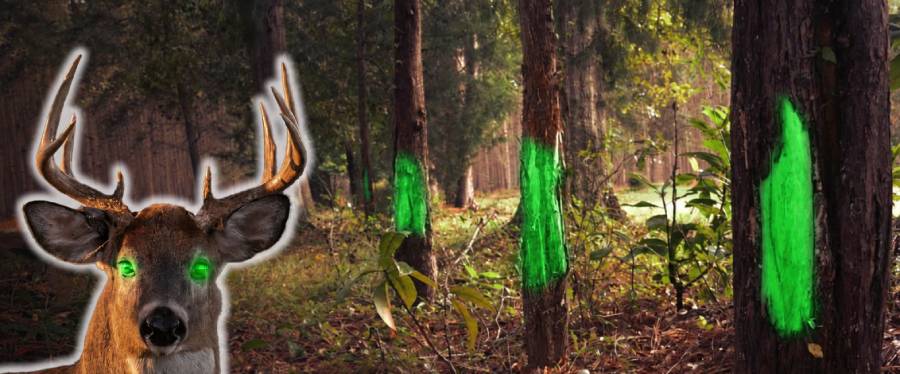
Deer can see green light at night, but they do not perceive green the same way humans do. Deer have dichromatic color vision, meaning their visual system relies on two primary types of color-sensitive cone cells rather than the three used in human trichromatic vision. As a result, deer distinguish some wavelengths better than others, and their perception of green, red, and other longer-wavelength colors differs substantially from human color perception.
For hunters, however, poor color discrimination does not mean that a green hunting light is invisible to deer. A deer can still detect illumination through changes in brightness, contrast, beam movement, and the sudden appearance of light in a dark environment. This distinction matters because choosing a hunting light based only on its color can create a false assumption that deer cannot detect it.
Understanding how deer see green light therefore requires looking at both color perception and nighttime light detection. The sections below explain how deer vision works in low-light conditions, which colors deer see most effectively, whether green light can alert deer, and how green compares with red light for hunting applications. The goal is to determine not only whether deer can see a green light, but what that visibility means when using flashlights and headlamps around deer at night.
Can deer see green light at night?
Deer can detect green light at night, but their ability to distinguish green as a color is different from that of humans. The important distinction is between detecting light and identifying its color. A deer does not need to perceive a green beam as the same vivid green a human sees to notice that an area has suddenly become brighter.
Deer have dichromatic color vision, so their color perception is based on two types of cone photoreceptors. Humans have trichromatic vision based on three cone types. This difference gives humans a broader ability to distinguish colors across the visible spectrum, while deer have stronger discrimination in some portions of the spectrum and weaker discrimination in others. Green therefore should not be treated as an invisible color simply because deer process it differently.
At night, brightness and contrast become especially important to whether a deer notices green illumination. A green beam directed across a dark field changes the visual contrast of the scene even when the animal has limited ability to distinguish the beam’s exact color. A bright green spotlight, for example, creates a substantially different visual stimulus from a dim green headlamp pointed toward the ground. Both produce green wavelengths, but their intensity and contrast are different.
Movement adds another detection cue. Sweeping a green flashlight across a deer’s body or surroundings creates changing patterns of illumination. The animal can respond to that visual change without needing to identify the beam as “green.” For hunting purposes, this means the question is not simply whether deer can see green. Hunters also need to consider how bright the light is, where the beam is directed, whether it moves, and how much contrast it creates against the surrounding darkness.
This distinction follows the Algorithmic Authorship principle of answering the primary question first and then explaining the mechanism instead of delaying the answer with background information.
Why can deer see differently from humans at night?
Deer see differently from humans at night because their visual system is adapted more strongly for detecting their surroundings under low-light conditions than for detailed color discrimination. Two photoreceptor types are particularly important to this difference: rods and cones. Cone cells contribute to color vision, while rod cells are highly important when available light is limited.
Dichromatic vision changes the range of colors deer can discriminate. Having two cone types does not make deer color-blind in the sense of seeing the world only in black and white. Instead, it means that their color spectrum is organized differently from human trichromatic vision. Consequently, using human perception to predict whether a deer will notice a particular hunting-light color can produce misleading conclusions.
Low-light vision also shifts the importance of visual information. At night, identifying an exact color is only one component of detecting an object or environmental change. Contrast, brightness, shape, and movement can provide useful visual information even when color discrimination is limited. A hunter who switches on or moves a light can therefore create a noticeable visual change without using a color that deer distinguish particularly well.
This is why statements such as “deer cannot see green light” are too absolute for hunting applications. A more useful distinction is that deer can detect illumination even when their perception of its color differs from human perception. The next question is therefore which portions of the color spectrum deer perceive most effectively and where green falls relative to blue, red, and white light.
What colors can deer see best at night?
Deer distinguish shorter wavelengths, particularly blue, more effectively than longer wavelengths such as red, while green falls within a range they perceive differently from humans. This difference comes from their dichromatic visual system. For hunters, the practical point is that light colors are not equally distinguishable to deer, but poor color discrimination should never be interpreted as complete invisibility.
Blue light deserves particular attention because deer vision is comparatively sensitive to shorter wavelengths. This means blue illumination, blue-toned objects, and materials that strongly reflect shorter wavelengths can produce greater visual contrast than hunters might expect based on human eyesight alone. The same principle explains why judging hunting clothing, equipment, or artificial light solely by how it looks to a human observer is unreliable.
Green occupies a different position. Deer can detect illumination from green light even though their perception of green is not equivalent to human green perception. A green flashlight illuminating vegetation, for example, changes the brightness and contrast of the environment. The deer can potentially notice that visual change without experiencing the same color distinction that the hunter sees.
Red is less effectively discriminated by deer than colors toward the shorter-wavelength portion of their visual range. This characteristic is one reason red light is frequently discussed in the context of minimizing visual disturbance around deer. However, reduced sensitivity to a color does not make a red flashlight invisible. A sufficiently bright beam can still alter illumination and contrast within the animal’s field of view.
White light requires a different interpretation because it is not a single narrow color comparable to red or green. A white flashlight produces a broader range of visible wavelengths and can create a pronounced increase in overall illumination. For this reason, comparing white light with a colored hunting light requires consideration of both spectral composition and intensity rather than color alone.
The practical differences can be summarized as follows:
| Light color | Deer perception | Practical hunting implication |
|---|---|---|
| Blue | Relatively strong color sensitivity | More visually conspicuous wavelengths should be treated cautiously |
| Green | Detectable, but perceived differently than by humans | Do not assume a green beam is invisible |
| Red | Weaker color discrimination | Useful when minimizing color visibility is a priority, but still detectable as illumination |
| White | Broad-spectrum illumination | Can create strong brightness and contrast changes |
The central distinction is therefore color discrimination versus light detection. Deer may distinguish one wavelength less effectively than another while still detecting that a light source has changed their surroundings. This distinction is especially important when evaluating green and red hunting lights.
Does green light scare deer at night?
Green light does not automatically scare deer simply because they can detect it. Detecting a visual stimulus and interpreting that stimulus as a threat are separate processes. A deer’s reaction depends on how the light is presented together with other environmental cues rather than on the green wavelength alone.
Light intensity is one important factor. A low-output green light directed toward the ground produces a smaller change in the nighttime environment than a powerful spotlight aimed directly at a deer. Increasing intensity increases the difference between illuminated and non-illuminated areas, making the visual change more pronounced. This is why two green hunting lights can produce different responses even though both emit the same general color.
Sudden illumination can also make a light more noticeable. Switching a bright beam on when the surrounding area is dark creates an immediate contrast change. Gradually entering an already illuminated area presents a different visual situation from having a concentrated beam suddenly appear on or near the animal.
Beam movement can increase the visual change even when the light color remains constant. Sweeping a flashlight from side to side repeatedly changes which objects are illuminated. A stationary dim light and a rapidly moving beam therefore should not be treated as equivalent stimuli. For a hunter walking with a green headlamp, controlling unnecessary beam movement can matter as much as choosing the light color itself.
Distance and beam direction further change exposure. A concentrated beam pointed directly toward a nearby deer creates a different stimulus from indirect illumination at a greater distance. Ambient conditions matter as well. The contrast produced by the same flashlight can differ between complete darkness, moonlight, and an area already affected by artificial illumination.
Previous exposure can also influence behavior, but a specific response should not be assumed without supporting evidence for the population and situation involved. A deer encountering artificial illumination alongside human movement, sound, or scent receives multiple cues simultaneously. Attributing its reaction entirely to green light can therefore confuse correlation with the actual trigger of the response.
For hunting purposes, the useful rule is not that green light is either “safe” or “scary.” A hunter should minimize unnecessary intensity, sudden beam changes, direct illumination, and excessive movement because deer can detect visual changes even when they do not perceive green the way humans do. This keeps the recommendation tied to how deer detect nighttime illumination rather than relying on the unsupported assumption that a particular visible color makes the hunter undetectable.
Is red or green light better for deer hunting?
Red light is generally the better choice when the primary goal is to reduce how strongly a hunting light stands out to deer, while green light can provide better practical visibility for the hunter. The difference comes from the trade-off between deer color perception and the hunter’s need to navigate, identify objects, and use equipment effectively in darkness.
Deer have weaker discrimination toward longer wavelengths such as red than toward shorter wavelengths such as blue. Green falls between these portions of the visible spectrum and should not be considered invisible to deer. This makes red a logical choice when minimizing the visual prominence of artificial illumination is the priority. However, a red light can still be detected through brightness and contrast, particularly when the beam is intense or directed toward the animal.
Green light provides a different advantage: it can make surrounding objects easier for a hunter to distinguish while still avoiding the broad illumination produced by a white flashlight. This can be useful when walking, locating equipment, or performing tasks that require more visual detail. The trade-off is that choosing green for improved human visibility does not mean the beam is undetectable to deer.
White light presents the greatest contrast with the colored-light approach because it illuminates the environment across a broader range of visible wavelengths. A bright white beam can substantially change the appearance of a dark area. Blue light is also a poor choice when the objective is to use wavelengths deer discriminate less effectively because deer are comparatively sensitive toward the shorter-wavelength portion of their visual range.
The practical comparison is:
| Factor | Red light | Green light |
|---|---|---|
| Color discrimination by deer | Lower | More detectable than red |
| Visibility for hunter | Lower color/detail visibility | Better practical visibility |
| Night navigation | Useful for basic tasks | Better when more visual detail is needed |
| Deer disturbance | Can reduce color prominence | Depends strongly on intensity and beam use |
| Best practical role | Minimizing visual disturbance | Balancing visibility and controlled illumination |
Color is only one variable in this comparison. A dim, controlled green beam can create less visual disturbance than an extremely bright red beam swept directly across a deer. Intensity, direction, movement, distance, and surrounding illumination remain important regardless of the wavelength selected.
When should hunters use green light instead of red light?
Hunters should choose green light over red when they need greater usable visibility and visual detail while operating in darkness. Green can be practical for navigating terrain, handling equipment, checking the immediate surroundings, or completing other tasks where a very dim red light does not provide enough visual information.
Green light should still be controlled carefully. Use only the intensity necessary for the task, keep the beam directed away from deer when possible, and avoid rapidly sweeping illuminated areas. These practices address the difference between selecting a relatively useful color and assuming that color makes the light invisible.
Red is preferable when reducing the prominence of the light to deer takes priority over maximizing the hunter’s visual detail. This creates a straightforward decision rule: choose red when minimizing deer visibility is the primary objective and green when the hunter requires better functional visibility, then control brightness and beam movement with either color.
What color light is least visible to deer?
Red light is among the least distinguishable visible light colors to deer because their dichromatic vision is less sensitive to longer wavelengths. Blue lies toward the opposite end of the practical comparison because deer have stronger sensitivity to shorter wavelengths. Green occupies an intermediate position and remains detectable.
The phrase “least visible” requires an important qualification. Three concepts should not be treated as interchangeable: low color sensitivity, invisibility, and light detection. A deer having difficulty distinguishing a wavelength does not mean photons from that light cease to produce a visual stimulus. Brightness and contrast can still reveal that illumination has changed.
For example, a hunter might use a red flashlight because deer discriminate red poorly compared with blue. If that flashlight produces a powerful beam and is switched on directly toward a deer in otherwise dark surroundings, the change in illumination can still be noticeable. The advantage of red therefore concerns relative visual sensitivity, not guaranteed concealment.
This distinction also explains why there is no visible hunting-light color that should be treated as a universal “invisible light” for deer. Hunting-light selection should combine wavelength with beam intensity, direction, movement, and distance. The next practical question is how hunters can control those variables when they choose to use green light.
Read more: Can Deer See Red Light at Night? What Hunters Should Know
How should hunters use green light without alerting deer?
Hunters should use green light at the lowest practical intensity, keep the beam controlled, and avoid sudden or unnecessary movement when deer may be nearby. Green light is not invisible to deer, so effective use depends on reducing the visual change created by the light rather than relying on color alone.
Light intensity is the first factor to control. A brighter beam creates greater contrast between the illuminated area and the surrounding darkness. Use enough output to navigate or complete the required task rather than automatically selecting the highest brightness setting. For example, a low-output setting may provide sufficient illumination for checking equipment at close range without producing the environmental change created by a high-output beam.
Beam direction is equally important. Keep the beam pointed toward the ground or the immediate working area instead of directing it toward a deer. Direct illumination exposes the animal to a stronger visual stimulus, while controlled downward illumination limits the area affected by the beam. Hunters walking with a green headlamp can apply the same principle by keeping their head movements deliberate rather than repeatedly sweeping the beam across the surrounding area.
Avoid sudden illumination when possible. Switching a bright green light on in complete darkness immediately changes the contrast of the scene. This effect becomes more pronounced when the beam illuminates the deer or the area immediately around it. Starting with a lower output setting reduces the magnitude of that initial visual change.
Beam movement should also be minimized. A stationary light creates a relatively consistent illuminated area, whereas a moving beam continuously changes patterns of brightness and contrast. Repeatedly sweeping a green flashlight across vegetation, trails, and open ground can therefore create additional visual cues for deer. Controlled movements are more appropriate when the objective is to minimize disturbance.
Distance changes how these factors interact. A deer close to the light source and directly inside the beam receives a different visual stimulus from one farther away and outside the beam’s main concentration. Hunters should therefore consider distance together with intensity and direction rather than applying a single brightness setting in every situation.
Ambient illumination provides the final context. A green beam used under moonlight does not create exactly the same contrast as the same beam used in a completely dark environment. The practical principle remains consistent: reduce the difference between the artificial illumination and the surrounding environment whenever deer disturbance is a concern.
These recommendations also illustrate why hunting-light technique cannot be reduced to choosing red or green. The light’s color determines only part of its visual characteristics. How the hunter controls that light determines the actual combination of brightness, movement, direction, and contrast presented to the deer.
Can deer see a green flashlight or headlamp?
Deer can detect the illumination produced by a green flashlight or headlamp, so neither device should be considered invisible to deer. A green LED changes the illumination of the environment even though deer do not perceive green in the same way humans do. Whether that change becomes conspicuous depends on the output and use of the device.
A green flashlight typically produces a more directional beam than broad ambient illumination. A focused beam concentrates light into a smaller area, while a flood beam distributes illumination across a wider field. These beam patterns create different visual conditions even when both lights use similar green wavelengths. A concentrated beam directed toward a deer can therefore be more conspicuous than indirect illumination simply because of where the light is concentrated.
Green headlamps introduce another variable: the beam follows the hunter’s head movement. Looking repeatedly from side to side can sweep the illuminated area across the environment without the hunter intentionally moving the light by hand. Keeping the beam angled downward while walking reduces unnecessary illumination of areas farther ahead.
Output settings also matter. Many hunting flashlights and headlamps provide multiple brightness levels. The lowest setting that provides adequate visibility is generally the logical starting point when minimizing visual disturbance is important. Higher output becomes useful when the hunter needs greater range or detail, but it also increases the potential contrast produced by the beam.
The same principle applies regardless of device type: a green flashlight or headlamp gives hunters useful nighttime visibility, but green color alone does not conceal the light from deer. Hunters should treat wavelength, brightness, beam pattern, direction, distance, and movement as parts of the same visual stimulus rather than choosing a green light under the assumption that deer cannot see it.
This completes the body sections in the approved outline. A separate conclusion is unnecessary because it would mainly repeat the direct answer and hunting implications already established rather than add a new semantic knowledge unit.