
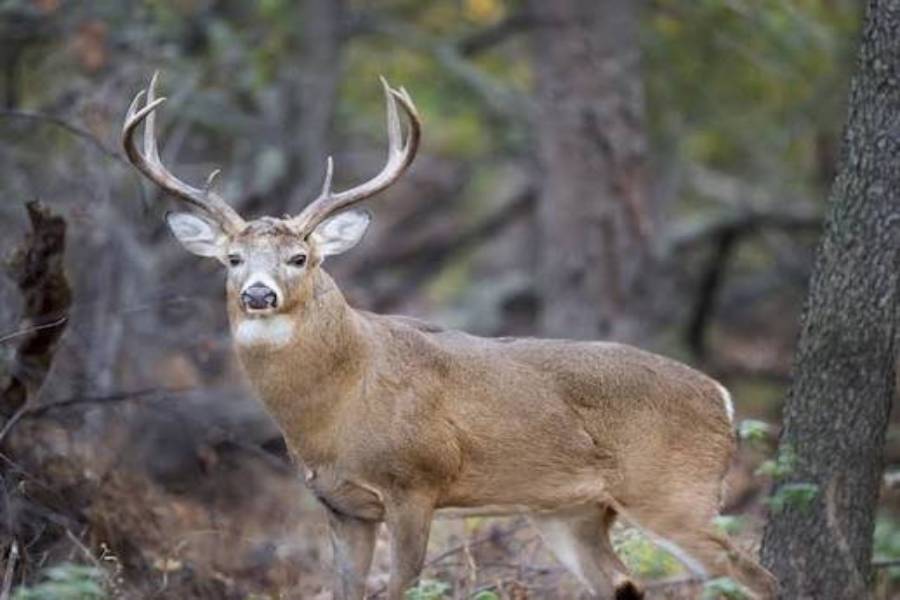
Bucks lose weight during the rut because they burn substantially more energy while spending less time feeding and resting. During the breeding season, whitetail bucks increase their movement as they search for receptive does, check doe groups, chase potential mates, compete with other males, and breed. These activities raise daily energy expenditure at the same time that feeding becomes a lower behavioral priority. The resulting energy deficit forces bucks to rely increasingly on body reserves accumulated before the rut.
Weight loss is therefore not caused by one rut behavior alone. It results from the combined effects of reduced food intake and sustained physical activity. The effect also varies among individual deer. A buck’s age, pre-rut body condition, breeding effort, food availability, weather, and local rut intensity can influence how much condition it loses during the breeding period.
For hunters, this physical change helps explain several shifts in whitetail behavior. A mature buck that spends much of the rut searching for and tending does can emerge from the breeding season in noticeably poorer condition. As rut activity declines, restoring depleted energy reserves becomes increasingly important, which can shift the buck’s attention back toward feeding and influence its post-rut and late-season movement patterns.
Why Do Bucks Lose Weight During the Rut?
Bucks lose weight during the rut because their daily energy expenditure increases while their food intake and resting time decrease. A rutting buck spends energy searching for receptive does, traveling between doe groups, chasing does, competing with other bucks, and breeding. When the calories used for these activities exceed the calories obtained from food, the buck enters a negative energy balance and begins drawing on stored body reserves.
Increased movement is one of the main contributors to this energy demand. Outside the breeding season, a buck can allocate more of its daily activity to feeding, bedding, and relatively predictable movement between these areas. The rut changes those priorities. A buck may travel beyond its normal patterns to locate does, investigate areas where females concentrate, and follow a receptive doe. Each additional period of walking, running, and chasing requires energy that would not have been spent at the same rate during less active periods.
Feeding behavior changes at the same time. Bucks do not necessarily stop eating during the rut, but breeding opportunities can take priority over regular feeding. Time spent searching for does, tending a doe, or interacting with competing males is time that cannot simultaneously be spent consuming food. This creates a two-sided energy problem: the buck is physically more active while having fewer opportunities to replace the calories being used.
Chasing, breeding, and competition add further physical demands. A buck pursuing a doe may repeatedly follow or run after her before breeding, while encounters with rival bucks can involve posturing, sparring, or fighting. Mature bucks participating heavily in breeding activity can therefore experience sustained energy demands across the rut rather than a single short burst of exercise.
The resulting weight loss is best understood as an energy-balance problem rather than as a direct effect of the rut itself. Rut behavior increases the amount of energy a buck uses and reduces the time available to replace that energy through feeding. As this deficit continues, the buck must use stored energy to support its activity, causing its body condition and weight to decline.
How Much Weight Can a Buck Lose During the Rut?
There is no single percentage of body weight that every buck loses during the rut. The amount varies according to the individual buck and the conditions under which it experiences the breeding season. Age, pre-rut body condition, breeding effort, food availability, weather, and the duration of intense rut activity can all influence the final change in body weight.
A buck entering the rut with substantial body reserves has more stored energy available to support breeding activity than a buck beginning the same period in poorer condition. This is one reason pre-rut feeding and body condition matter. Two bucks exposed to the same breeding season do not necessarily finish it in the same physical condition because they may begin with different body weights and participate in breeding activity at different intensities.
Breeding effort also changes the size of the energy deficit. A buck that spends substantial time traveling, chasing, tending does, and competing with other males uses more energy than one displaying less rut activity. Food availability can offset part of that demand when accessible forage remains available, but feeding opportunities only help when the buck actually allocates time to eating.
For hunters, visible body condition can therefore be more informative than assuming every rutting buck loses a predetermined percentage of its weight. A buck observed late in or shortly after the rut may have a leaner body profile than it displayed before breeding activity intensified. The extent of that change reflects the combined effects of its starting condition, food intake, movement, breeding effort, and other energetic demands throughout the rut.
Do Mature Bucks Lose More Weight During the Rut?
Mature bucks can experience greater rut-related weight loss when they invest more time and energy in breeding activity, but age alone does not determine how much weight a buck loses. The actual loss depends on the buck’s breeding effort, movement, food intake, starting body condition, and the amount of time it spends participating in high-energy rut behaviors.
Breeding competition creates an important difference between individual bucks. A mature buck that actively searches for receptive does, tends females, challenges competitors, and breeds repeatedly has fewer opportunities to maintain its normal feeding and resting routine. At the same time, each of those activities adds to its energy expenditure. The combination can produce a larger calorie deficit as the rut progresses.
Body condition before the rut also matters. Mature bucks can enter the breeding season with substantial energy reserves accumulated during periods when food is abundant. Those reserves provide energy when feeding declines relative to physical activity. As stored energy is used, the buck can develop the leaner appearance hunters often associate with heavily rutting deer later in the breeding season.
This does not mean every mature buck loses more weight than every younger buck. Rut participation differs among individual deer, and local conditions influence the energetic cost of breeding. A younger buck that travels extensively and feeds less could experience considerable weight loss, while a mature buck with lower breeding activity and good access to food could maintain better condition. Breeding effort and energy balance provide a stronger explanation for rut weight loss than age by itself.
For hunters, age is therefore most useful when considered alongside behavior and body condition. A mature buck showing extensive rut activity may look physically different later in the season because weeks of searching, chasing, breeding, and competition have drawn down its energy reserves. That change can also help explain why its priorities shift once intense breeding activity subsides.
Do Bucks Lose Fat or Muscle During the Rut?
Bucks primarily need stored energy to compensate for the calorie deficit created during the rut, so declining body condition should not be interpreted simply as a loss of muscle. Body-weight change can reflect several components, and the visible reduction in a buck’s size or condition does not establish that all of the lost weight came from one type of tissue.
Body fat serves as an important energy reserve. When a buck repeatedly uses more energy than it obtains through feeding, its body must supply energy from existing reserves. This allows the animal to continue searching for does, moving across its range, competing, and breeding even when current food intake does not fully cover those energetic demands. Continued reliance on reserves contributes to the decline in body condition observed as the breeding season progresses.
Muscle and fat should therefore not be treated as interchangeable measurements. A buck can appear noticeably leaner after the rut without that visual change providing a precise measurement of how much fat or muscle it has lost. Body weight also does not reveal tissue composition by itself. Determining the exact proportion of fat and lean tissue lost requires measurements beyond visual observation of a live deer.
The duration and severity of the energy deficit are important when evaluating physical condition. A buck experiencing a short period of intense rut activity under favorable feeding conditions faces a different energetic situation from one experiencing prolonged breeding activity, limited food availability, harsh weather, or additional physical stress. The longer energy expenditure exceeds energy intake, the greater the demand placed on stored reserves.
For hunters, the practical distinction is that a post-rut buck with poorer body condition has depleted part of the energy reserve it carried into the breeding season, but its appearance alone cannot determine exactly how much fat or muscle it lost. This energy depletion helps set up the next behavioral change: as breeding pressure declines, obtaining food and restoring body condition become increasingly important.
When Do Bucks Lose the Most Weight During the Rut?
Bucks are most likely to experience substantial declines in body condition during periods when intense breeding activity keeps energy expenditure high while feeding remains reduced. Weight loss accumulates from an energy deficit, so it should be viewed as a process occurring across active portions of the rut rather than as an event tied to one specific day.
During the pre-rut, bucks increase breeding-related behaviors as the season progresses, but they can still devote periods of activity to feeding. Their physical condition at this stage matters because the energy reserves carried into the breeding period help support the increased demands that follow. A buck entering this period in strong condition has more stored energy available when breeding behavior begins taking a larger share of its time.
As breeding activity intensifies, the energetic equation becomes less favorable. Searching for receptive does, traveling between areas used by doe groups, chasing, tending, breeding, and competing with other bucks can consume time and energy that would otherwise be allocated to feeding and resting. Repeating these behaviors over successive days extends the calorie deficit and progressively draws down body reserves.
The decline does not necessarily stop immediately when peak breeding activity passes. A buck can continue searching for remaining receptive does during later breeding activity, especially where breeding is spread across a longer period. At this point, the animal may already be carrying the cumulative energetic cost of earlier rut activity. For that reason, a buck’s poorest condition can occur toward the later stages of its breeding effort rather than at the moment hunters identify as peak rut.
Rut timing also varies geographically, so a single calendar date cannot identify when every whitetail buck will experience its greatest weight loss. The more useful indicator is the duration and intensity of the individual buck’s breeding activity. Hunters should therefore connect declining body condition with the progression of local rut behavior rather than assume that maximum weight loss occurs on the same date in every deer population.
What Happens to Bucks After the Rut?
After intense rut activity declines, bucks shift more of their available time and energy from reproduction toward feeding, resting, and restoring depleted body reserves. A buck that has spent an extended period searching for does, chasing, breeding, and competing enters the post-rut period with a different energy requirement than it had before breeding activity intensified.
Food becomes increasingly important because the buck must reduce the energy deficit accumulated during the rut. Returning to more consistent feeding supplies calories that can support basic maintenance and improve body condition. Rest is also valuable because reduced movement lowers energy expenditure. Together, increased opportunities to feed and decreased breeding activity move the buck away from the negative energy balance responsible for rut-related weight loss.
Recovery is not identical for every buck. A deer finishing the rut in relatively good condition with access to adequate food faces a different recovery challenge from a buck that experienced prolonged breeding activity, physical injury, poor forage availability, or demanding weather. These factors determine how quickly energy intake can begin exceeding the energy required for daily activity and maintenance.
How Long Does It Take a Buck to Recover After the Rut?
There is no single recovery period that applies to every post-rut buck. Recovery depends on the severity of the energy deficit, remaining body reserves, food availability, weather, injuries, and whether the buck continues participating in later breeding activity.
A buck with reliable access to nutritious food and limited additional breeding pressure has a better opportunity to stabilize its energy balance than a buck that must travel extensively to find food. Harsh winter conditions can make the process more demanding because maintaining body temperature and moving through difficult conditions require additional energy at the same time that natural food availability may decline.
Recovery should therefore be understood as a change in energy balance rather than a fixed number of days. The buck needs sufficient calorie intake relative to its ongoing energy expenditure to stop further depletion and begin restoring condition. The exact rate cannot be determined simply by observing that the main rut has ended.
For hunters, this transition has behavioral significance. As breeding opportunities decline and recovery becomes more important, food can regain a stronger influence over where and when a buck moves. This is one reason post-rut patterns can differ from the extensive, doe-focused movement observed during more intense portions of the breeding season.
Read more: Best Ways to Improve Deer Habitat Without Food Plots
Where Do Bucks Feed After the Rut?
After the rut, bucks increasingly prioritize food sources that allow them to replace energy lost during the breeding season while limiting unnecessary energy expenditure. The specific foods available depend on habitat, region, agricultural activity, and season, so there is no single post-rut food source that applies to every whitetail population.
This shift toward feeding follows directly from the buck’s changing energy balance. During intense rut activity, searching for does, chasing, breeding, and competition can take time away from regular feeding. Once breeding pressure decreases, those activities consume less of the buck’s daily energy budget. Spending more time feeding while reducing unnecessary movement gives the animal a better opportunity to stabilize its condition.
Food availability becomes especially important when winter conditions develop. A buck recovering from the rut benefits from obtaining adequate calories without repeatedly making long, energetically expensive movements. Where available, productive feeding areas can therefore become important components of its post-rut range. The exact food source can differ substantially between properties because whitetail diets reflect local habitat and seasonal availability.
Hunters should evaluate post-rut feeding areas together with bedding cover and travel distance rather than focus on food alone. A productive food source does not automatically mean a mature buck will visit it during legal shooting hours. The buck must still balance feeding with security, environmental conditions, and other pressures. Food explains part of the post-rut movement pattern, but it does not eliminate the importance of cover.
This creates a practical change from peak-rut hunting. During intense breeding activity, the location of does and breeding opportunities can exert a strong influence on buck movement. After that activity declines, the relationship between secure cover and available food can become increasingly relevant because a depleted buck needs calories while conserving energy. Identifying that relationship provides hunters with a more useful starting point than assuming bucks will continue moving according to peak-rut patterns.
How Does Rut Weight Loss Affect Late-Season Buck Behavior?
Rut weight loss can make feeding, resting, and energy conservation more important components of a buck’s late-season behavior as breeding activity declines. A buck that enters the late season with depleted energy reserves has less reason to maintain the same level of breeding-related movement once receptive does become less available.
The behavioral change follows an energy trade-off. Traveling long distances, chasing does, and competing with other bucks require calories. Feeding adds energy, while resting and reducing unnecessary movement conserve it. As the reproductive benefit of extensive rut movement decreases, the energetic cost of that movement becomes harder to offset. This helps explain why a buck’s movement pattern after the rut can become more closely associated with feeding and secure bedding areas.
For hunters, this means a buck’s rut pattern should not automatically be projected into the late season. A location that produced frequent buck movement while does were being searched for or chased may become less important once breeding activity subsides. Conversely, areas that combine dependable food with nearby security cover can gain relevance as bucks devote more attention to maintaining and recovering body condition.
Weather can strengthen this energy-conservation context. Colder conditions increase the importance of balancing energy intake with expenditure, while unnecessary travel adds another energetic cost. A recovering buck therefore has an incentive to obtain sufficient food without spending more energy than necessary to reach it. Local habitat, hunting pressure, food availability, and remaining breeding opportunities still influence the exact movement pattern.
Late-season hunters should therefore interpret post-rut movement through the sequence that produced it: intense rut activity increases energy expenditure, sustained energy deficits reduce body condition, and declining breeding activity allows feeding and energy conservation to regain importance. Rut-related weight loss does not determine exactly where an individual buck will appear, but it explains why the priorities influencing its movement can change substantially from peak rut to the late season.