
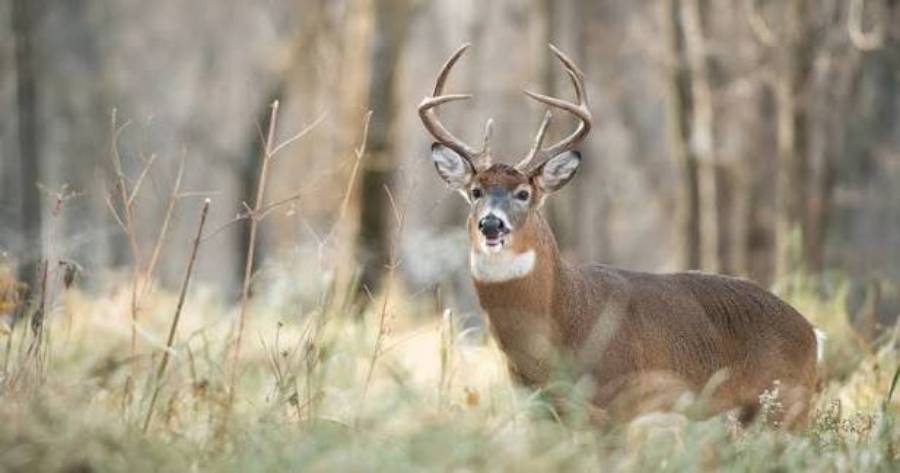
Use prevailing winds for deer hunting by positioning yourself so your scent blows away from the areas where deer are bedding, feeding, or expected to travel. The prevailing wind gives you the dominant wind direction for planning a hunt, while the actual wind at your stand determines whether that setup remains safe to hunt. A favorable wind keeps your scent cone away from approaching deer and reduces the chance that they detect you before entering shooting range.
Using the prevailing wind effectively requires more than placing a stand downwind or upwind of a deer trail. You need to consider four connected factors: the expected location of deer, their likely travel direction, the path your scent will follow, and the route you use to enter and leave the stand. A stand can have a favorable wind while you are hunting but still fail if your access route carries scent through a bedding area or across a primary travel corridor.
Terrain and changing temperatures add another layer to wind planning. Ridges and valleys can redirect the forecast wind, while morning and evening thermals can move scent differently from the prevailing airflow. A complete wind strategy therefore starts with the prevailing wind, matches stand and access locations to that direction, and verifies the actual scent movement at the hunting site.
What Are Prevailing Winds in Deer Hunting?
Prevailing winds in deer hunting are the dominant wind directions that occur most frequently at a hunting location during a specific period. Hunters can use these patterns to decide which stands are suitable for different wind directions before entering the property. For example, if winds commonly arrive from the northwest during the hunting season, a hunter can identify stand locations where a northwest wind carries human scent away from bedding areas, feeding locations, and likely deer travel routes.
Prevailing wind is different from the wind actually moving through a stand at a particular moment. The prevailing wind describes a broader pattern, while current wind describes the conditions occurring during the hunt. Local wind can differ from both because terrain features such as ridges, draws, creek bottoms, and valleys can redirect airflow. A northwest wind shown in a forecast can therefore produce a different scent path at a stand located below a steep ridge or inside a narrow drainage.
For this reason, use prevailing winds to plan a deer hunting setup and current wind to decide whether that setup is safe to hunt. Before the season, hunters can match individual stands with suitable prevailing wind directions. On the day of the hunt, they should compare the forecast with conditions at the stand and confirm where their scent is actually traveling. This approach prevents a common planning error: assuming that a favorable forecast automatically produces a favorable scent direction everywhere on the property.
Prevailing winds are most useful when they are considered in relation to deer locations rather than as isolated compass directions. A west wind is neither inherently good nor bad for deer hunting. It becomes favorable when it carries the hunter’s scent toward an area deer are unlikely to use, and unfavorable when it carries scent into a bedding area, feeding destination, or travel corridor that deer are expected to use.
Why Does Wind Direction Matter When Hunting Deer?
Wind direction matters when hunting deer because moving air transports human scent, allowing a deer to detect a hunter without seeing or hearing the hunter. The important question is therefore not simply which direction the wind is blowing. Hunters need to determine where their scent will travel in relation to the locations deer occupy and the routes deer are expected to follow.
Human scent does not remain directly around a treestand or ground position. Airflow carries odor away from the hunter and creates a scent plume extending downwind. As that plume travels, air movement and turbulence can spread it across a wider area. This means hunters should think in terms of a scent cone rather than a single scent line. A deer does not necessarily need to walk directly downwind of the stand to encounter human odor.
The relationship between wind and deer location can be illustrated with a simple setup. Suppose deer are expected to leave a bedding area and follow a trail toward a feeding area in the evening. If the hunter’s scent is carried directly across that trail before deer reach the stand, the wind setup creates a detection risk. Moving the stand so the same wind carries scent toward an area outside the expected travel corridor creates a more favorable setup without changing the prevailing wind itself.
Wind direction also affects areas beyond the immediate stand location. A hunter may have a scent-safe position while sitting in the stand but contaminate the setup by walking across a deer trail or allowing wind to carry scent toward a bedding area during the approach. Effective wind management therefore includes three locations: the stand, the expected deer route, and the hunter’s access route. Each location needs to be evaluated before deciding whether a particular wind is suitable for the hunt.
This is why wind should be treated as a positioning variable rather than a standalone weather condition. The same north wind can be useful at one stand and unsuitable at another stand on the same property. What changes is the spatial relationship between the hunter, the scent cone, and the deer.
Should You Hunt Upwind or Downwind of Deer?
Position yourself so the wind carries your scent away from the location deer occupy or are expected to enter. In practical terms, this generally means keeping the deer on the upwind or crosswind side of your position rather than allowing your scent cone to extend across their expected approach. The correct setup depends on the relative positions of the hunter, deer, travel route, and downwind scent area rather than on a fixed rule to always hunt one compass direction.
An upwind deer is positioned where the wind moves from the deer toward the hunter. This arrangement can keep the hunter’s scent behind the stand instead of carrying it toward the approaching animal. However, the setup only works when the downwind area behind the hunter is unlikely to contain other deer. A hunter focused on one trail can still alert deer in a nearby bedding area if the same wind pushes scent into that location.
A crosswind setup can provide another useful positioning option because the scent cone travels beside the expected deer route instead of directly along it. For example, if deer are expected to travel north along a trail while the wind blows from west to east, a stand positioned west of the trail can allow scent to continue east without crossing the primary approach. The exact position must account for the width and variability of the scent cone rather than assuming scent follows a perfectly straight line.
Do not choose a stand based only on whether it is technically upwind or downwind of deer. Identify where deer are likely to come from, where they are going, and where your scent will end up throughout the encounter. This distinction becomes especially important near bedding areas and travel corridors because deer may approach from several directions rather than following one predictable line.
Wind also needs to remain favorable after a deer passes the stand. A setup that protects the initial approach can still expose the hunter if the expected travel route crosses the scent cone farther downwind. Mapping the complete route helps identify this problem before the hunt. The objective is to create a usable encounter zone where deer can approach and move through the intended shooting area without entering the hunter’s scent stream first.
How Do You Find the Prevailing Wind Direction on a Hunting Property?
Find the prevailing wind direction by reviewing historical wind patterns for the hunting area, checking the forecast for the planned hunt, and verifying actual airflow after arriving at the property. Historical information establishes the wind directions a property commonly receives, while short-term forecasts identify which of those conditions are expected on a specific hunting day. Field observations then confirm whether the wind behaves as predicted at the stand.
Start by recording the common wind directions during the part of the season when the property will be hunted. Wind patterns should be connected to specific stand locations rather than treated as property-wide rules. Mark bedding areas, feeding areas, primary trails, funnels, and candidate stands on the same map. For each stand, identify where scent would travel under the relevant wind directions. This produces a set of stand options that can be selected according to expected conditions instead of forcing one stand to work under every wind.
Check the weather forecast again before entering the property because the wind expected for a particular hunt can differ from the broader prevailing pattern. Pay attention to both direction and changes expected during the hunting period. For example, a stand that works with a northwest wind at the beginning of an evening hunt can become unsuitable if the wind shifts west and sends the scent cone across the primary deer trail later in the evening.
Verify wind direction at the hunting location instead of relying exclusively on the forecast. Lightweight wind-checking powder or another visible airborne indicator can reveal the direction in which air and scent are actually moving. Natural indicators such as moving vegetation can show general airflow, but they provide less information about subtle currents around the hunter. Checking the wind at several points along the access route can also reveal areas where local airflow behaves differently.
Terrain explains why this field verification matters. A forecast describes airflow across a broader area, while ridges, valleys, draws, slopes, and other landforms can alter wind at hunting height. The wind at a parking location or field edge may therefore differ from the wind around a stand farther into the property.
The final decision should combine all three levels of information: historical wind for preseason planning, forecast wind for stand selection, and actual wind for field verification. When actual airflow sends scent into a bedding area or expected deer route, the conditions at the stand take priority over the prevailing pattern shown during planning.
How Do You Use Prevailing Winds to Choose a Deer Stand?
Choose a deer stand where the prevailing wind carries your scent away from expected deer locations and travel routes while still allowing deer to pass within an effective hunting position. Start with deer movement rather than the stand itself. Identify where deer are expected to bed, feed, and travel, then determine where your scent would move under each likely wind direction. A stand becomes suitable when these two patterns—deer movement and scent movement—do not intersect before the intended encounter.
A practical stand-selection sequence has five steps: identify the expected deer location, map the likely travel route, determine the wind direction, project the scent cone, and place the stand outside that scent-deer intersection. For example, consider deer traveling from a bedding area toward an agricultural field during an evening hunt. A stand located beside the connecting trail can work when the wind carries scent away from both the bedding cover and the trail. The same stand becomes a poor choice when a different wind pushes scent back along the trail toward approaching deer.
The destination of your scent is more important than simply having wind in your face. A hunter can feel a steady wind blowing toward the stand and still have a poor setup if that airflow carries human odor into another area deer use. This problem is especially relevant around bedding cover, funnels, pinch points, and intersections where deer can approach from more than one direction. Evaluate the entire downwind scent area instead of checking only the trail where you expect the shot opportunity.
Avoid treating scent as a narrow line extending from the stand. Wind speed, vegetation, terrain, and local turbulence can spread scent as it moves downwind. A setup with the expected deer trail immediately beside the edge of the projected scent path leaves little margin for a small wind shift. Giving the scent cone more separation from the expected approach creates a more forgiving setup when the wind fluctuates.
Stand selection should also account for the time deer are expected to reach the area. A stand positioned between bedding and feeding locations may have a favorable wind during one part of the day but become less reliable as local airflow changes. The stand should therefore match both a wind condition and a hunting situation, such as an evening feeding movement or a morning return toward bedding cover.
Preseason planning is more effective when several stands are assigned to different wind conditions. Instead of trying to hunt one preferred location regardless of weather, identify which stands work with north, south, east, west, or other common wind patterns relevant to the property. When the forecast changes, select the stand whose scent destination remains separated from the expected deer movement.
How Do You Use Prevailing Winds to Plan Entry and Exit Routes?
Plan entry and exit routes so the prevailing wind keeps your scent away from bedding areas, feeding locations, and travel corridors before, during, and after the hunt. A favorable wind at the stand does not compensate for an access route that carries scent toward deer. Wind planning therefore needs to begin where the hunter enters the property rather than only after reaching the stand.
For the entry route, map the path from the access point to the hunting position and compare every section with the expected deer locations. Avoid approaches where the prevailing wind carries scent from the hunter toward bedding cover or across a primary travel corridor. Also avoid unnecessarily walking through the locations deer are expected to use. For example, approaching an evening stand from the field side may provide better scent control than crossing the trail between a bedding area and that field, provided the wind and property layout support that route.
The shortest route is not necessarily the best access route. A longer approach can produce a cleaner hunt when it keeps both the hunter and the scent stream outside high-use deer areas. Terrain features can help separate an access route from deer movement, but they also need to be evaluated for local wind behavior. A route through a drainage or below a ridge, for example, should not automatically be considered scent-safe simply because the forecast wind appears favorable.
Entry timing also changes the context of the route. During a morning hunt, deer may already be moving from feeding locations toward bedding cover when the hunter enters. During an evening hunt, deer may be positioned near bedding areas before moving toward food. Plan access around where deer are likely to be at the time you are walking to the stand, not only where you expect them to appear later during the hunt.
Exit routes require the same planning. This is particularly important during evening hunts when deer may be approaching or occupying feeding areas as shooting light ends. Walking directly toward those deer can create visual, auditory, and scent disturbance even if the stand remained undetected throughout the hunt. A separate exit route that avoids the expected feeding movement can reduce this problem when the property layout allows it.
A complete wind setup therefore contains three connected paths: the deer travel route, the hunter access route, and the hunter’s downwind scent path. Evaluate all three before hunting a stand. When the access route or scent path overlaps an area deer are likely to occupy, select another approach or another stand rather than relying on the favorable wind at the final hunting position alone.
How Should You Hunt When Deer Travel With the Wind?
Hunt deer traveling with the wind by positioning your stand where the expected travel route stays outside your downwind scent cone. Do not assume that deer traveling in the same direction as the wind automatically creates an unhuntable situation. The deciding factor is whether the animal must enter the area carrying your scent before reaching the intended encounter location.
Start by identifying three positions: where the deer is expected to come from, where it is expected to travel, and where your scent will go from the stand. If deer movement and the scent cone overlap before the shooting area, the setup creates a high detection risk. Moving the stand laterally can create a crosswind relationship in which deer continue along the same travel route while the hunter’s scent passes beside rather than directly through that route.
For example, consider a deer traveling east along a bedding-to-feeding corridor while the prevailing wind also moves generally east. Placing a stand directly west of the approaching deer would put the hunter’s scent into the same corridor the deer is using. Moving the stand north or south of the travel route can create a better angle, provided the resulting scent cone does not intersect another trail, bedding location, or destination farther downwind.
Deer movement should not be treated as a perfectly fixed line. An animal can use parallel trails, circle through cover, approach a destination from another angle, or move to the downwind side of an area. A setup that depends on the deer remaining within a very narrow path has little tolerance for these changes. A stronger wind setup creates separation between the likely deer movement zone and the hunter’s scent zone, giving the hunter more room for variation in both wind and animal movement.
Avoid forcing a high-value stand when the prevailing wind creates an unfavorable scent relationship. Moving to a secondary stand can preserve the primary location for conditions that provide better scent control. This approach is particularly useful when several stands have been planned for different wind directions before the season.
The objective is not to make deer movement conform to the prevailing wind. It is to select a hunting position where the existing combination of wind and expected movement creates a usable encounter. When no position can keep the scent cone separated from the likely deer approach, that location should be saved for a different wind.
How Does Terrain Change Prevailing Winds While Deer Hunting?
Terrain can redirect, channel, slow, accelerate, or disrupt prevailing winds, causing the wind at a deer stand to differ from the direction shown in a regional forecast. Ridges, valleys, draws, slopes, creek bottoms, and other landforms influence how air moves across a hunting property. Hunters should therefore treat forecast wind as the starting direction and verify local airflow before relying on a stand.
Ridges can produce different wind behavior depending on the stand’s position relative to the prevailing airflow. Air moving toward elevated terrain can be pushed over or around it, while locations on the protected side can experience less consistent airflow. Irregular terrain can also create swirling or turbulent conditions. As a result, two stands separated by a relatively short distance but located on different sides of the same ridge can experience different scent movement under the same forecast wind.
Valleys and draws can channel air along the shape of the terrain rather than allowing it to follow the broader prevailing direction. For example, a forecast west wind does not guarantee that scent inside a narrow north-south drainage will move directly east. Local topography can influence the airflow enough that the scent follows part of the drainage instead. This difference matters when the drainage also functions as a deer travel corridor.
Terrain-induced turbulence creates another problem because scent movement can become inconsistent. A hunter may initially observe a favorable wind only to see a wind checker move sideways or briefly reverse direction several minutes later. Repeated changes at the stand indicate that the local setup needs to be evaluated by actual scent movement rather than by the compass direction in the forecast.
The effect of terrain becomes more important when a stand is close to a critical deer location. A small shift may have little consequence when the scent cone has substantial separation from the expected deer route. The same shift can compromise a setup when the stand is positioned close to bedding cover or when the projected scent cone runs immediately beside a primary trail. Greater separation provides more tolerance for local wind variation.
Hunters can account for these effects by checking wind at multiple points instead of testing it once. Observe airflow along the access route, near the base of the stand, and at the hunting position. Repeated observations reveal whether the local wind remains consistent or changes because of surrounding landforms.
Map-based wind planning and field verification should work together. Use prevailing wind information to identify potentially suitable stands before the hunt, then use actual airflow to determine whether terrain has changed the expected scent path. When the local wind consistently carries scent toward bedding cover, feeding areas, or expected travel routes, the stand is unsuitable for those conditions regardless of what the broader forecast indicates.
How Do Thermals Affect Prevailing Winds When Hunting Deer?
Thermals affect deer hunting by moving air according to temperature differences, which can cause your scent to travel differently from the prevailing wind. As the ground and surrounding air warm or cool, air tends to move vertically and along terrain. These thermal currents are especially relevant around slopes, valleys, draws, and other elevation changes where scent movement can change during the transition from morning to daytime or afternoon to evening.
Prevailing wind and thermals can operate at the same time. A prevailing wind may establish the broader horizontal airflow across a property, while thermal movement influences what happens to scent at a particular stand. When the prevailing wind is strong and consistent, it can dominate local air movement. When broader winds are light, local thermal effects can become more noticeable. This is why a stand that appears favorable from the forecast can produce a different scent path once temperature and terrain are considered.
Thermals should therefore be incorporated into the same scent-management process used for prevailing winds. Identify the expected deer location, determine the broader wind direction, consider whether air is likely to rise or fall around the stand, and then verify actual scent movement in the field. The purpose is not to predict every air current perfectly but to determine whether the resulting scent path remains separated from deer.
How Do Morning Thermals Affect Deer Hunting?
Morning thermals can cause air and scent to rise as sunlight warms the ground and the air near it. This transition matters when hunting slopes and elevation changes because scent that moved downhill or settled into lower terrain under cooler conditions can begin moving upward as the environment warms.
Consider a morning stand positioned above a lower travel corridor. Airflow observed before sunrise may not remain identical after sunlight reaches the slope. As warming changes local air movement, the hunter’s scent can begin traveling toward a different elevation. A setup should therefore be evaluated through the period when deer are expected to return toward bedding cover rather than judged from a single wind check immediately after arrival.
Morning thermal changes can also interact with the prevailing wind instead of moving in exactly the same direction. This interaction can produce variable scent movement around complex terrain. Checking the wind periodically during the hunt helps identify whether the original scent-safe setup remains usable as temperatures change.
How Do Evening Thermals Affect Deer Hunting?
Evening thermals can carry air and scent toward lower terrain as the ground cools after daytime heating. This change is particularly important for evening hunts around slopes, draws, creek bottoms, and valleys because the scent destination can shift as temperatures fall.
For example, a hunter positioned above a lower travel route may have a favorable scent pattern earlier in the afternoon but lose that advantage as cooling air begins moving downslope. If deer are also using the lower terrain to travel toward a feeding area, the thermal movement can carry human scent into the same corridor before the animals reach the stand.
Evening stand selection should therefore account for the conditions expected near the end of the hunt, not only the airflow present when the hunter climbs into the stand. A setup that works at mid-afternoon but sends scent toward the primary deer route near expected movement time has limited value.
Use prevailing winds for the broad hunting plan and thermals to refine that plan according to terrain, temperature, and time of day. Checking actual airflow throughout morning and evening transitions provides the final test. When thermal movement redirects scent into a bedding area, feeding location, or expected travel corridor, the local scent path should determine whether you continue using that stand.
What Should You Do When the Wind Changes During a Deer Hunt?
Recheck your scent direction and change your hunting position when a sustained wind shift carries scent toward deer bedding areas, feeding locations, or expected travel routes. A change in wind does not automatically require leaving the stand. The decision depends on whether the new scent cone intersects an area deer are likely to use before reaching the intended encounter location.
Start by determining whether the change is a brief fluctuation or a sustained shift. Wind rarely maintains one exact compass direction every second, and small variations do not necessarily compromise a setup with adequate separation between the scent cone and deer movement. A sustained change is more significant because it can relocate the entire downwind scent area. Check airflow several times over a short period to determine whether the new direction persists.
Next, compare the new scent path with the expected deer location. A shift from northwest to west, for example, matters only when that change pushes scent toward a bedding area, trail, funnel, feeding destination, or other location deer are expected to occupy. Evaluate the consequence of the wind shift rather than the compass change alone. The same directional change can ruin one stand while leaving another stand usable.
Move to a different planned stand when the new wind consistently compromises the current setup and another location provides a safer scent direction. Preseason wind planning makes this adjustment easier because each stand can be associated with specific wind conditions before the hunt. Instead of improvising after the wind changes, the hunter already knows which alternative position fits the new direction.
Leave the setup when no available position keeps scent away from the expected deer movement. Remaining in a compromised stand can expose the hunter and disturb an area that could otherwise be hunted under better conditions later. This is especially important near bedding cover, where allowing scent to enter the area can affect more than a single deer approaching a single trail.
Continue checking airflow after repositioning because a wind shift can also signal broader changes in local conditions. Terrain and thermals may alter the new direction further at another elevation or location. The decision process is therefore straightforward: check the wind, identify the new scent path, compare it with deer locations, and reposition or leave when the scent cone enters a critical area.
Read more: How to Create a Deer Sanctuary on a Small Property
What Wind Mistakes Should You Avoid When Hunting Deer?
There are 7 main wind mistakes to avoid when deer hunting: relying only on the forecast, ignoring access routes, treating prevailing and local winds as identical, overlooking terrain, ignoring thermals, assuming scent travels in a straight line, and staying in a stand after the wind becomes unfavorable. Each mistake creates the same underlying problem: human scent reaches an area deer are expected to use.
The first mistake is relying exclusively on a weather forecast. Forecast data is valuable for choosing a stand before the hunt, but it does not show every local air current around a specific ridge, valley, draw, or slope. Verify actual airflow after reaching the property and continue checking it when conditions change.
The second mistake is evaluating wind only from the stand. A hunter can select a position where scent remains clear of the expected deer route and still compromise the hunt while walking in. Plan the wind from the property entrance to the stand and from the stand back out. Entry and exit routes should avoid sending scent into bedding cover, feeding areas, and primary travel corridors.
The third mistake is assuming the prevailing wind and local wind are always identical. Prevailing wind describes the dominant broader pattern, while local airflow reflects the conditions occurring at the hunting position. Terrain and temperature can alter that airflow. Use prevailing wind to select potential setups and field observations to determine whether those setups actually work.
The fourth mistake is ignoring terrain. Ridges, valleys, draws, creek bottoms, and slopes can change airflow enough to alter the expected scent destination. A stand should not be classified as suitable for a particular wind direction until the hunter understands how that direction behaves around the surrounding landforms.
The fifth mistake is overlooking thermals during temperature transitions. Morning warming and evening cooling can change local air movement, particularly across elevation changes. A stand that produces favorable scent movement when the hunter arrives can become less favorable around the time deer begin moving.
The sixth mistake is treating scent as a narrow, perfectly straight line. Airflow and turbulence can spread human odor across a wider downwind area. A stand with only a small gap between the projected scent path and a deer trail therefore provides less margin for changing conditions than a setup with greater separation.
The seventh mistake is remaining in a stand after a sustained wind shift sends scent toward deer. Hunters can become reluctant to abandon a promising position after investing time in reaching it, but the previous wind direction no longer matters once the scent cone changes. Judge the stand by current scent movement, not by the conditions that existed when the hunt began.
Avoiding these 7 mistakes requires one consistent principle: determine where human scent will end up relative to deer. Prevailing winds, forecasts, stand locations, terrain, thermals, and access routes are individual parts of that decision. Their value comes from helping the hunter keep the scent zone separated from the locations deer are most likely to use.
How Can You Build a Deer Hunting Wind Plan Before the Season?
Build a deer hunting wind plan by mapping deer activity areas, identifying likely travel routes, reviewing prevailing winds, assigning stands to specific wind directions, and planning scent-safe access before the season begins. The goal is to have multiple predetermined setups so stand selection can follow the actual wind conditions instead of forcing a preferred stand to work on an unfavorable day.
Start by mapping the locations that influence deer movement on the property. Mark known or suspected bedding areas, feeding destinations, water sources, primary trails, funnels, pinch points, field edges, and other travel features. Then connect locations that deer are likely to move between. This creates the movement layer that the wind plan needs to protect from human scent.
Next, review the prevailing wind patterns that occur during the period you expect to hunt. Apply each common wind direction to the property map and project where scent would travel from potential hunting positions. Eliminate positions where the expected scent cone crosses bedding cover or primary approach routes before deer reach the intended encounter area. Keep positions where the downwind zone provides enough separation from likely deer movement.
Assign each selected stand a set of acceptable wind directions instead of labeling it as a good stand under all conditions. One stand may work with a northwest wind, while another may provide better scent control with a south wind. Creating several wind-specific options allows the forecast to determine where you hunt. It also reduces the temptation to enter a high-value location when conditions do not support it.
Plan the entry and exit routes at the same time as the stand locations. Draw each access route on the map and project the hunter’s scent along the entire approach. A route should avoid bedding areas and primary travel corridors while also minimizing unnecessary disturbance. When morning and evening deer locations differ, a stand may require different access considerations depending on the time of the hunt.
Terrain should be added to the plan before a stand receives final approval. Identify ridges, valleys, draws, creek bottoms, slopes, and other features capable of changing local airflow. A stand that appears favorable on a flat map may behave differently when prevailing wind interacts with elevation. Locations with complex terrain require more field verification before they can be reliably assigned to a particular wind.
Thermal behavior should also be considered for stands around elevation changes. Morning warming and evening cooling can change scent movement during the same period deer movement increases. Evaluate where scent is likely to travel around the expected encounter time, not only where it travels when you first enter the stand.
The final preseason plan should connect each stand with its acceptable winds, expected deer movement, scent destination, entry route, exit route, terrain conditions, and likely thermal behavior. This turns wind direction into a repeatable stand-selection system rather than a decision made after arriving at the property.
Before every hunt, compare the forecast with this plan and select the stand designed for those conditions. After reaching the property, verify actual airflow along the access route and at the stand. Change locations when local wind does not match the planned scent path. Prevailing winds provide the framework for the hunt, but the wind carrying your scent at the hunting location determines whether the final setup is usable.