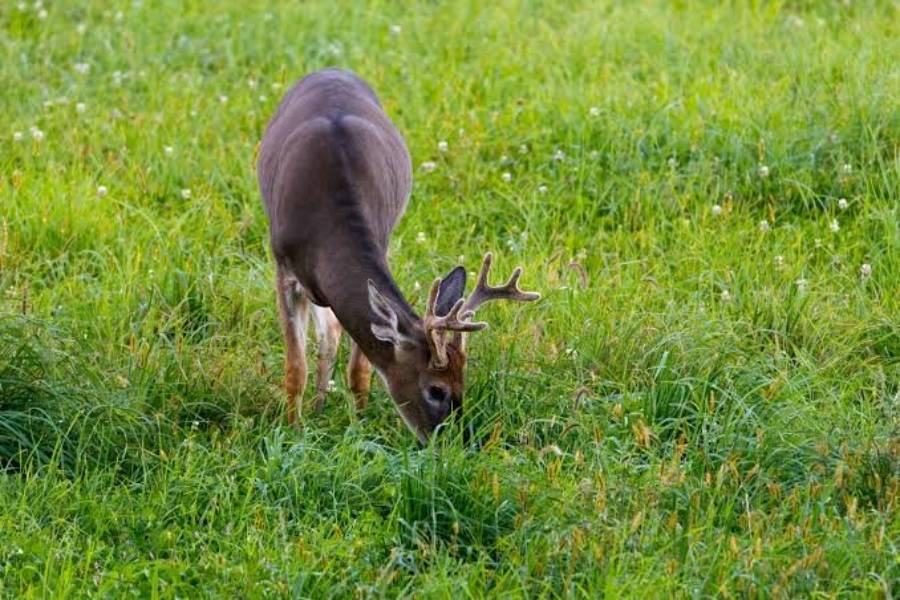
Yes, deer eat ryegrass, especially when the plants are young, tender, and actively growing. Whitetail deer can graze ryegrass when it is available in food plots, pastures, or other areas within their feeding range. However, the fact that deer eat ryegrass does not mean it is always their preferred forage or the best crop to plant in a deer food plot.
Ryegrass becomes more relevant to hunters when its attractiveness is considered alongside other food sources. Deer feeding preference changes with plant maturity, seasonal forage availability, and the presence of alternatives such as clover, oats, wheat, brassicas, and natural browse. Young ryegrass can provide accessible green forage, while older growth may become less desirable as the plant matures.
Hunters should also distinguish ryegrass from cereal rye. Although their names are similar, they are different plants and should not be treated as interchangeable food plot crops. Choosing between them requires looking at deer preference, forage quality, establishment, seasonal availability, and the specific purpose of the food plot. This guide explains when deer eat ryegrass, which types they consume, its nutritional and hunting value, and whether planting ryegrass makes sense for a deer food plot.
Do Deer Eat Ryegrass?
Yes, deer eat ryegrass when its leaves are green, tender, and accessible for grazing. Whitetail deer are adaptable herbivores that feed on available vegetation, and young ryegrass can become part of their diet when it grows within their feeding range. A ryegrass food plot can therefore receive regular deer browsing, particularly while the plants remain in an actively growing vegetative stage.
Deer are more likely to eat the leafy portion of ryegrass than coarse, mature growth. Young plants provide softer tissue that is easier to browse, while ryegrass becomes less desirable as stems develop and the plants advance toward maturity. This means a plot that attracts deer during early growth does not necessarily maintain the same level of feeding pressure throughout the entire growing cycle.
Food availability also determines how heavily deer use ryegrass. Deer do not evaluate ryegrass in isolation; they select food from the combination of cultivated forage and natural browse available within their home range. A deer may feed readily on ryegrass in one location but use it less in another location where more attractive foods are abundant.
For hunters, deer tracks or browsed leaves in a ryegrass plot confirm that deer are using the crop, but they do not prove that ryegrass is the animals’ preferred forage. Consumption and preference are different factors when evaluating a deer food plot. Preference becomes more important when deciding whether ryegrass deserves planting space compared with other forage options.
Do Deer Like Ryegrass?
Deer can find young ryegrass palatable, but ryegrass should not automatically be considered their first-choice forage. Its attractiveness depends on plant maturity, alternative food availability, seasonal conditions, and the other forage species growing in or around the food plot.
Plant maturity directly affects how deer respond to ryegrass. Fresh vegetative growth provides tender leaves that deer can graze easily. As the plant develops more fibrous stems and reproductive growth, its physical and nutritional characteristics change. Deer can then shift feeding pressure toward younger vegetation or other available foods rather than continuing to browse mature ryegrass at the same rate.
Competition from other forage is equally important. A hunting property may contain ryegrass alongside clover, oats, wheat, brassicas, agricultural crops, woody browse, forbs, acorns, and other natural foods. Deer can move between these resources according to availability and palatability. For example, deer entering a mixed food plot may browse several plant species rather than concentrating exclusively on the ryegrass.
This distinction matters when hunters evaluate food plot performance. A crop that deer will eat is not necessarily the crop that will attract the most consistent feeding activity. Ryegrass should therefore be judged by observed deer use, forage quality, seasonal availability, and its performance relative to alternative food plot species. The next step is determining whether annual ryegrass and perennial ryegrass provide the same value to deer and how both differ from cereal rye.
What Types of Ryegrass Do Deer Eat?
Deer can eat both annual and perennial ryegrass, but the two grasses differ in growth cycle, persistence, and usefulness in a deer food plot. Hunters should also separate both types of ryegrass from cereal rye because cereal rye belongs to a different plant group and has different characteristics as deer forage. The distinction matters when selecting seed because products labeled “ryegrass” and “rye” should not be treated as interchangeable.
Do Deer Eat Annual Ryegrass?
Yes, deer eat annual ryegrass, particularly during its young and actively growing stages. Annual ryegrass (Lolium multiflorum) is a cool-season grass that establishes relatively quickly and produces green forage that deer can browse. Its fast establishment can make it useful when the objective is to produce ground cover and accessible forage within a relatively short growing period.
Annual ryegrass completes its life cycle rather than functioning as a permanent food plot crop. Its value to deer therefore depends heavily on growth stage. Tender leaves provide the portion deer are most likely to browse, while older plants become stemmier as they mature. Maintaining young vegetative growth is more relevant to deer attraction than simply having a dense stand of mature annual ryegrass.
For hunters, this means annual ryegrass can provide food, but deer use should be evaluated against other forage available on the property. A plot receiving browsing pressure demonstrates that deer will consume the grass; it does not establish that annual ryegrass is more attractive than clover, oats, wheat, cereal rye, or other food plot species.
Do Deer Eat Perennial Ryegrass?
Yes, deer also eat perennial ryegrass, especially when it produces fresh vegetative growth. Perennial ryegrass (Lolium perenne) differs from annual ryegrass because it is capable of persisting across multiple growing seasons under suitable conditions. This persistence can provide repeated green growth rather than requiring the stand to complete its entire establishment cycle every year.
The same relationship between maturity and palatability still applies. Deer are more likely to browse tender leaves than coarse, mature plant material. Perennial growth alone therefore does not guarantee consistent deer attraction. Climate, soil conditions, grazing pressure, competing vegetation, and the availability of other foods influence how much use a perennial ryegrass plot receives.
Hunters should consequently view persistence and deer preference as separate attributes. A plant can survive well in a plot without being the forage deer select first. Perennial ryegrass may fit a particular planting system, but longevity should not be used as the sole reason for choosing it as a deer food source.
Is Ryegrass the Same as Cereal Rye for Deer?
No, ryegrass and cereal rye are different plants, despite the similarity in their names. Annual ryegrass and perennial ryegrass belong to the genus Lolium, while cereal rye (Secale cereale) belongs to the genus Secale. This botanical distinction also matters practically because the plants differ in growth characteristics and their roles in food plot systems.
The word “rye” creates an easy source of confusion when hunters compare seed choices. A bag containing annual ryegrass is not simply another form of cereal rye. Likewise, recommendations for planting cereal rye for deer should not automatically be applied to ryegrass. Seed labels should be checked for the actual species rather than relying only on the word “rye.”
This distinction becomes particularly important when comparing food plot performance. The relevant question is not only whether deer eat ryegrass, but whether ryegrass provides enough forage value and attraction to justify choosing it over cereal rye or another food plot crop. Nutritional quality is one of the next factors needed to make that decision.
Is Ryegrass Nutritious for Deer?
Ryegrass can provide deer with nutritious green forage, but its nutritional value depends strongly on the plant’s growth stage. Young, actively growing ryegrass generally provides higher-quality forage than mature plants because the leaves are tender, digestible, and contain less structural fiber. As ryegrass matures, its stems become more fibrous and the overall forage quality declines.
This change occurs because a young grass plant directs a larger share of its growth toward soft leaves and rapidly developing plant tissue. As the plant approaches reproductive maturity, it produces more structural material to support stems and seed heads. Increasing structural fiber makes mature forage harder to digest and can reduce the amount of usable nutrition deer obtain from each bite.
For hunters, the practical implication is that the condition of a ryegrass plot matters as much as the presence of ryegrass itself. A plot containing short, actively growing leaves represents a different food source from a plot dominated by tall, mature plants. Two properties planted with the same ryegrass species can therefore receive different levels of deer use when their stands are at different stages of growth.
Ryegrass should also be evaluated as one component of the broader deer diet rather than as a complete nutritional solution. Whitetail deer consume a varied diet that can include grasses, forbs, woody browse, mast, agricultural crops, and planted food plot species. A ryegrass plot provides another forage opportunity, while the surrounding habitat continues to supply other nutrients and food sources.
Hunters should therefore avoid choosing ryegrass solely because deer can obtain nutrition from it. Forage quality, palatability, seasonal availability, and deer preference all determine its practical value. These factors become especially important as ryegrass matures and as alternative foods become available within the deer’s range.
When Do Deer Eat Ryegrass the Most?
Deer are most likely to use ryegrass heavily while it is producing young, green growth and when competing food sources are less attractive or less abundant. This means deer use cannot be assigned to one universal month. Planting date, climate, ryegrass growth stage, local habitat, and seasonal changes in alternative foods determine when a particular plot receives the greatest feeding pressure.
During fall, newly established ryegrass can produce tender green growth at a time when hunters are actively monitoring deer movement and food sources. Deer may browse these young plants as part of their available diet. The amount of use depends on what else is available nearby. Agricultural crops, acorns, natural browse, other food plots, and remaining green vegetation can all compete with ryegrass for feeding activity.
Winter changes that food environment. Green forage can become more important where cold conditions reduce the availability or quality of other vegetation, provided the ryegrass remains actively growing or usable. A ryegrass plot that stays green can offer deer a feeding opportunity when surrounding herbaceous vegetation has declined. Severe weather, snow cover, regional climate, and the availability of mast or agricultural residue can still change how frequently deer visit the plot.
Spring creates another shift in forage competition. Ryegrass can resume or accelerate growth as temperatures become favorable, producing new leaves that deer can browse. At the same time, natural vegetation also expands. New forbs, browse, grasses, and other spring plants increase the number of feeding choices available to deer. Ryegrass may remain edible without receiving the same proportional use it received when fewer green foods were available.
Growth stage is therefore a better predictor of ryegrass palatability than season alone. Hunters evaluating a plot should consider whether the plants are young and vegetative, mature and stemmy, or competing with more attractive seasonal foods. Observing browse pressure, trail-camera activity, tracks, and feeding patterns can then show whether deer are actually using that specific plot.
This seasonal relationship also explains why the question “Do deer eat ryegrass?” has limited value by itself when planning a hunting property. Deer do eat it, but a food plot must do more than contain edible vegetation. The more useful question is whether ryegrass can provide enough consistent forage and deer use to justify planting it as part of a food plot.
Is Ryegrass Good for Deer Food Plots?
Ryegrass can work in a deer food plot, but its suitability depends on whether the goal is quick establishment, available green forage, long-term forage quality, or maximum deer attraction. Deer will browse ryegrass, particularly during young vegetative growth, so planting it can create a usable food source. However, ryegrass should not be selected simply because deer eat it. Hunters need to compare its establishment, palatability, maturity, persistence, and deer use with other available food plot crops.
The distinction between an edible crop and an effective hunting food plot is important. A successful food plot needs to provide forage when deer need it while also producing enough feeding activity to support the management or hunting objective. Ryegrass may accomplish part of that goal by producing accessible green vegetation, but its performance changes as the stand matures. The presence of more attractive forage nearby can also reduce deer use even when the ryegrass remains available.
Site conditions further influence the result. Soil fertility, moisture, temperature, planting date, grazing pressure, and competition within a seed mixture affect how much usable ryegrass a plot produces. Hunters should therefore evaluate ryegrass as part of the entire food plot system rather than judging it only by seed germination or the amount of green vegetation visible in the field.
What Are the Benefits of Ryegrass in a Deer Food Plot?
There are 4 practical benefits of ryegrass in a deer food plot: quick establishment, production of green forage, ground coverage, and compatibility with mixed plantings. The importance of each benefit depends on the purpose of the plot and the other forage species available on the property.
First, ryegrass can establish quickly under suitable growing conditions. Rapid establishment is useful when a hunter needs vegetation to occupy a prepared seedbed within a relatively short period. Faster ground coverage can also reduce the amount of exposed soil while the food plot develops.
Second, actively growing ryegrass produces green leaves that deer can consume. This gives deer another forage option within the hunting property rather than forcing them to depend entirely on surrounding natural vegetation. The benefit is greatest while the plants remain tender and palatable.
Third, ryegrass can create dense ground coverage. A well-established stand occupies open space in the plot and produces a substantial amount of vegetation. Ground coverage is not the same as deer attraction, however. A visually dense green field should not automatically be interpreted as a highly productive deer feeding area unless browsing and deer activity confirm that animals are actually using it.
Fourth, ryegrass can be incorporated into a mixed planting rather than grown as the only forage species. Combining plants with different growth characteristics can diversify the food available within one plot. For example, a mixture may include grasses alongside legumes or other cool-season forage, allowing deer to select among multiple food sources as conditions change.
These benefits make ryegrass usable in certain food plot systems, but ease of establishment should not be confused with superior deer preference. A plant can be easy to grow and still receive less browsing than another forage growing beside it.
What Are the Disadvantages of Ryegrass in a Deer Food Plot?
There are 4 main limitations to consider before planting ryegrass for deer: changing palatability, declining forage quality with maturity, competition from preferred foods, and management requirements. These limitations explain why ryegrass is not automatically the best choice simply because deer consume it.
First, deer preference can change as ryegrass matures. Tender vegetative leaves are different from older, stemmier growth. As the stand advances toward reproductive maturity, the physical characteristics of the forage change, potentially reducing its attractiveness compared with younger vegetation.
Second, forage quality does not remain constant throughout the plant’s life cycle. Increasing structural fiber accompanies maturation, making older plant material less comparable to young growth. Hunters who want a plot to provide attractive forage over a particular period therefore need to consider growth stage rather than only the total amount of ryegrass present.
Third, ryegrass competes for deer attention with every other available food source. Clover, oats, wheat, brassicas, cereal rye, agricultural crops, mast, forbs, and woody browse can influence where deer choose to feed. A ryegrass plot may receive substantial use when alternatives are limited and considerably less use when more attractive foods become abundant.
Fourth, ryegrass still requires management to produce the desired result. Planting at the wrong time, allowing the stand to become excessively mature, or using ryegrass without considering the surrounding forage base can reduce its value to the hunting property. Successful establishment alone does not demonstrate that the plot is accomplishing its intended purpose.
Ryegrass is therefore a functional deer food plot option rather than an automatic first choice. Its strongest value comes from producing accessible green forage and fitting specific planting situations. Hunters seeking the most attractive or seasonally useful forage should compare ryegrass with alternatives before deciding what portion of limited food plot acreage to dedicate to it. One of the most important comparisons is between ryegrass and cereal rye, two crops whose similar names can hide meaningful differences for deer management.
Is Ryegrass or Cereal Rye Better for Deer?
Cereal rye is generally the more relevant crop to compare with other cool-season deer food plot forages, while ryegrass is better treated as a separate grass option rather than a substitute for cereal rye. Deer eat both, but the two plants differ botanically, in growth characteristics, and in how hunters can use them within a food plot. Choosing between them should therefore be based on the purpose of the plot rather than their similar names.
Cereal rye (Secale cereale) is an annual cereal grain, while annual and perennial ryegrasses belong to the Lolium genus. This distinction affects how the plants develop and how they function within a planting system. Hunters buying seed should check the species listed on the label because a product containing ryegrass does not provide the same crop as one containing cereal rye.
Deer preference is another reason not to treat the two plants as equivalents. Both can produce green vegetation that deer consume, but food plot selection should account for how consistently deer browse each crop relative to the other forage available on the property. Local deer density, neighboring agricultural fields, natural browse, mast production, weather, and the composition of nearby food plots can all change observed use.
Growth timing also matters. A hunter planting primarily to create forage during hunting season needs a crop capable of producing usable vegetation during the targeted period. The correct choice therefore depends on planting date, climate, soil conditions, and the intended hunting window. A crop that establishes successfully but reaches its least desirable growth stage before deer need it does not accomplish the same objective as one that remains useful through the target period.
Hunters should not choose ryegrass simply because they intended to buy “rye.” Cereal rye and ryegrass should appear as separate entries when comparing food plot seeds. Evaluate each according to deer use, forage quality, seasonal performance, establishment, and compatibility with the rest of the planting rather than assuming the word “rye” indicates the same crop.
What Can You Plant With Ryegrass for Deer?
Ryegrass can be planted with other deer forage species, including clover, oats, and wheat, when the mixture is designed to provide more than one type of food. A mixed food plot gives deer several forage options and can reduce dependence on the attractiveness of a single species. The mixture should still be selected according to climate, soil conditions, planting season, and the management objective of the plot.
Clover can add a broadleaf legume component to a plot containing grass. The two plants occupy different forage categories, which creates greater plant diversity than a ryegrass-only stand. This can be useful when the objective is to provide deer with multiple feeding options rather than expecting one grass species to maintain attraction throughout the entire growing period.
Oats can also be included in a cool-season planting strategy. Young oat growth provides another forage option that deer can browse alongside ryegrass. When several species emerge within the same plot, deer can selectively feed on the plants they prefer as growth stages and environmental conditions change. Observed browsing patterns can then help the hunter determine which components of the mixture are contributing most to deer use.
Wheat provides another cereal-grain option for mixed food plots. As with oats, its presence means a deer entering the plot does not have to rely exclusively on ryegrass. The value of this diversity becomes more apparent when one species becomes mature, experiences poor establishment, or receives less feeding pressure than expected.
More species do not automatically create a better food plot. Plants growing together compete for sunlight, moisture, nutrients, and physical space, and inappropriate seeding rates can allow one species to dominate the stand. A dense ryegrass component, for example, should not be allowed to undermine the establishment of another crop that the hunter considers more important.
The purpose of a mixture is to create complementary forage, not simply to maximize the number of seeds planted. Hunters should identify the primary forage first and use companion species to fill specific seasonal or management roles. Clover, oats, wheat, and other suitable forage can then be selected according to what is missing from the existing food supply.
This approach also makes food plot observations more useful. Trail-camera activity, browsing intensity, plant height, and visible grazing can show which components deer are actually using. Hunters can use those observations to adjust future plantings instead of assuming every species in a commercial seed mixture contributes equally to deer attraction.
Read more: Do Deer Use Cattle Trails? What Hunters Should Know
When Should You Plant Ryegrass for Deer?
Plant ryegrass early enough for it to establish young, green forage before the period when you want deer using the food plot. There is no single planting date that works across every hunting property because temperature, moisture, growing season, and the type of ryegrass determine when establishment occurs. For a fall hunting plot, the objective is to synchronize active ryegrass growth with the period when deer are expected to use the area.
Annual ryegrass is a cool-season grass, so hunters commonly establish it as temperatures moderate rather than during the hottest part of summer. Adequate soil moisture is particularly important during germination and early growth. Planting into dry soil without dependable rainfall can delay emergence, while suitable moisture and temperature allow the stand to establish more effectively.
Perennial ryegrass also performs as a cool-season grass, but its potential to persist changes the purpose of planting. A hunter establishing perennial ryegrass may be planning beyond one period of fall forage. Local climate becomes especially important because persistence depends on whether environmental conditions remain suitable for the plant across seasons.
Timing also affects palatability. Planting too early can allow ryegrass to advance beyond its most tender vegetative stage before the desired hunting period. Planting too late creates the opposite problem: the seedlings may not develop enough usable forage before deer are expected to feed in the plot. The practical target is an established stand that is still producing young vegetative growth when deer use matters most.
Germination should not be treated as the point when a plot becomes useful to deer. Newly emerged seedlings contain little forage and can be vulnerable to heavy grazing pressure. The plants need enough growth to produce browseable leaves while maintaining their ability to continue developing. Deer density and plot size influence how quickly grazing pressure affects a young stand.
Ryegrass can regrow after grazing because grasses retain growing points that can produce additional leaves when conditions remain favorable. Regrowth is not unlimited. Repeated heavy browsing, unfavorable temperatures, inadequate soil fertility, moisture stress, or excessive competition can reduce the amount of new forage produced.
Hunters should therefore work backward from the desired period of deer use rather than selecting a planting date without context. Consider the local growing season, expected rainfall, soil temperature, ryegrass type, deer density, and hunting dates together. Regional planting recommendations and the instructions for the specific seed variety provide a more reliable planting window than a universal calendar date.
Should You Plant Ryegrass in a Deer Food Plot?
Plant ryegrass in a deer food plot when its establishment characteristics and forage period match your management objective, but do not assume it is the best choice simply because deer eat it. Ryegrass can provide green forage and can function within a mixed planting, yet its value depends on what you expect the food plot to accomplish.
Ryegrass makes more sense when quick ground establishment and cool-season green growth are useful characteristics for the site. It can also fit a mixture where other species provide complementary forage. In these situations, ryegrass does not need to serve as the sole attraction crop to contribute value to the plot.
Ryegrass becomes a weaker choice when the primary objective is to maximize deer preference and another forage performs better for that purpose under local conditions. A hunter with limited acreage has to consider opportunity cost: every portion of a plot occupied by ryegrass is space that cannot simultaneously be dedicated to a more desirable crop. Comparing ryegrass with cereal rye, oats, wheat, clover, brassicas, and locally successful forage is therefore more useful than asking whether deer will eat ryegrass at all.
The surrounding habitat should influence the decision as well. A property already containing abundant green forage may gain less from another grass-dominated plot than a property with a seasonal forage gap. Conversely, a planting that supplies usable vegetation when natural foods decline can complement the existing habitat. Food plots work best when they address a specific nutritional or seasonal gap rather than merely adding another edible plant.
Deer response provides the final test. Monitor browsing pressure, tracks, trail-camera activity, plant utilization, and the portions of mixed plots that receive the most feeding. These observations reveal whether ryegrass is contributing meaningful forage on that particular property. A crop that grows exceptionally well but receives little browsing is accomplishing a different objective from a crop that deer consistently select.
For most hunting applications, the decision should therefore be based on 5 factors: deer preference, forage quality, seasonal availability, establishment performance, and compatibility with the overall food plot strategy. Ryegrass can earn a place in a deer food plot when it performs well across those factors. When another crop better matches the property’s conditions and the hunter’s objective, planting that forage instead provides a stronger use of limited food plot acreage.