
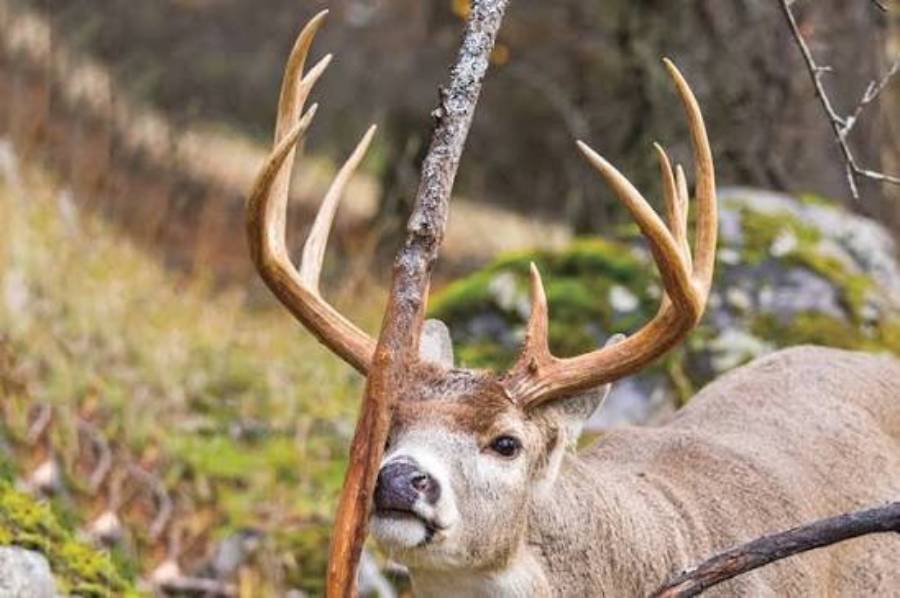
Bucks stop using rubs when changes in the rut, travel routes, food sources, bedding areas, hunting pressure, or home-range use alter where and how they move. A buck can also stop visiting one specific rub while continuing to rub trees elsewhere. For hunters, this means an inactive rub does not automatically indicate that the buck has left the area.
Rub activity changes throughout deer season because rubbing is connected to several parts of whitetail behavior. Bucks rub trees while shedding velvet, leaving visual and scent signals, and moving through areas they use during the breeding season. As these priorities change, the location and frequency of rubbing can change with them. A rub line that receives regular activity during one part of the season may therefore become inactive when a buck begins using a different food source, bedding area, travel corridor, or portion of its home range.
There are 7 main reasons bucks stop using rubs, and identifying the cause helps determine whether a hunter should remain near the old rub, search the surrounding area for fresh sign, or shift to a different travel route. The condition of the rub matters, but fresh tracks, scrapes, bedding sign, nearby rubs, and current movement patterns provide stronger context for determining whether a buck is still using the area.
Why Do Bucks Stop Using Rubs?
Bucks stop using rubs for 7 main reasons: changes in the rut, travel routes, food sources, bedding areas, hunting pressure, home-range use, and the use of different rub locations. These factors affect where a buck spends time and which trees it encounters during normal movement. A rub that suddenly becomes inactive can therefore indicate a change in movement rather than the disappearance of the buck.
The first reason is a change in the rut phase. Rubbing behavior is not constant throughout deer season because a buck’s priorities change as the breeding season progresses. Before peak breeding activity, bucks spend time establishing patterns, interacting with other deer, and leaving sign along their travel routes. As breeding activity increases, searching for and tending receptive does can occupy more of a buck’s movement. The buck may continue rubbing, but the location and frequency of those rubs can change because it is traveling differently.
The second reason is a change in travel routes. Rubs occur where bucks move, so a rub line is partly a record of where a buck traveled when those rubs were made. A route can lose activity when the buck starts using another trail, crossing, ridge, creek bottom, edge, or cover transition. Even a relatively small shift can leave previously active trees outside the buck’s current route. For a hunter, finding no new activity on an established rub line is therefore a reason to search adjacent travel corridors rather than immediately assuming the buck is gone.
The third reason is a change in food sources. Feeding destinations influence the routes bucks use between feeding and bedding areas. When a preferred food source becomes less available or another source becomes more attractive, a buck can redirect its movement toward the new feeding area. For example, a buck traveling toward an agricultural field may change routes when another food source, such as acorns, becomes available closer to secure cover. Rub activity along the old route can decline even though the buck remains within the surrounding area.
The fourth reason is a change in bedding areas. A buck that changes where it beds also changes at least part of the route connecting its bedding cover with feeding and breeding areas. This matters when rubs are concentrated near a bedding-area edge or along a trail leading from secure cover. If the buck shifts to another bedding location, the old rub line can receive little or no new activity. Changes in bedding use can therefore make a productive rub location appear abandoned without requiring a large shift in the buck’s overall range.
The fifth reason is hunting pressure or repeated human disturbance. Bucks can alter their movement after encountering hunters, repeated access through cover, or other disturbances. The change may involve using a different route, spending more time in secure cover, or reducing movement through the disturbed location during legal shooting hours. A hunter who repeatedly walks directly past a rub line to inspect it can also add disturbance to the same area being monitored. When rub activity declines after hunting pressure increases, nearby cover and alternative routes become more relevant than the old rub alone.
The sixth reason is a shift within the buck’s home range. A home range contains multiple resources and locations, and a buck does not need to use every part of it equally throughout the season. Food availability, security, breeding opportunities, and changing deer activity can concentrate its movement in another portion of that range. As a result, a group of rubs can go inactive even though the buck has only shifted its activity rather than permanently leaving the broader area.
The seventh reason is that a buck can stop revisiting one rub while continuing to rub elsewhere. Individual rubs should not be treated as permanent destinations. A buck may rub a tree during one movement through an area and never return to that exact tree, while producing new rubs along another route. This distinction is important because stopping use of a specific rub is not the same as stopping rubbing behavior.
For hunters, the practical meaning is that an inactive rub should be interpreted as one piece of buck sign rather than proof of a buck’s current location or absence. When a previously active rub or rub line goes cold, the next step is to examine current movement evidence around it. Fresh tracks, newer rubs, scrapes, trails, bedding sign, food availability, and trail-camera observations can show whether the buck changed routes, shifted activity within its range, or stopped using the immediate area.
When Do Bucks Stop Rubbing Trees?
Bucks generally reduce rubbing activity as the breeding season progresses, but there is no single date when all bucks stop rubbing trees. Rubbing behavior changes from the period when bucks shed velvet through the pre-rut, peak rut, and post-rut because testosterone levels, breeding activity, movement patterns, and interactions with other deer also change during these stages.
Rubbing becomes noticeable after bucks shed velvet and transitions into a form of sign associated with their movement and breeding-season behavior. During the pre-rut, bucks can create rubs along travel corridors, near bedding cover, and in other areas they repeatedly use. This period can produce concentrated rub lines because movement is still relatively connected to repeatable locations. For hunters, fresh rubs found together along a route are more useful for identifying current movement than a single isolated rub.
As the rut progresses, buck movement becomes increasingly influenced by the location and reproductive status of does. A buck that previously traveled a predictable route between bedding and feeding areas may begin covering different ground while searching for breeding opportunities. Rubs along the original route can consequently stop receiving activity even while the buck remains active within the broader area. The apparent end of a rub line can therefore reflect a seasonal movement change rather than the end of rubbing itself.
After peak breeding activity, rubbing can continue, but its frequency and distribution can differ from earlier in the season. Bucks are also dealing with changing food requirements, hunting pressure, and the physical demands of the rut. These factors can shift movement toward secure bedding cover and important food sources. Hunters should therefore evaluate late-season rubs according to current deer movement instead of assuming that an old pre-rut rub line still identifies the best route.
Do Bucks Stop Rubbing During the Rut?
No, bucks do not automatically stop rubbing when the rut begins. They can continue making and revisiting rubs during the rut, but breeding activity changes where they travel and how much time they spend following predictable routes. This makes rub activity less consistent in some locations.
A buck that was regularly using one rub line during the pre-rut may leave few new rubs there once it begins searching for receptive does in other areas. The change is especially important from a hunting perspective because an inactive rub line can look like evidence that the buck disappeared. In reality, the buck may simply be spending more time around doe bedding areas, breeding concentrations, or different travel corridors.
The useful distinction is between a decline in activity at a particular rub and a complete stop in rubbing behavior. Hunters should avoid treating these as the same event. When a rub line becomes inactive during the rut, current tracks, scrapes, fresh rubs, doe activity, and trail-camera observations provide better evidence of where the buck has shifted its movement.
Does an Inactive Rub Mean the Buck Has Left the Area?
No, an inactive rub does not mean the buck has left the area. A rub only confirms that a buck used that location when the sign was created or revisited. Once fresh rubbing stops, the buck may still live within the same home range while using a different trail, bedding area, food source, or travel corridor.
There are 3 different conditions hunters should separate: an inactive rub, an inactive travel route, and a buck leaving the area. An individual rub can stop receiving attention even when deer continue traveling nearby. An entire route can also become less active because seasonal movement has shifted to another part of the property. Neither condition alone proves that the buck has abandoned its broader home range.
Current sign provides better evidence than the condition of one old rub. Fresh tracks can confirm recent deer movement through the surrounding area, while new rubs can reveal where rubbing activity has shifted. Active scrapes, well-used trails, fresh droppings, bedding sign, and trail-camera observations add further context. For example, a rub line along a field approach may become inactive after the primary food source changes, while fresh tracks and new rubs appear along a route connecting bedding cover with a different feeding area.
The location of new sign also helps explain why the old rub became inactive. Fresh rubs appearing on a parallel trail can indicate a route change. New activity closer to thick cover can indicate a shift toward more secure movement. Sign concentrated around another food source can indicate a feeding-pattern change. During the rut, increased activity near doe bedding areas can instead point toward breeding-related movement.
Hunters should therefore follow the freshest cluster of buck sign rather than remain committed to an old rub simply because it was productive earlier in the season. One inactive tree provides limited information. Several recent signs that point toward the same travel corridor provide a stronger basis for determining where a buck is currently moving.
How Can You Tell if a Buck Rub Is Still Active?
You can tell whether a buck rub is still active by checking the condition of the exposed wood, bark and debris around the tree, nearby tracks, and fresh rubs along the same travel route. No single characteristic proves that a buck is currently using the rub, so hunters should evaluate several signs together.
Freshly exposed wood is one of the first characteristics to examine. A recent rub generally exposes wood that looks noticeably different from the weathered surface of an older rub. Bark fragments may also remain around the base of the tree shortly after rubbing occurs. As the rub ages, weather, moisture, sunlight, and oxidation gradually change its appearance. These variables make color alone an unreliable way to determine exactly when a rub was made.
The ground surrounding the tree provides additional context. Fresh tracks on the trail, disturbed leaves, recently broken vegetation, or another new rub nearby indicate more recent deer movement than an isolated rubbed tree. A sequence of fresh rubs along the same trail is particularly useful because it connects rubbing activity with a travel route rather than a single point on the landscape.
Hunters should also compare the rub with other buck sign in the immediate area. Fresh scrapes, tracks, active trails, bedding sign, and trail-camera observations can help establish whether bucks are still moving through the location. For example, an older-looking rub accompanied by fresh tracks and several newer rubs farther down the trail can indicate that the travel corridor remains active even though the original tree is no longer being rubbed.
The most useful question is therefore not simply whether one rub looks fresh. Hunters should determine whether fresh sign forms a current pattern around the rub. When multiple recent signs follow the same corridor, the area has greater hunting relevance than an isolated rub with no supporting evidence.
How Long Will a Buck Use the Same Rub?
There is no fixed amount of time that a buck will use the same rub. Some trees may be rubbed during a single visit, while other rubs can receive repeated attention as bucks continue traveling through the same location. The duration of activity depends more on the buck’s movement pattern and the location of the tree than on a universal lifespan for a rub.
A rub positioned along a repeatedly used travel corridor has more opportunity to receive additional activity than a tree encountered during an occasional movement. The same principle applies to rubs associated with routes between bedding cover, feeding areas, and locations used during the breeding season. When those movement patterns remain stable, a buck may encounter the same tree again. When the route changes, activity at that rub can stop immediately.
This explains why the physical age of a rub and the current value of its location are not always the same. An older rub can remain beside an active travel corridor, while a visually fresh rub may have been created during a movement that is not regularly repeated. Hunters who judge a location only by how recently the bark was removed can therefore overestimate or underestimate its current importance.
The better approach is to evaluate repeated use of the surrounding route. Multiple rubs, fresh tracks, current scrapes, established trails, and trail-camera activity provide stronger evidence of repeated buck movement than the age of one rub. When those signs disappear together, the probability that the buck has shifted its movement becomes more significant.
Read more: 8 Best Habitat Improvements for Deer Hunting Land
Do Bucks Return to the Same Rubs?
Yes, bucks can return to the same rubs, but repeated use of the same tree is not guaranteed. A buck may revisit an individual rub, continue using the same rub line, or travel through the same corridor without rubbing the original tree again. Hunters should therefore distinguish between repeated use of a tree and repeated use of the location.
The distinction matters because a rub represents both rubbing behavior and movement through a specific place. If a buck continues traveling the same route, it has opportunities to revisit an existing rub or create additional rubs nearby. A cluster of rubs along one trail can consequently provide more information about repeated movement than a single heavily rubbed tree.
A buck can also return to the same travel corridor while choosing different trees. In this situation, the original rub may appear inactive even though fresh rubs begin appearing farther along the same trail. This pattern does not necessarily indicate that the buck abandoned the area. It can indicate that the location remains useful while individual rubbing points change.
Rub locations can also appear in the same general areas across different hunting seasons. Stable landscape features such as travel corridors, terrain transitions, bedding cover, and feeding routes can continue directing deer movement from year to year. However, a rub appearing in the same location in multiple years does not prove that the same individual buck created it. Different bucks can use the same travel corridor and rub trees within the same area.
For scouting purposes, recurring rub locations are therefore most valuable as evidence of historically repeated buck use of an area, not as a reliable method for identifying an individual deer. Hunters should combine historical rub information with current tracks, fresh rubs, scrapes, trails, and trail-camera observations before deciding that a previous movement pattern is active again.
Should You Hunt a Rub After a Buck Stops Using It?
You should not continue hunting an inactive rub solely because a buck used it earlier in the season. Hunt the surrounding location only when current sign indicates that bucks are still using the same travel corridor, bedding area, feeding route, or nearby cover. An old rub records past activity; fresh sign provides stronger evidence of current movement.
Start by determining whether only the individual rub has become inactive or whether the entire route has gone cold. Fresh tracks, newer rubs, active scrapes, trail use, and trail-camera observations around the original location indicate that deer may still be moving through the area. In that situation, the old rub can remain useful as part of a larger movement pattern even when the tree itself receives no additional rubbing.
Move your attention elsewhere when several forms of current sign disappear together. For example, a rub line with no fresh rubs, limited recent tracks, declining trail-camera activity, and an abandoned food source provides more evidence of a movement shift than an old rub alone. The objective is to follow the buck’s current pattern rather than remain attached to the location where its previous pattern was easiest to see.
Hunting pressure also affects this decision. Repeatedly entering a rub line to check sign, cameras, or stand locations can add disturbance to a route that previously felt secure. When current sign shifts toward thicker cover or an alternative trail after hunting activity begins, repositioning around the new movement pattern can be more productive than continuing to hunt directly over the original rub.
Where Should You Look When a Rub Line Goes Cold?
Look for fresh buck sign along alternative travel corridors, current food sources, bedding edges, habitat transitions, and routes connecting secure bedding cover with feeding or breeding areas. These locations help determine where the movement represented by the old rub line has shifted.
Begin close to the inactive rub line rather than assuming the buck moved a long distance. Check parallel trails and nearby terrain or cover transitions for newer rubs and tracks. A relatively small route change can remove a buck from the exact trees being monitored while keeping it within the same general hunting area.
Next, examine whether feeding or bedding patterns have changed. A different food source can redirect evening and morning travel, while increased disturbance can push bedding activity toward more secure cover. During the breeding season, doe concentrations can also influence where bucks spend their time. Each change can produce fresh sign away from a rub line that was active earlier.
Follow clusters of recent sign rather than individual rubs. A new rub combined with fresh tracks, an active trail, nearby scrapes, or recent trail-camera activity provides more hunting context than either an old rub or a new isolated rub by itself. The goal is not to find another rubbed tree; it is to identify the buck’s current movement pattern and hunt the route that pattern supports.