
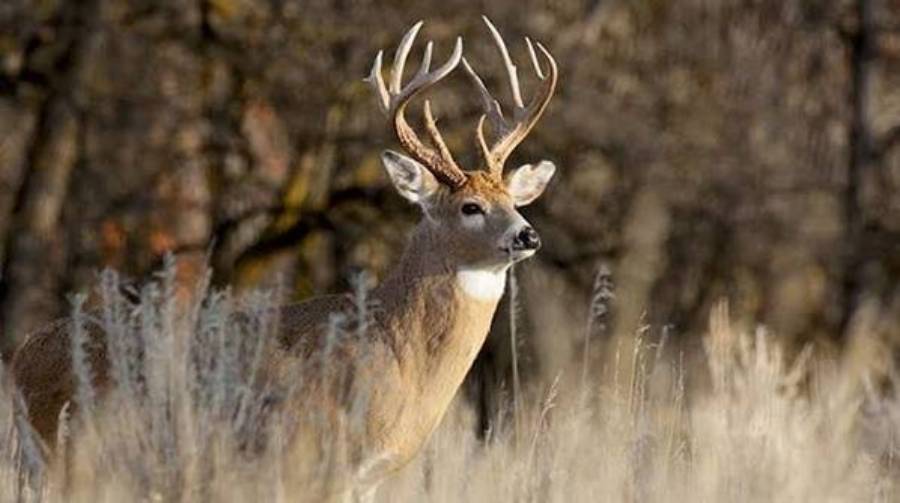
The best habitat improvements for deer hunting land increase usable food, secure bedding cover, water access, productive vegetation, and protected travel routes while reducing human disturbance. The most effective improvement depends on what the property currently lacks. A heavily wooded property with a closed canopy may benefit more from timber and understory management than another food plot, while open hunting land with abundant forage may need dense bedding and security cover instead.
A productive deer property should provide connected resources rather than isolated habitat features. Food sources have greater value when deer can reach them through secure cover, bedding areas become more useful when human disturbance is limited, and water improvements provide the greatest benefit where reliable water is scarce. Hunting pressure also affects how deer use these resources, so stand access, entry routes, and sanctuary areas should be considered alongside physical habitat work.
The best approach is to identify the property’s limiting habitat factors first and improve them in order of importance. The following habitat improvements address food, cover, forest structure, water, movement, and security while keeping the primary goal focused on creating better deer hunting land.
What Are the Best Habitat Improvements for Deer Hunting Land?
The 8 best habitat improvements for deer hunting land are improving native forage, establishing strategic food plots, creating bedding cover, managing timber, developing early successional habitat, adding water where needed, improving travel corridors, and protecting sanctuary areas. Each improvement addresses a specific habitat requirement, but their value depends on what resources are already available on the property and surrounding land.
Improving native forage increases the amount of naturally available food deer can use across a larger portion of the property. Opening selected areas of a closed forest canopy allows more sunlight to reach the ground, which promotes grasses, forbs, shrubs, and woody browse. Mast-producing trees can provide additional seasonal food. These natural food sources complement food plots rather than requiring deer to depend on a few concentrated feeding areas.
Food plots provide another source of forage and allow landowners to place food strategically in relation to bedding cover and hunting access. Bedding improvements serve a different purpose by creating dense vegetation where deer can rest with less exposure. Timber management can contribute to both goals because reducing selected canopy competition can stimulate understory growth that provides food and cover.
Early successional habitat adds another combination of forage and security cover through grasses, forbs, shrubs, and young woody growth. Water sources can improve habitat where dependable water is limited. Travel corridors connect bedding, feeding, and watering areas through usable cover, while sanctuary areas reduce human disturbance in portions of the property. These improvements work best as a connected habitat system rather than 8 independent projects.
For example, adding a food plot beside poor bedding habitat addresses food availability but does not solve the lack of secure daytime cover. Improving bedding cover while maintaining a protected travel route between that cover and an existing food source addresses multiple parts of the deer’s habitat use without unnecessarily creating another food source. The best habitat project is therefore the one that corrects a meaningful deficiency in the property.
How Should You Decide Which Deer Habitat Improvement to Do First?
Improve the limiting habitat factor first: the resource or condition that most restricts how deer can use the hunting property. Evaluate at least 5 factors before beginning a project: food availability, bedding and security cover, water availability, habitat connectivity, and human disturbance. This assessment prevents landowners from investing acreage, labor, and money in resources that are already abundant.
Start with food by identifying what deer can eat throughout different seasons, not only during hunting season. A property may contain abundant summer vegetation but provide less useful forage later in the year. Examine native browse, mast-producing trees, agricultural food sources, food plots, and food available on adjacent properties. If adequate food already surrounds the property, adding another food plot may provide less habitat value than improving cover.
Next, evaluate bedding and security cover by determining whether deer have dense, low-level vegetation where they can spend time away from regular disturbance. Mature woods are not automatically high-quality bedding habitat. A closed canopy can limit sunlight at ground level and produce an open understory with relatively little screening cover. In that situation, timber or vegetation management may address both cover and forage because increased sunlight can stimulate understory growth.
Water should be evaluated as a limiting factor rather than treated as a mandatory habitat project. A property with streams, ponds, wetlands, or other dependable nearby water may receive little additional habitat value from another artificial water source. A property where deer must travel farther to reach dependable water presents a different management problem, making strategically located water more relevant.
Habitat connectivity and hunting pressure complete the assessment. Food, bedding, and water provide less hunting value when deer must cross exposed areas to move between them or when hunters repeatedly disturb the routes connecting those resources. Map likely bedding areas, feeding areas, water, cover, property boundaries, access routes, and neighboring habitat before deciding where improvements belong.
The final priority should account for the surrounding landscape as well as the property itself. For example, a small wooded parcel surrounded by agricultural fields may already have extensive food nearby but lack secure bedding cover. Converting additional acreage into food plots duplicates a resource available next door, whereas improving dense cover can supply a habitat component missing from the larger landscape. The first improvement should therefore solve the strongest habitat limitation rather than simply replicate a popular deer-management practice.
How Can You Improve Natural Food Sources for Deer?
Improve natural food sources for deer by increasing native browse, forbs, shrubs, young woody growth, and productive mast-producing trees across the hunting property. Natural forage can provide food over a broader area than a concentrated food plot while simultaneously improving vegetation structure and cover. The first priority is identifying where existing vegetation management can produce more usable forage before converting additional acreage into planted plots.
Sunlight is one of the main factors controlling forage production in wooded deer habitat. A mature forest with a dense canopy can shade the forest floor enough to limit the growth of herbaceous plants and woody browse. Selectively opening the canopy allows more sunlight to reach the ground, which can stimulate grasses, forbs, shrubs, sprouts, and other low-growing vegetation. The result is a greater amount of forage within the vertical zone deer can reach while feeding.
Native browse is especially valuable because habitat improvements can distribute it throughout wooded portions of a property instead of concentrating deer activity around a single field. Young shoots, leaves, shrubs, vines, and other accessible vegetation can become part of the property’s food base. Managing existing vegetation also allows one habitat project to serve multiple functions. Dense regeneration created after canopy disturbance, for example, can provide both browse and screening or bedding cover as vegetation develops.
Mast-producing trees add another seasonal food component. Oaks and other locally appropriate mast-producing species can provide food without requiring the annual planting cycle associated with many food plots. Existing productive trees should therefore be considered when planning timber work. Removing trees without evaluating their habitat function can eliminate valuable food sources while attempting to improve another part of the property.
The best natural-forage strategy is not to maximize every type of vegetation equally. It is to create a diverse food base that complements resources already present on the property and neighboring land. For example, hunting land surrounded by agricultural crops may receive more value from improving native browse and woody vegetation inside secure cover than from duplicating the same type of concentrated food available outside the property. This approach increases habitat diversity while keeping improvements connected to the property’s actual deficiencies.
How Can Food Plots Improve Deer Hunting Land?
Food plots improve deer hunting land by adding concentrated forage in locations where food availability or its distribution limits habitat quality. They also give landowners greater control over where a food resource occurs relative to bedding cover, travel routes, property boundaries, and hunting access. Their value comes from both nutrition and placement, so a productive plot in a poorly planned location is not necessarily an effective hunting-land improvement.
Food plot location should be selected before deciding what to plant. A plot located near secure cover allows deer to reach food without crossing large exposed areas, while a plot positioned around existing travel patterns can complement the way deer already use the property. Hunter entry and exit routes matter as well. A plot can attract deer but become difficult to hunt effectively when reaching a stand requires repeatedly crossing the feeding area or the cover connecting it to bedding habitat.
Plot size should match its function and the amount of usable acreage available. A landowner creating supplemental forage across a property has a different objective from someone establishing a smaller plot primarily to influence deer movement near a hunting location. Larger plots require more acreage and can provide greater food volume, while smaller plots can fit into habitat systems where cover and limited disturbance are higher priorities. There is no single plot size that is optimal for every deer hunting property because surrounding food availability, deer use, soil conditions, and management objectives differ.
Plant selection should also follow the purpose of the plot rather than a universal seed list. Clover can provide a perennial or multi-season forage component under suitable conditions, while cereal grains and brassicas are examples of plant groups used for different seasonal objectives. Soil fertility, drainage, climate, planting date, available sunlight, and local growing conditions determine whether a selected forage can establish and remain productive. A plant that performs well on one property can fail when those conditions change.
Food plots should ultimately supplement natural habitat instead of replacing it. A hunting property consisting of attractive plots surrounded by poor bedding cover, limited browse, and frequent human disturbance still has major habitat deficiencies. For example, improving 2 acres of food while ignoring 50 acres of closed-canopy timber may concentrate management effort on a small part of the property while leaving a much larger habitat opportunity unused. Combining strategic food plots with natural forage, secure cover, and low-disturbance movement routes creates a more complete habitat system.
How Can You Create Better Bedding Cover for Deer?
Create better deer bedding cover by increasing dense, low-level vegetation in secure areas with limited human disturbance. Effective bedding habitat gives deer physical cover while allowing them to remain close enough to food, water, and travel routes to use the surrounding property efficiently. On hunting land with an open understory, improving bedding cover can provide greater value than adding another concentrated food source.
Vegetation structure is a primary component of bedding cover. Mature woods can contain large trees while providing relatively little cover near ground level, particularly where a closed canopy restricts sunlight. Increasing sunlight through selective canopy work can encourage shrubs, woody regeneration, forbs, and other understory plants. As this vegetation becomes denser, it provides both visual screening and usable browse. One improvement can therefore address 2 habitat needs: cover and food.
Bedding improvements should be concentrated where deer can use them without frequent human intrusion. Creating dense cover beside a road, equipment route, property entrance, or regularly traveled hunter access trail reduces the security value of the habitat. Areas farther from routine disturbance are generally better candidates, especially when they can be connected to feeding areas through additional cover. The objective is not simply to create thick vegetation but to create thick vegetation in a location that functions as secure habitat.
Landowners can improve wooded bedding areas through forest and vegetation management that encourages regeneration at deer level. Selective cutting and other appropriate canopy treatments can change the amount of sunlight reaching the forest floor and produce denser growth. Specific cutting techniques should match the forest type, management objectives, and condition of individual trees rather than being applied uniformly across the property.
Bedding cover should also be planned as part of the hunting system. For example, creating secure bedding in the center of a property can lose much of its hunting value if every stand-access route passes through it. A better layout protects the bedding area from routine disturbance while giving hunters access to locations around deer movement routes without repeatedly entering the core cover. This relationship between habitat and access becomes especially important as hunting pressure increases.
How Does Timber Stand Improvement Help Deer Habitat?
Timber stand improvement can improve deer habitat by changing forest structure so that selected areas produce more understory forage and cover. Removing or reducing competition from selected trees can allow additional sunlight to reach the forest floor. That sunlight supports vegetation growth within reach of deer and can convert open, shaded woods into more productive habitat.
The basic mechanism follows a clear sequence: canopy modification increases available sunlight, sunlight stimulates understory vegetation, and the additional vegetation can provide browse and cover. Grasses, forbs, shrubs, vines, sprouts, and young woody plants can occupy areas that previously had limited ground-level growth. The exact vegetation response depends on site conditions and the existing plant community, so timber work should be treated as a habitat-management tool rather than a guarantee that a specific plant will appear.
Timber management also changes horizontal and vertical cover. A forest dominated by mature trees can contain substantial timber volume while offering little dense vegetation at deer level. Strategic canopy work creates opportunities for regeneration and structural diversity. This is particularly useful when a property needs both additional browse and security cover because the same treated acreage can contribute to both objectives as vegetation develops.
Tree selection matters because not every tree that occupies canopy space has the same habitat or timber value. Productive mast trees, desirable timber, den trees, and other trees with defined management functions may warrant retention, while competing or lower-priority trees may be candidates for treatment. For example, removing a productive mast-producing tree simply to increase sunlight can trade one valuable food resource for another. Decisions should therefore consider both the existing function of a tree and the expected habitat response after treatment.
Timber stand improvement should ultimately support the property’s larger habitat plan. Treating every wooded acre in the same way can eliminate useful differences between mature timber, dense regeneration, bedding cover, travel corridors, and feeding habitat. A better approach uses timber management selectively to create a mixture of habitat structures. This allows wooded hunting land to provide mature-tree resources in some areas and dense forage or cover in others while maintaining connections between them.
How Does Early Successional Habitat Benefit Deer Hunting Land?
Early successional habitat benefits deer hunting land by producing dense grasses, forbs, shrubs, sprouts, and young woody vegetation that can provide both forage and cover. This vegetation stage fills the space between open ground and mature forest, making it especially valuable on properties dominated by closed-canopy timber or large areas with limited ground-level growth.
The primary advantage is the amount of usable vegetation produced close to ground level. Deer can browse leaves, shoots, forbs, and woody growth while also using dense vegetation for security and bedding. This combination makes early successional habitat different from improvements designed for only one resource. A food plot primarily concentrates forage, while early successional vegetation can distribute food and cover across a larger treatment area.
Creating this habitat requires disturbance that prevents vegetation from remaining in a mature, closed-canopy condition. Selective clearing, timber harvest, appropriate mowing schedules, and other vegetation-management practices can reset plant succession and allow sunlight-dependent vegetation to establish. Prescribed fire is another management tool used in suitable ecosystems to influence plant composition and vegetation structure. Its use depends on site conditions, local regulations, weather, fuel conditions, and appropriate expertise.
Early successional habitat also changes how different habitat types connect across hunting land. For example, a transition of shrubs and young vegetation between mature woods and an open food source creates more cover than an abrupt boundary between forest and field. Deer can use the transition for feeding and movement while remaining closer to screening vegetation. Similar treatments can connect bedding cover with other resources rather than leaving large exposed gaps between them.
This habitat requires continued management because plant succession does not stop after the initial treatment. Young vegetation eventually develops into taller woody growth and, without further disturbance, can progress toward mature forest. Management should therefore maintain a mixture of vegetation stages instead of attempting to keep the entire property at one stage. Rotating treatments among different areas can preserve mature timber where it provides value while maintaining younger vegetation elsewhere for forage and cover.
Do You Need to Add Water Sources to Deer Hunting Land?
You need to add water sources to deer hunting land when dependable water is a limiting habitat resource, not simply because water improvements are commonly recommended for deer properties. Existing streams, ponds, wetlands, springs, drainage features, and nearby water on neighboring land should be evaluated before investing in a new source. Adding more water to a property already surrounded by reliable water may provide less habitat value than improving deficient food or cover.
Water availability should be assessed together with its location. A dependable source has greater functional value when deer can reach it through secure habitat without making long movements across exposed ground. Water positioned near bedding and feeding habitat can become part of an efficient resource system, while an isolated source surrounded by poor cover may receive different levels or patterns of use. The surrounding habitat therefore matters as much as the presence of water itself.
Natural and managed water sources can both contribute to deer habitat. Existing ponds, streams, and other dependable features may require little intervention beyond protecting surrounding cover. Where natural water is genuinely limited, an appropriately designed managed source can shorten the distance between water and other habitat resources. The specific option should fit the property’s soils, drainage, terrain, maintenance capacity, and applicable regulations rather than being selected solely because it is popular on other hunting properties.
Placement should also account for hunting pressure. A water source located directly beside a frequently traveled access route can introduce regular disturbance into an otherwise secure part of the property. Conversely, placing water within a low-disturbance habitat system can allow deer to move between bedding, water, and food while remaining in cover. Hunters should be able to access hunting locations without repeatedly crossing the resource or the primary routes leading to it.
Water improvements should therefore be prioritized only after the landowner identifies an actual deficiency. For example, a property with limited surface water but abundant forage and dense bedding cover presents a stronger case for adding dependable water than a property containing multiple streams but little secure cover. The objective is not to maximize the number of habitat features on the land. It is to correct the resource that most restricts the property’s value as deer habitat.
How Can You Improve Deer Travel Corridors on Hunting Land?
Improve deer travel corridors by connecting bedding areas, food sources, water, and security cover through routes that allow deer to move without crossing unnecessary open ground or high-disturbance areas. A useful corridor does more than create a physical trail. It provides habitat connectivity between resources deer already need to reach across the property.
Start by identifying how the property’s major habitat features relate to one another. Bedding cover, feeding areas, water sources, timber edges, creek bottoms, terrain features, and dense vegetation can influence where practical movement routes exist. A corridor has greater habitat value when it connects 2 or more important resources rather than ending in an area with little food, cover, or security.
Vegetation structure determines how secure a corridor can be. An exposed path through short vegetation does not provide the same function as a route bordered or covered by shrubs, young woody growth, tall vegetation, or other screening cover. Improving vegetation along existing movement routes can make different habitat units function as a connected system. For example, dense cover between a bedding area and a food source allows deer to approach feeding habitat without immediately entering exposed ground.
Habitat edges can also contribute to movement. Abrupt transitions between mature timber and open fields provide less gradual cover than edges containing shrubs, forbs, young trees, and other intermediate vegetation. Improving these transitions can add both forage and screening cover. The resulting edge becomes a habitat feature rather than simply a boundary between 2 vegetation types.
Travel corridors should also be planned around hunter movement. A well-developed corridor can lose much of its practical hunting value when the main access trail repeatedly crosses it between bedding and feeding areas. Map stand locations and entry and exit routes alongside expected deer movement before modifying vegetation. The objective is to connect habitat resources for deer while separating routine hunter movement from the most important deer travel routes.
Why Should Deer Hunting Land Include Sanctuary Areas?
Deer hunting land should include sanctuary areas because low-disturbance habitat gives deer places to bed and spend time without repeated human intrusion. A sanctuary is defined by both habitat quality and disturbance level. Dense vegetation alone does not function as a secure sanctuary when people regularly walk through it, operate equipment inside it, or use it as a primary access route.
The strongest sanctuary locations combine security cover with a property layout that makes human intrusion unnecessary. Existing bedding cover, dense regeneration, difficult-to-access vegetation, or other secure habitat can form the physical foundation. The management decision is then to minimize avoidable disturbance within that area rather than repeatedly entering it for scouting or routine hunting access.
Sanctuaries should connect with other habitat resources. Deer still need to move between secure cover, food, and water, so protected travel routes around or from the sanctuary can increase its functional value. For example, a sanctuary connected to evening feeding habitat through dense vegetation creates a more complete system than an isolated block of cover surrounded by exposed ground.
Hunter access should be designed around the sanctuary rather than through it. Entry and exit routes that cross bedding cover can introduce scent, noise, and visual disturbance into the area intended to provide security. A better layout allows hunters to reach stands from property edges or other lower-impact routes when the terrain and property configuration permit it. Habitat improvements around the sanctuary should follow the same principle.
The size and location of a sanctuary depend on acreage, habitat distribution, neighboring land, and hunting strategy, so one universal acreage recommendation does not fit every property. On smaller hunting land, protecting a strategically located block of secure cover may be more realistic than dedicating a large percentage of the property to an inaccessible zone. The defining principle remains the same: create useful cover and protect it from unnecessary disturbance so it continues to function as secure deer habitat.
How Does Hunting Pressure Affect Deer Habitat Improvements?
Hunting pressure can reduce the value of habitat improvements by increasing human disturbance around the food, cover, water, and travel routes deer use. A property can contain productive food plots, dense bedding cover, and reliable water yet still provide poor hunting opportunities when hunters repeatedly disturb the same areas. Habitat management and hunting access should therefore be planned together.
Hunter entry and exit routes are one of the main sources of controllable disturbance. Walking through bedding cover to reach a stand can disturb the habitat a landowner invested time and money to create. Crossing a food plot before an evening hunt can also leave scent and expose the hunter’s presence near a concentrated feeding area. Access routes should avoid core bedding areas, sanctuary cover, major feeding locations, and the travel corridors connecting these resources whenever the property layout allows it.
Stand placement creates a similar problem when habitat improvements are designed without considering how they will eventually be hunted. For example, creating a food plot in the center of a property may appear beneficial because it places food close to surrounding cover. The layout becomes less effective if every practical route to the hunting location requires the hunter to cross a major deer travel corridor. The improvement attracts deer, but the access required to hunt it introduces disturbance into the same habitat system.
Habitat improvements can instead be arranged to separate deer activity from routine hunter movement. Bedding and sanctuary cover can occupy low-disturbance portions of the property, while access routes approach hunting locations from less sensitive edges. Food and water can then be positioned in relation to both deer movement and practical access. This creates a system in which deer can move between essential resources while hunters avoid unnecessary intrusion into core habitat.
Hunting pressure should also determine how frequently a landowner enters improved habitat outside actual hunts. Checking cameras, inspecting food plots, maintaining trails, scouting, and completing habitat work all create human activity. These activities may be necessary, but their timing and location should be managed rather than treated as separate from habitat management. Improving 20 acres of cover provides limited security value if routine activity repeatedly penetrates those same 20 acres.
The goal is therefore not to eliminate human activity from hunting land. It is to concentrate necessary activity in locations and periods that protect the property’s most valuable habitat. Food, cover, water, and movement improvements create the physical habitat, while controlled access helps preserve the security that allows deer to use those improvements.
How Can You Improve Deer Habitat on a Small Hunting Property?
Improve deer habitat on a small hunting property by concentrating limited acreage on the habitat resources missing from the property and surrounding landscape. Small parcels rarely need to provide every deer resource independently. Their strongest habitat value can come from supplying one or more resources that neighboring properties provide poorly.
Start by evaluating habitat beyond the property boundary. Deer can use agricultural fields, timber, water, bedding cover, and other resources located on neighboring land, so limiting the assessment to owned acreage produces an incomplete picture. A 40-acre hunting property surrounded by crop fields faces a different habitat problem from a 40-acre parcel surrounded by mature closed-canopy forest. The acreage is identical, but the surrounding resources are different.
Prioritization becomes more important as property size decreases because every acre assigned to one project is unavailable for another purpose. Converting several acres into food plots may be inefficient when abundant agricultural food exists immediately across the boundary. Those same acres may provide greater value as dense bedding cover, early successional habitat, or a protected transition between existing resources.
Small properties can also benefit from combining multiple habitat functions within the same acreage. Timber management that stimulates understory vegetation can produce both browse and cover. Early successional vegetation can supply forage, screening cover, and movement habitat. A vegetated travel corridor can connect bedding habitat with food available on neighboring land. Multi-function improvements reduce the need to dedicate separate areas to every habitat requirement.
Human disturbance requires additional attention because deer have fewer places to avoid activity on a small parcel. A poorly positioned access trail can pass close to multiple bedding and feeding areas simply because the property is compact. Sanctuary cover and hunter access should therefore be considered before placing new food plots, water sources, or stand locations. Protecting a smaller amount of high-quality security cover can be more valuable than spreading improvements throughout every available acre.
For example, consider a small wooded property bordered by large agricultural fields. Food may already be abundant during portions of the year, while secure daytime cover is scarce across the surrounding landscape. Improving dense understory vegetation and protecting a low-disturbance bedding area can fill that habitat gap without competing with neighboring properties as a food source. The property becomes valuable because it provides something the surrounding landscape lacks.
The best small-property strategy is therefore selective rather than comprehensive. Identify the strongest deficiency, use acreage for improvements that solve that deficiency, combine habitat functions where practical, and minimize disturbance around the resulting resources. Small hunting land does not need to contain every possible deer habitat improvement to become a useful part of the larger landscape.
Read more: Best Natural Browse for Whitetail Deer: Top Plants
How Do Neighboring Properties Affect Your Deer Habitat Plan?
Neighboring properties affect your deer habitat plan because deer use resources across the surrounding landscape rather than remaining within property boundaries. Food, bedding cover, water, travel corridors, human activity, and hunting pressure outside your land can determine which improvements provide the greatest value on your own property. A habitat plan should therefore evaluate both the hunting land itself and the resources immediately surrounding it.
The first step is identifying what neighboring land already provides. Agricultural fields may supply concentrated seasonal food, mature timber may provide mast and travel cover, wetlands or streams may supply water, and unmanaged vegetation may provide bedding habitat. These resources reduce the need to duplicate the same habitat function unless availability changes seasonally or access to the resource is limited.
The second step is identifying what the surrounding landscape lacks. For example, a hunting property bordered by agricultural fields may have little reason to convert substantial acreage into additional food if secure cover is scarce. Increasing understory vegetation, creating early successional habitat, and protecting bedding areas can fill the missing habitat role. In contrast, a property surrounded by extensive forest may benefit more from additional forage where food is the stronger limitation.
Neighboring hunting pressure also influences habitat value. Secure cover on your property can become more important when adjacent land receives frequent human activity during hunting season. Sanctuary areas, dense bedding vegetation, and protected travel routes can provide lower-disturbance habitat without requiring the property to supply every resource deer use. The improvement works because of its relationship with conditions beyond the boundary.
Property boundaries should also influence the placement of improvements. Creating a major food source or bedding area directly beside a boundary can affect where deer spend time and how they move between properties. Habitat projects should therefore be positioned according to the complete property layout, available acreage, hunter access, surrounding cover, and the location of neighboring resources rather than simply wherever construction or planting is easiest.
A useful deer habitat plan treats the property as one component of a larger habitat system. Determine what food, cover, water, and security already exist around the land, identify the missing resources, and use your acreage to strengthen those deficiencies. This approach prevents unnecessary duplication and gives each habitat improvement a defined function.
Which Deer Habitat Improvements Provide the Best Long-Term Value?
The deer habitat improvements with the best long-term value are those that correct a genuine habitat deficiency, affect meaningful usable acreage, require sustainable maintenance, and continue providing food, cover, water, movement, or security over time. Evaluate projects using 4 factors: habitat deficiency, acreage affected, maintenance requirements, and long-term habitat value.
Habitat deficiency should receive the highest priority because an improvement has limited value when it adds a resource that is already abundant. A new food plot does not solve inadequate bedding cover, and another water source does not correct a lack of forage. The first investment should address the resource most strongly limiting how deer use the property or surrounding landscape.
Acreage affected determines how broadly an improvement changes habitat. Some projects concentrate resources in a small location, while others alter conditions across larger areas. Timber management, for example, can increase understory vegetation across treated woodland and potentially influence both forage and cover. A food plot concentrates forage within its planted acreage. Neither approach is automatically superior; the better option is the one that addresses the identified habitat objective.
Maintenance requirements determine whether an improvement remains practical over multiple years. Food plots can require recurring soil preparation, planting, weed management, or other inputs depending on the crop and management system. Early successional habitat also changes as vegetation matures and requires periodic disturbance to maintain the desired growth stage. Forest improvements may develop over longer periods but still require monitoring and follow-up management. Initial installation is therefore only one part of project cost.
Long-term habitat value comes from integrating individual improvements rather than maximizing any single feature. A productive food source becomes more useful when connected to secure bedding through covered travel habitat. Bedding cover becomes more functional when routine human intrusion is limited. Water has greater value where it fills an actual resource gap. Timber and early successional management can provide both forage and cover when they are positioned within the larger habitat plan.
For example, a landowner deciding between another food plot and improving closed-canopy timber should first examine existing resources. If food is already abundant on nearby agricultural land but the property contains little understory cover, timber and vegetation management can address a stronger deficiency and affect more than one habitat function. If surrounding cover is abundant but dependable forage is scarce, the priority can reverse. The same improvement does not produce the same relative value on every property.
The best long-term deer habitat plan connects food, bedding cover, water, travel habitat, and low-disturbance areas while concentrating management on the resources the property lacks most. This framework turns individual habitat projects into a coordinated hunting-land system and provides a basis for deciding where future improvements should be made.