
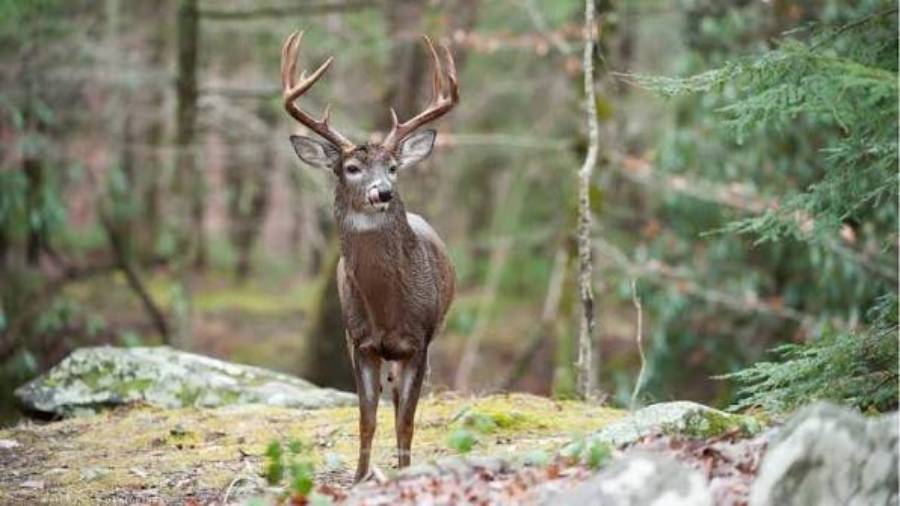
Hunting deer around mast crops starts with finding the food sources deer are actively using, not simply locating oak trees, acorns, or other mast-producing plants. Mast availability can influence where deer feed, which routes they use between feeding and bedding areas, and how long they remain in a particular part of their range. A productive mast area with fresh deer sign therefore provides more useful information than mast abundance alone.
Hard mast, including acorns, beechnuts, and chestnuts, and soft mast, including persimmons and apples, can create seasonal feeding opportunities for deer. However, mast production and availability vary between locations and over time. When mast is concentrated, deer may repeatedly use a limited number of productive feeding areas. When acorns or other mast foods are widespread, deer can disperse across a larger area, making individual feeding locations harder to identify.
The key is to connect active mast sources with fresh deer sign, travel routes, nearby bedding cover, wind conditions, and hunting pressure. This guide explains how mast crops affect deer movement, how to identify food sources deer are currently using, and how to evaluate hunting areas as mast availability changes throughout the season.
What Are Mast Crops and Why Do Deer Feed on Them?
Mast crops are the nuts and fruits produced by trees and woody plants that provide seasonal food for deer and other wildlife. Hunters generally divide mast into two categories: hard mast and soft mast. Hard mast includes acorns, beechnuts, and chestnuts, while soft mast includes fleshy fruits such as persimmons and apples. Both types can influence where deer feed, but their importance changes with local availability, habitat, and the time of year.
Hard mast is particularly relevant when hunting deer in forests containing mast-producing trees. Acorns fall beneath oak canopies and can create feeding opportunities within wooded cover rather than forcing deer to rely entirely on open food sources. This matters because a mast-producing area can alter the relationship between feeding areas, bedding cover, and the routes deer use between them.
Soft mast creates a different type of food source because fruits are often concentrated around individual trees or small groups of trees. A productive persimmon or apple tree can therefore create a localized feeding area when ripe fruit is available. However, finding fruit on the ground does not automatically mean deer are actively feeding there. Fresh tracks, droppings, disturbed ground, and other recent deer activity provide stronger evidence that a mast source is currently being used.
Mast should therefore be treated as part of a changing food network rather than a permanent deer destination. A mast-producing tree matters to a hunter when three conditions overlap: the food is currently available, deer prefer or accept that food, and deer can incorporate the location into their normal movement pattern. When one of those conditions changes, deer use of the area can change as well.
Which Mast Crops Do Deer Prefer?
Deer can feed on several mast crops, but the most valuable mast source for hunting is the one deer are actively selecting when other foods are also available. Acorns are a major hard-mast example, while beechnuts and chestnuts can also contribute where those trees occur. Soft-mast sources include persimmons, apples, and other locally available fruits. The exact food source that matters most therefore depends on what the habitat produces at that time.
Acorn-producing oaks deserve particular attention because even neighboring oak trees may not provide identical feeding opportunities. Species, individual tree productivity, acorn condition, and the amount of mast available elsewhere can influence where deer spend their feeding time. For this reason, locating an oak stand is only the first step. The hunter still needs to determine which parts of that stand show current feeding activity.
The difference between mast availability and deer preference becomes especially important during a strong mast year. Hundreds of trees may produce food, yet deer do not have to use every tree equally. A smaller area with fresh tracks, droppings, recently disturbed leaf litter, and repeated feeding evidence provides a stronger hunting signal than a larger area containing abundant acorns but little recent deer activity.
The opposite pattern can occur when mast production is limited. A small number of productive trees can become proportionally more important because fewer mast sources are available across the surrounding habitat. Deer may also shift toward alternative foods as individual mast sources decline. Hunters should therefore reassess mast areas throughout the season instead of assuming that the food source deer used earlier will remain the preferred source later.
How Do Mast Crops Affect Deer Movement?
Mast crops affect deer movement by changing where concentrated food is available within a deer’s range. When acorns, beechnuts, chestnuts, persimmons, or other mast foods become available, deer can adjust feeding locations and the travel routes connecting those locations with bedding cover. The strength of that change depends on how much mast is available and how widely it is distributed across the habitat.
A heavy mast crop can spread deer activity across a larger area because deer have more feeding options. This effect is especially important when acorns are abundant throughout an oak-dominated forest. Instead of repeatedly traveling to one obvious food source, deer can feed beneath numerous productive trees. As a result, a location that produced consistent deer activity before the mast drop may become less predictable once food becomes widely available.
A limited mast crop can create the opposite pattern. When only a small number of trees produce substantial amounts of usable mast, those trees can become relatively important feeding locations. Deer still have other food choices, but concentrated mast provides a reason to revisit a smaller part of the landscape. Fresh sign around a productive tree is therefore more informative than simply knowing that the surrounding forest contains oaks.
Mast availability can also change during the season. A feeding area can lose value after deer and other wildlife consume much of the available mast, while another area may become more attractive as different food sources become available. Deer movement around mast is dynamic rather than fixed, so scouting information should be updated as food conditions change.
How Do You Find Mast Crops That Deer Are Actively Using?
Find mast crops deer are actively using by looking for fresh feeding evidence and deer sign around available food. The presence of acorns or fruit confirms that food exists, but it does not confirm current deer activity. Tracks, fresh droppings, disturbed leaf litter, trails entering the feeding area, and evidence that mast has recently been consumed provide stronger indicators.
Start by comparing several mast-producing areas rather than stopping at the first productive tree. One oak may have abundant acorns underneath it but little deer sign, while another location may contain less visible mast and substantially more fresh activity. This comparison helps separate food availability from actual use. The objective is to identify where available mast and recent deer activity overlap.
The age of the sign matters. Fresh tracks with defined edges, recent droppings, newly disturbed leaves, and repeatedly used trails indicate current activity more effectively than old sign left from an earlier feeding pattern. Rubs and scrapes can provide additional context where present, but they should not replace direct evidence that deer are currently using the mast source for feeding.
Surrounding habitat provides another layer of evidence. A mast source connected to bedding cover by established travel routes can fit naturally into daily deer movement, while an isolated food source may receive different levels of use. Hunters should therefore examine the mast itself, fresh deer sign, nearby cover, and the routes connecting these habitat features rather than evaluating each element independently.
Repeated scouting can reveal when a productive location begins to decline. If fresh sign decreases while mast remains visible, deer may have shifted to another food source or changed their movement pattern. The best mast area is not necessarily the area with the most food; it is the area showing the strongest combination of usable mast and current deer activity.
Where Should You Hunt Deer Around Mast Crops?
The most useful hunting areas around mast crops are locations where active feeding areas connect with deer travel routes and nearby bedding cover. Finding a productive oak, persimmon tree, or other mast source establishes that food is available, but the surrounding habitat determines how deer can incorporate that food into their movement. A mast source with fresh sign and identifiable travel routes provides more information than an isolated tree with abundant food but little evidence of deer use.
Start by examining how deer enter and leave the feeding area. Trails connecting mast-producing trees with thicker cover can indicate repeated movement between feeding and bedding locations. Fresh tracks and droppings along these routes strengthen the evidence that the connection is currently active. When several trails exist, differences in track frequency, fresh sign, and surrounding cover can help distinguish heavily used routes from occasional travel paths.
Nearby bedding cover also affects the value of a mast source. Deer using mast within or close to secure cover may not need to travel as far as deer feeding at more exposed food sources. This relationship is particularly important when mast is available inside wooded habitat because feeding and security cover can occur relatively close together. Hunters should therefore evaluate the entire habitat connection rather than treating the mast tree as an independent destination.
Should You Focus on the Mast Source or Deer Travel Routes?
Focus on the location showing the clearest combination of current feeding activity and repeatable deer movement rather than automatically prioritizing either the mast source or a travel route. Direct activity around the mast source confirms feeding use, while an active route provides evidence of how deer reach or leave that food. The stronger option depends on how deer are using the surrounding habitat.
Concentrated mast can produce recognizable feeding activity around a limited group of trees. In this situation, fresh sign beneath and around those trees can make the feeding area itself especially informative. Widespread mast creates a different pattern because deer can feed across numerous locations, reducing the importance of any single tree. Travel routes associated with bedding cover can then provide additional context for narrowing the area.
The relationship can also change as mast is consumed. A trail that was heavily used when a nearby oak was dropping acorns may lose activity after that food source declines. Fresh sign should therefore take priority over historical assumptions about where deer traveled earlier in the season.
How Does Wind Direction Affect Hunting Around Mast Crops?
Wind direction affects how a hunter should evaluate access and position around an active mast area because deer rely heavily on scent to detect potential danger. A location with abundant mast and fresh deer activity can lose practical value when the prevailing wind carries human scent toward the area deer are expected to use.
Wind should be considered together with the expected direction of deer movement. If fresh sign indicates that deer commonly approach a mast source from nearby cover, the relationship between that approach route and the current wind becomes relevant. The objective is not simply to identify which direction the wind is blowing, but to understand where scent is likely to travel relative to the feeding area and observed deer movement.
Terrain and vegetation can make this relationship less uniform at the local level. Ridges, valleys, openings, and changes in cover can influence airflow around a mast area, so a general wind direction does not always describe conditions at every point on the ground. Observations made at the actual location provide more useful information than relying only on a broad regional wind forecast.
Wind conditions can also change which mast location is practical to use on a particular day. When several active feeding areas exist, the food source with the greatest amount of mast is not automatically the best option. Fresh deer activity, predictable movement, surrounding cover, and favorable wind conditions should be evaluated together when choosing among mast areas.
How Does Hunting Pressure Change Deer Movement Around Mast Crops?
Hunting pressure can change when and how deer use mast-producing areas, even when the food source remains available. Repeated human activity around feeding locations, travel routes, and nearby cover can reduce the predictability of deer movement. As pressure increases, deer may alter their routes, spend more time in thicker cover, or use exposed feeding areas at different times.
The effect becomes important when hunters rely on sign collected earlier in the season. A mast area may contain tracks, droppings, trails, rubs, or other evidence of deer activity but receive less current use after repeated disturbance. This is why fresh sign has greater practical value than accumulated sign. A heavily marked location does not necessarily represent the deer movement occurring now.
Access can contribute to this pressure. Repeated movement through feeding areas or heavily used travel routes can introduce disturbance into the same locations hunters are attempting to monitor. The relationship is especially important around concentrated mast because a limited number of productive trees may create recognizable areas of deer activity. Disturbing those areas repeatedly can make previous observations less reliable.
Hunting pressure should therefore be treated as a variable rather than a permanent characteristic of a location. Compare current deer sign with earlier observations and reassess a mast area when fresh activity declines. If usable mast remains but recent tracks, droppings, or trail activity decrease, changing pressure is one factor to consider alongside alternative food sources and natural changes in mast availability.
When Is the Best Time to Hunt Deer Around Mast Crops?
The most relevant period for hunting around mast crops is when usable mast and fresh deer activity occur in the same location. Calendar dates alone are less informative because mast production, fruit maturity, acorn drop, and food depletion vary among tree species, individual trees, habitats, and years.
The beginning of mast availability can change existing feeding patterns. Deer that previously relied on other food sources can incorporate newly available acorns or soft mast into their movements. Hunters should watch for this transition by checking productive trees and comparing fresh sign around mast sources with activity around previously used feeding areas.
The useful period does not last indefinitely. Mast is consumed by deer and other wildlife, deteriorates, or becomes less competitive as other foods become available. Fresh sign can decline before every visible acorn or fruit disappears. The practical signal is therefore current deer use rather than the simple presence of mast on the ground.
Seasonal scouting should follow these changes. Checking the same mast locations at different points in the mast cycle can reveal whether deer activity is increasing, remaining stable, or shifting elsewhere. This approach prevents an earlier observation from becoming a fixed assumption about deer movement later in the season.
How Does the Acorn Drop Affect Deer Movement?
The acorn drop can shift deer feeding activity toward productive oak areas by introducing a food source within wooded habitat. The size and distribution of that shift depend on where acorns are falling relative to existing bedding areas, travel routes, competing foods, and other productive oak trees.
A concentrated acorn drop can make a relatively small area more significant when surrounding oaks produce little mast. Fresh tracks, droppings, disturbed leaves, and feeding evidence beneath productive trees can reveal whether deer have incorporated the location into their current movement. In this situation, individual productive trees can provide useful clues for narrowing a larger hunting area.
A widespread acorn drop produces a different problem. Deer may have access to food across much of the woods, allowing feeding activity to become dispersed rather than concentrated around one obvious location. When this occurs, hunters need additional information from fresh sign, preferred feeding areas, nearby bedding cover, and active travel routes to distinguish one mast location from another.
The effect of the acorn drop also changes as the available crop is consumed. A productive oak is most relevant while deer are actively using the food beneath it. Once fresh activity declines, continuing to rely on that tree simply because it produced acorns earlier can lead to an outdated interpretation of deer movement.
How Do You Hunt Deer When Acorns Are Everywhere?
When acorns are everywhere, narrow the hunting area by identifying where fresh deer activity overlaps with preferred feeding locations, travel routes, and nearby cover. Finding oak trees alone provides little separation when dozens or hundreds of trees are dropping acorns. The objective shifts from finding available food to determining which parts of the mast-producing habitat deer are currently using most consistently.
Start by comparing deer sign beneath different groups of productive oaks. Fresh tracks, droppings, disturbed leaf litter, and established trails provide evidence that deer have recently used an area. One section of an oak ridge may contain abundant acorns with limited deer activity, while another section shows repeated feeding evidence. The second location provides a stronger signal even if both areas contain similar amounts of mast.
Habitat differences can further narrow the search. Deer do not select food independently of security cover and movement opportunities. Productive oaks located near bedding cover, along active travel routes, or within habitat deer already use can fit more naturally into existing movement patterns. An isolated concentration of acorns with weak connections to deer cover may receive different levels of activity.
Alternative food sources also need to be considered. Acorns may be widespread without being the only food available, and deer feeding patterns can change as other foods become more or less attractive. Comparing current activity around mast with sign around other food sources helps determine whether abundant acorns are actually controlling deer movement.
The key distinction is between food abundance and concentrated deer use. Widespread acorns increase the number of potential feeding locations, so hunters need stronger evidence before treating one oak area as more important than another. Fresh sign and repeated use provide that evidence.
What Are 5 Mistakes to Avoid When Hunting Deer Around Mast Crops?
The 5 mistakes to avoid when hunting deer around mast crops are treating every mast tree equally, relying on old deer sign, ignoring alternative foods, overlooking surrounding habitat, and assuming deer movement remains unchanged throughout the mast cycle. Each mistake disconnects the food source from one or more factors that determine how deer currently use the area.
1. Treating every mast-producing tree as equally important. Mast production does not automatically equal deer use. Two oak areas can contain acorns while showing very different levels of fresh activity. Compare productive trees and prioritize evidence of current feeding rather than assuming that every available mast source has the same value.
2. Relying on old deer sign. Tracks, droppings, trails, rubs, and other sign show that deer used an area, but their age determines how useful that information is for understanding current movement. A location containing substantial old sign can become less active after mast availability, alternative foods, or hunting pressure changes. Fresh activity should carry more weight than accumulated historical evidence.
3. Ignoring alternative food sources. Deer can shift between mast and other available foods as conditions change. A productive oak stand may lose feeding activity even while acorns remain on the ground. Monitoring other food sources helps explain these changes instead of incorrectly assuming that deer have simply disappeared from the surrounding habitat.
4. Overlooking travel routes and surrounding cover. A mast source exists within a larger habitat system. Bedding cover, terrain, vegetation, and established travel routes influence how deer reach and leave feeding areas. Evaluating the tree without evaluating these connections provides an incomplete picture of deer movement.
5. Assuming deer movement remains unchanged throughout the mast cycle. Mast availability changes from the beginning of the drop through depletion, and deer activity can change with it. Hunting pressure and competing food sources add further variation. A productive location identified earlier should therefore be reassessed using current mast conditions and fresh deer sign rather than treated as a fixed feeding area for the entire season.
Avoiding these 5 mistakes requires one consistent principle: base hunting-area decisions on current relationships between food, fresh deer activity, movement, and cover rather than on mast presence alone. This keeps the evaluation centered on what deer are doing now instead of what the habitat suggests they could be doing.
How Should You Scout Mast Crops Before Choosing a Deer Hunting Area?
Scout mast crops by identifying productive food sources first, checking them for fresh deer activity, tracing the routes connected to them, and evaluating the surrounding cover before choosing a hunting area. This sequence prevents a common scouting error: selecting a location because it contains abundant mast without confirming that deer are currently using it.
Begin by identifying which trees are actually producing usable mast. Check multiple locations because mast production can differ substantially across the same property or woodland. An oak stand containing numerous trees does not guarantee that every tree is producing the same amount of acorns. The first objective is therefore to separate productive mast areas from locations where the expected food is scarce or absent.
Next, determine whether deer are currently using those productive areas. Look for fresh tracks, droppings, disturbed leaf litter, feeding evidence, and trails associated with the mast source. Compare several locations rather than evaluating each one in isolation. A mast area showing repeated fresh activity provides stronger evidence than a location containing more food but little recent deer sign.
Trace active trails away from the feeding area to understand how the mast source connects with surrounding habitat. The objective is to identify relationships among feeding locations, travel routes, and secure cover rather than simply finding the largest concentration of mast. Fresh sign along these connections can indicate which routes are currently part of deer movement.
Finally, reassess the area as conditions change. A practical scouting sequence is identify mast → confirm usable food → find fresh deer sign → evaluate travel routes → examine surrounding cover → reassess current activity. Repeating this process during the mast cycle helps identify changes that a single scouting trip can miss.
Read more: How to Identify Community Scrapes: 7 Key Signs
Why Do Mast Crops Vary From Year to Year?
Mast production varies from year to year because trees do not produce identical quantities of nuts or fruit every season. Production can also differ among species, individual trees, and locations, creating changes in both the amount and distribution of food available to deer.
For hunters, the important consequence is that last year’s productive feeding area is not automatically productive this year. A group of oaks that previously supplied abundant acorns may provide less food during another season, while trees elsewhere in the habitat may become more relevant. Historical deer activity should therefore be treated as context rather than proof of current feeding behavior.
Variation also changes how concentrated the available food becomes. When relatively few trees produce mast, deer feeding activity may become more concentrated around the productive sources. When mast production is widespread, deer gain more feeding options and activity can become harder to narrow to a single location.
Annual scouting is therefore necessary even on familiar hunting ground. Current mast production and current deer sign provide stronger evidence than assuming previous seasonal patterns will repeat.
What Food Sources Do Deer Use When Mast Crops Are Limited?
Deer shift toward other available foods when mast crops become limited, so declining mast can change both feeding locations and movement patterns. The replacement food depends on the habitat, season, and foods available within the deer’s range rather than on one universal alternative.
Natural vegetation and other seasonal foods can become more relevant when acorns, beechnuts, persimmons, or other mast sources decline. Agricultural foods can also influence deer movement where cropland occurs within the surrounding landscape. The important hunting relationship is not simply which food deer can eat, but which available source is receiving current feeding activity.
This transition can explain why a previously active mast location suddenly shows fewer fresh tracks or droppings. Deer do not need to abandon the larger area for activity around one food source to decline. They may instead redirect part of their movement toward another feeding opportunity within the same range.
Hunters should respond by expanding scouting beyond the depleted mast source. Check nearby alternative foods for fresh sign and examine whether previously active travel routes have changed. Comparing activity among several food sources can reveal where feeding pressure has shifted.
Mast crops are most useful for locating deer when they are evaluated as one changing component of the broader food and habitat system. Following fresh deer activity as food availability changes provides a more reliable picture than continuing to focus on a mast source after deer have reduced their use of it.