
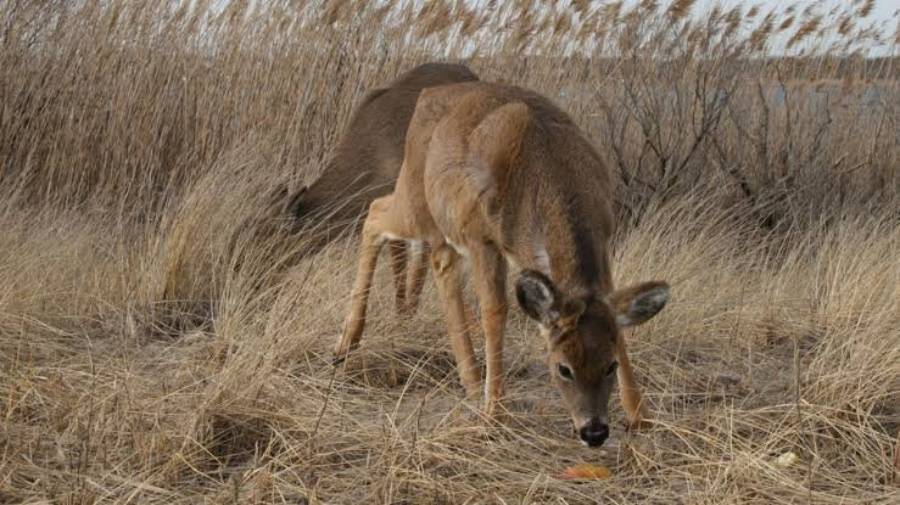
Yes, deer can smell gasoline. A deer’s sense of smell allows it to detect unfamiliar odors in its environment, including gasoline carried on the air, hunting clothes, boots, equipment, or vehicles. For hunters, however, detecting gasoline and being frightened by gasoline are two different responses. A deer that smells fuel does not automatically leave the area.
How a deer responds depends on the context surrounding the odor. Deer living near farms, roads, homes, or areas with regular vehicle traffic encounter fuel- and vehicle-related odors more frequently than deer in locations with little human activity. Wind direction, hunting pressure, the concentration of the odor, and whether gasoline scent occurs alongside human scent can also influence how significant that odor becomes during a hunt.
Gasoline is therefore best treated as an avoidable source of scent rather than a guaranteed deer repellent. Hunters should minimize fuel contamination on their clothes, boots, and equipment, while paying particular attention to wind direction and their access route. This article explains how deer detect gasoline, whether the smell can scare them away, how gasoline on hunting gear and vehicles affects scent exposure, and what hunters can do to reduce unnecessary gasoline odor in the woods.
Can Deer Smell Gasoline?
Yes, deer can smell gasoline when gasoline odor reaches their scenting range. Gasoline releases volatile compounds into the surrounding air, creating a strong odor that can travel away from the original source. A deer downwind of spilled fuel, contaminated hunting gear, or a gasoline-powered vehicle can therefore encounter that odor without being close enough to see its source.
A deer does not need to identify the odor specifically as “gasoline” for it to matter during a hunt. The important distinction is that the animal can detect an odor that differs from the normal scent profile of vegetation, soil, water, and other elements in its surroundings. Once detected, that odor becomes environmental information the deer can evaluate alongside human scent, movement, sound, and previous experiences in the area.
Smelling gasoline also does not prove that a deer will immediately recognize danger or leave the area. Odor detection and behavioral response are separate processes. A deer may detect a gasoline-related odor without showing an obvious alarm response, particularly in an environment where vehicles, farm equipment, or other gasoline-powered machines are regularly present. For hunters, this distinction matters because the practical question is not only whether deer can smell gasoline, but whether the odor contributes to a scent pattern the animal associates with human activity or danger.
How Far Away Can Deer Smell Gasoline?
There is no reliable fixed distance at which every deer can smell gasoline. The distance changes because scent does not spread evenly through the woods. Wind direction, wind speed, terrain, vegetation, temperature, atmospheric conditions, and the amount of gasoline present all affect where its odor travels.
Wind direction is especially important. A deer positioned downwind can receive odor carried directly from a hunter, vehicle, or fuel-contaminated object, while a deer at a similar distance upwind may receive little or none of that scent. Terrain and vegetation can further change the scent path by redirecting airflow and creating areas where odor accumulates, disperses, or moves inconsistently.
The gasoline source also affects scent exposure. A small amount transferred to a glove while fueling a vehicle is different from gasoline spilled directly onto boots or the ground. Hunters should therefore avoid treating statements such as “deer can smell gasoline from X yards away” as universal rules. Wind and scent conditions are more useful for evaluating gasoline exposure than a fixed distance.
Does the Smell of Gasoline Scare Deer Away?
Gasoline smell does not automatically scare every deer away. A deer can detect an odor without responding to it as an immediate threat. Its reaction depends partly on what that odor represents within the environment and whether similar odors have previously occurred alongside harmless or threatening human activity.
Deer living around farms, rural roads, homes, logging operations, or managed properties can encounter trucks, tractors, ATVs, lawn equipment, and other machines regularly. In those environments, fuel- and vehicle-related odors are not necessarily novel. Repeated exposure without a negative consequence can make the presence of an odor less informative than it would be in an area where mechanical and human activity is uncommon.
Hunting pressure can change the significance of gasoline-related odors because deer can encounter them as part of a larger pattern of human disturbance. A vehicle arriving, doors closing, hunters walking from a parking location, human scent appearing along an access trail, and hunting activity occurring afterward provide more information than gasoline odor alone. The combination of cues can therefore be more relevant to a hunter than one isolated smell.
This is why gasoline should not be treated as either a guaranteed deer repellent or a harmless scent. Hunters gain little by introducing an unnecessary foreign odor into their hunting area. At the same time, attempting to eliminate every trace of gasoline while ignoring wind direction, access routes, human scent, noise, and hunting pressure addresses only one part of the detection problem.
Can Deer Smell Gasoline on Your Clothes and Boots?
Yes, deer can smell gasoline carried on hunting clothes, boots, gloves, and other gear when the odor reaches them. Gasoline can contaminate hunting equipment when a hunter fuels a truck, ATV, UTV, generator, or other gasoline-powered equipment before entering the woods. Clothing and gear then become additional odor sources that travel with the hunter instead of remaining at the vehicle.
The location of the contamination matters because clothing and boots interact with the hunting environment differently. Gasoline odor on a jacket or gloves can contribute to airborne scent moving downwind from the hunter. Contaminated boots can contact soil, leaves, grass, and vegetation along an access route. A hunter can therefore introduce gasoline odor both while moving toward a stand and while remaining stationary at the hunting location.
Hunters should avoid handling gasoline while wearing hunting clothes whenever practical. Fueling a vehicle before putting on hunting clothing, keeping hunting gear separate from fuel containers, and changing contaminated gloves or clothing remove avoidable odor sources. These actions do not make a hunter scent-free; human skin, breath, clothing, equipment, and movement still contribute odors to the surrounding environment. Their purpose is to avoid adding a strong foreign odor unnecessarily.
Gasoline contamination should also be considered alongside wind direction rather than treated as an isolated scent-control problem. Clean hunting clothes offer limited protection when the hunter is positioned upwind and the prevailing air movement carries human odor directly toward deer. Reducing gasoline contamination helps control one scent source, while wind management controls where the hunter’s combined scent travels.
Can Gasoline on Hunting Boots Leave a Scent Trail?
Gasoline-contaminated hunting boots can carry odor along the hunter’s access route. Boots repeatedly contact leaves, vegetation, mud, and other surfaces while a hunter walks toward a stand or blind. If gasoline has spilled directly onto the footwear, the boots become a moving odor source along that route.
The practical concern is not that every deer crossing the trail will automatically flee. A deer still has to encounter the odor, and its response can depend on environmental conditions and its experience with human activity. The more useful hunting principle is to avoid creating unnecessary scent contamination on a route that deer may later cross.
Do not rely on a fixed rule for how long gasoline odor remains detectable on boots or along a trail. The amount spilled, boot material, surface contacted, airflow, temperature, and time all change how the odor dissipates. Changing or cleaning contaminated footwear before entering the hunting area is more reliable than assuming the gasoline smell has disappeared after a specific number of minutes or hours.
Can Deer Smell Gasoline From an ATV, UTV, or Truck?
Deer can detect odors associated with gasoline-powered ATVs, UTVs, and trucks, but vehicle scent is not limited to gasoline. A running vehicle introduces several scent sources into the hunting environment, including fuel-related odors, exhaust, heated mechanical components, and human odor associated with the driver and passengers.
This distinction matters because hunters sometimes describe the entire odor signature of a vehicle as “gas smell.” Gasoline stored in the fuel system and exhaust leaving an engine are not the same scent source. A hunter who parks an ATV near a stand may therefore introduce a combination of mechanical and human odors rather than a single gasoline odor.
A deer’s response to vehicle activity can also depend on context. Deer occupying agricultural land or properties with routine vehicle traffic may regularly encounter trucks, tractors, and ATVs without being pursued. Vehicle activity that occurs only when hunters enter a normally quiet area provides a different pattern of disturbance. The hunting context surrounding a vehicle can therefore matter as much as the presence of fuel odor itself.
For this reason, hunters should evaluate where and how they use vehicles rather than assuming an ATV or truck automatically ruins a hunting location. Parking position, wind direction, normal vehicle activity on the property, access route, noise, and the amount of human disturbance all contribute to the overall situation.
Does ATV Exhaust Scare Deer?
ATV exhaust can alert or disturb deer, but the smell of exhaust does not produce the same response from every deer in every hunting environment. Exhaust adds a noticeable artificial odor while an ATV also creates engine noise, movement, and human activity. These cues occur together, making it difficult to treat exhaust odor as the only factor affecting deer behavior.
Regular exposure provides important context. An ATV used routinely for farming, property maintenance, or other non-hunting activities can be part of the background disturbance deer experience on a property. An ATV entering a secluded hunting area shortly before a hunter appears creates a different sequence of cues.
Hunters should consequently treat ATV use as an access decision rather than only a scent-control decision. Reducing unnecessary ATV activity near bedding areas, travel routes, and stand locations limits multiple forms of disturbance at the same time, including odor, noise, movement, and human presence.
Does Wind Direction Affect Whether Deer Smell Gasoline?
Yes, wind direction strongly affects whether gasoline odor reaches a deer. Gasoline releases volatile compounds into the air, and moving air carries those odors away from their source. A deer positioned downwind of gasoline-contaminated clothing, boots, equipment, or a vehicle has a greater opportunity to encounter the odor than a deer positioned upwind of the same source.
Scent does not move through hunting terrain as a perfectly straight or uniform stream. Trees, hills, valleys, dense vegetation, openings, and changes in air temperature alter airflow. Wind can shift, swirl, rise, or fall as it moves across terrain. This means gasoline odor from a hunter or parked vehicle can reach locations that are not directly downwind according to a simple compass reading.
Thermals can also change where gasoline and human scent travel during a hunt. Air near the ground changes as the surrounding terrain heats and cools, producing vertical air movement that can influence scent distribution. Hunters operating in terrain where thermal movement is significant should therefore consider both prevailing wind and local air movement when choosing an access route or stand location.
Gasoline should not be managed separately from the hunter’s total scent profile. A hunter carrying gasoline odor can simultaneously release human body odor and scents from clothing, boots, food, equipment, and other materials. When the wind carries that combined odor toward a deer, removing only the gasoline component does not solve the larger scent problem. For hunting strategy, controlling where scent travels is more important than trying to eliminate every individual odor.
How Can Hunters Reduce Gasoline Scent Before Deer Hunting?
Hunters can reduce gasoline scent by preventing fuel from contacting hunting clothes, boots, gloves, and equipment before entering the hunting area. Prevention is more practical than attempting to cover gasoline with another odor after contamination has occurred. Hunters who need to fuel a truck, ATV, UTV, or other equipment should do so before putting on hunting clothing when practical.
Keep hunting gear separate from gasoline containers and fuel-handling equipment during transportation. A jacket, backpack, pair of gloves, or boots stored next to a leaking fuel container can acquire an unnecessary odor before the hunt begins. Separating hunting equipment from fuel sources reduces this contamination without requiring complicated scent-control procedures.
Change contaminated clothing or gloves when gasoline has been spilled directly on them. Adding cover scent does not remove the gasoline that remains on the material. The same principle applies to boots and equipment: removing or cleaning the source of contamination is preferable to adding another strong odor in an attempt to conceal it.
Vehicle placement also matters. Parking a gasoline-powered vehicle immediately upwind of a hunting location creates an avoidable scent source that can be carried toward the area being hunted. Hunters should consider the expected deer approach, prevailing wind, access route, and parking location together rather than making each decision independently.
Scent-control products should not be treated as a guarantee that deer cannot detect a hunter. Their practical role is secondary to preventing unnecessary contamination and managing airflow. The priority is to keep the hunter’s scent cone away from expected deer movement, then reduce avoidable odors such as gasoline where practical.
What Should You Do If You Spill Gasoline Before a Hunt?
Remove gasoline-contaminated hunting gear before entering the hunting area when a spill is substantial enough to leave a noticeable odor. The appropriate response depends on what the gasoline contacted. Clothing, gloves, boots, skin, and equipment create different contamination problems, but continuing the hunt with fuel-soaked material introduces an unnecessary odor source.
Change affected clothing or gloves when clean replacements are available. For contaminated boots or reusable equipment, clean them appropriately and allow the gasoline odor to dissipate rather than immediately applying another scent over it. If gasoline contacts the skin, wash the affected area appropriately before handling hunting clothing and equipment.
A gasoline spill on the ground near a hunting location presents a different problem because the hunter cannot simply remove the contaminated surface. Avoid adding more fuel or attempting to mask the spill with another strong substance. Adjusting the access route or hunting position may reduce the chance that airflow carries the odor toward the area where deer are expected.
Do not use a fixed waiting period to decide when a gasoline spill is no longer detectable to deer. Odor persistence changes with the amount spilled, material contaminated, temperature, airflow, and surrounding environment. A practical hunting decision should therefore be based on removing the contamination where possible and managing wind exposure rather than assuming gasoline becomes irrelevant after a predetermined number of hours.
Can Deer Smell Diesel Fuel?
Yes, deer can smell diesel fuel when its odor reaches them. Like gasoline, diesel produces a distinct foreign odor that can enter a deer’s scent environment from trucks, tractors, generators, farm equipment, or contaminated hunting gear. For hunters, the important issue is not whether deer can distinguish diesel by name, but whether they detect the odor and associate the surrounding activity with human presence or danger.
A deer’s response to diesel odor depends on context. Deer living around agricultural properties can regularly encounter diesel-powered tractors, trucks, and other machinery. In that environment, diesel odor can occur without hunters being present. A deer occupying remote habitat with little vehicle or machinery activity encounters a different scent environment, so the same foreign odor appears within a different behavioral context.
Hunters should not assume that diesel is safer than gasoline simply because deer in agricultural areas encounter it regularly. Vehicle movement, exhaust, noise, human scent, and hunting pressure can accompany both fuels. The practical strategy remains the same: avoid unnecessary fuel contamination on hunting gear and manage the direction in which the combined scent travels.
There is also no reliable basis for assigning gasoline and diesel universal detection distances for deer. Scent movement depends on variables such as wind, terrain, odor concentration, temperature, and the location of the source. For hunting decisions, these environmental conditions provide more useful information than claims that deer can smell one fuel from a specific number of yards away.
Read more: Do Deer Avoid Cattle? What Hunters Should Know
Can Deer Smell Human Scent Through Gasoline?
Gasoline should not be relied on to hide human scent from deer. A strong gasoline smell does not remove the odor compounds coming from a hunter’s body, breath, clothing, boots, and equipment. Adding gasoline therefore introduces another odor into the environment rather than making the hunter scent-free.
This distinction is important because masking and eliminating an odor are different processes. A hunter may perceive gasoline as overwhelmingly strong and conclude that it covers weaker smells. That does not establish that a deer receives no olfactory information from the other odors present in the same air. From a hunting perspective, deliberately introducing gasoline as a cover scent creates an unnecessary variable without solving the underlying problem of human scent moving toward deer.
Human scent can also be deposited along an access route independently of gasoline. Boots contact vegetation and soil, clothing brushes against plants, and the hunter continuously releases airborne odor while walking or sitting. Even if gasoline is present, these sources of human-associated scent have not been physically removed.
Hunters should reduce human and gasoline contamination separately instead of using one odor to cover the other. Clean hunting gear, careful access, limited unnecessary contact with vegetation, and appropriate wind positioning address the sources and movement of scent more directly than deliberately adding a strong fuel odor.
Should Hunters Worry More About Gasoline or Wind Direction?
Hunters should prioritize wind direction over trying to eliminate every trace of gasoline odor. Gasoline contamination is worth preventing, but wind determines whether the hunter’s broader scent profile is carried toward the location where deer are expected to travel, feed, bed, or approach a stand.
Consider two situations. A hunter may wear clean clothing with no noticeable gasoline contamination but sit upwind of an approaching deer. The wind can still carry human odor toward that animal. Another hunter may have encountered minor vehicle-related odor but remain positioned so the prevailing airflow carries scent away from the expected deer movement. The two situations demonstrate why scent direction is a more fundamental hunting variable than focusing on one odor alone.
This does not mean gasoline scent should be ignored. The practical approach is to manage scent in order of importance: control wind exposure first, choose a low-impact access route, minimize unnecessary human disturbance, and prevent avoidable gasoline contamination. These measures address both how much foreign scent the hunter introduces and where that scent travels.
Gasoline is ultimately one component of the larger scent environment surrounding a hunt. Deer can detect gasoline, but detection alone does not establish that gasoline will scare them away. A hunter gains a more useful advantage by understanding the relationship between odor, wind, human activity, vehicle use, and deer behavior than by treating gasoline as either an automatic deer repellent or a reliable cover scent.