
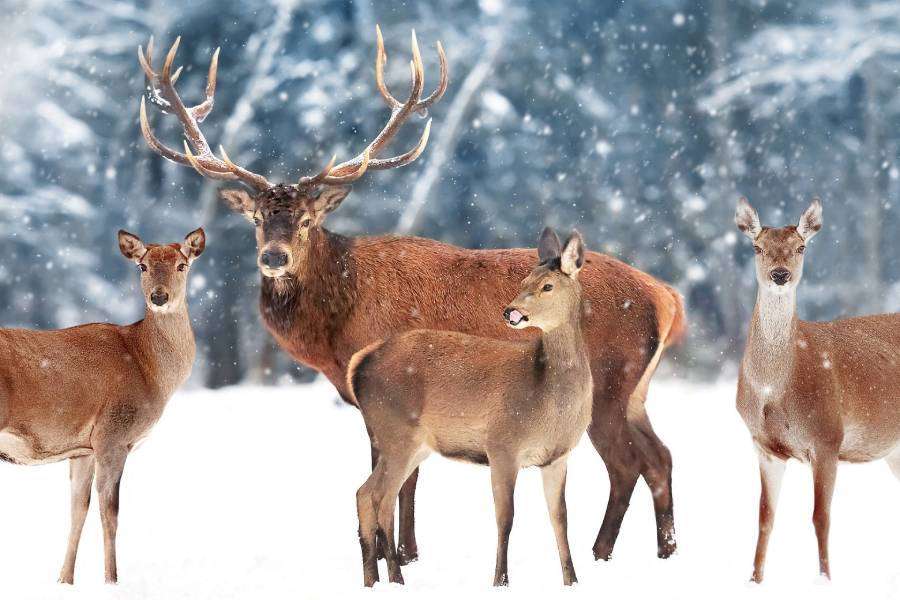
Some deer migrate in winter, but not every deer population does. Winter migration is a seasonal movement from one geographic range to another, typically driven by changes in snow conditions, food availability, elevation, and suitable winter habitat. Migratory deer may leave their summer or fall range and travel to a separate winter range, while resident deer remain within the same general home range and adjust where they feed, bed, and seek cover.
Migration patterns also differ between deer species and populations. Mule deer commonly use distinct seasonal ranges in landscapes where elevation and winter conditions change substantially. White-tailed deer populations can either migrate or remain resident depending on local climate, habitat, and winter severity. Therefore, seeing deer move to a different feeding area or bedding location does not necessarily mean they are migrating.
For hunters, this distinction matters because winter migration can change where deer are concentrated compared with earlier in the season. This article explains why deer migrate in winter, when migration occurs, where deer go, how far they travel, how snow affects their movement, and how hunters can recognize a shift toward winter range.
Do Deer Migrate in Winter?
Some deer migrate in winter, while others remain within the same general home range throughout the year. Whether deer migrate depends on the population, species, landscape, and seasonal conditions. Migration occurs when deer make a recurring seasonal movement between geographically distinct ranges, such as moving from a summer range to a winter range and returning when conditions change.
This distinction matters because not every change in deer location is migration. Resident deer can shift their bedding areas, feeding locations, travel routes, and cover without leaving their established home range. A buck moving from an exposed feeding area to dense cover after snowfall, for example, is showing a change in habitat use rather than necessarily making a seasonal migration.
Migratory deer make a more substantial transition between seasonal ranges. These movements can involve migration corridors that connect summer and winter habitat. The behavior allows deer to use different parts of a landscape as environmental conditions change throughout the year. As winter approaches, habitat that supported deer during summer or early fall may become less suitable because snow changes access to forage and increases the energetic cost of movement.
Migration behavior also varies among deer populations. Two populations of the same species do not necessarily respond to winter in the same way. Deer living where seasonal conditions differ sharply can have stronger reasons to move between seasonal ranges, while deer living in less variable environments may remain resident. Hunters therefore should not assume that every deer leaves its fall range simply because winter arrives.
Why Do Deer Migrate in Winter?
Deer migrate in winter primarily to reach seasonal habitat where they can obtain food and conserve energy under worsening winter conditions. Snow conditions, food availability, and habitat characteristics work together to influence whether remaining in a summer or fall range becomes energetically expensive.
Snow is important because deeper snow changes how efficiently deer can travel and reach food. Moving through accumulating snow requires more effort than traveling across bare ground or shallow snow. Snow can also cover vegetation that was readily available earlier in the season. As these conditions develop, a winter range with more accessible forage, suitable terrain, or protective cover can provide an energetic advantage.
Food availability provides another reason for seasonal movement. Deer must continue obtaining enough energy while winter simultaneously increases the cost of maintaining body condition. Seasonal changes can reduce the accessibility or distribution of forage in one part of the landscape. Deer that migrate can shift toward habitat where winter food remains more accessible rather than continuing to use areas that were productive during summer and fall.
Suitable winter habitat also helps deer manage energy expenditure. The objective of winter migration is not simply to reach a warmer location. Deer benefit from reaching habitat where the combined effects of snow, forage, terrain, and cover create more favorable winter conditions. This explains why temperature alone should not be treated as a universal migration trigger. A cold day does not automatically mean deer will begin migrating.
For hunters, these mechanisms explain why earlier-season deer locations can become less productive as winter develops. A hunting area that contained deer during fall may lose activity when migratory animals begin transitioning toward winter range. Tracking changes in snow conditions, food accessibility, habitat use, and deer sign provides more useful information than assuming migration occurs on the same calendar date every year.
When Do Deer Migrate to Their Winter Range?
Deer migrate to their winter range when seasonal conditions make their current range less favorable than winter habitat. There is no single migration date that applies to every deer population. Timing varies according to location, elevation, deer population, snowfall, snow accumulation, food availability, and the severity of winter conditions.
Snowfall can influence migration timing, but the first snow does not automatically trigger deer migration. A light snowfall may change short-term feeding or travel behavior without causing deer to leave their seasonal range. More persistent conditions become important when accumulating snow increases the energy required for movement, restricts access to forage, or changes which parts of the landscape deer can use efficiently.
Deer can also begin seasonal migration before severe winter weather arrives. Migration is a recurring seasonal behavior in migratory populations rather than a simple reaction to one cold day or one snowstorm. For this reason, hunters should evaluate a sequence of changing conditions instead of treating a specific temperature or snowfall event as a universal signal that migration has started.
Migration timing can also differ among deer using the same broader landscape. Deer do not necessarily leave an area simultaneously, so the transition between seasonal ranges can occur progressively. For hunters, declining deer sign in an earlier-season area combined with increasing activity along routes leading toward winter habitat provides stronger evidence of seasonal movement than the calendar date alone.
Where Do Deer Go When They Migrate in Winter?
Migrating deer move from their summer or fall range to a winter range that provides more favorable conditions for conserving energy, accessing food, and surviving winter. The two seasonal ranges can be connected by migration corridors that deer use while moving between them.
The basic seasonal pattern can be represented as summer range → migration corridor → winter range. The winter destination depends on the landscape rather than a universal habitat type. Deer select areas where the combination of terrain, snow conditions, available forage, and cover provides better winter habitat than the range they leave behind.
In mountainous landscapes, winter migration can involve movement toward lower elevations. Lower terrain can provide different snow conditions and improve access to forage compared with higher-elevation seasonal ranges. However, deer do not always migrate downhill in winter. Elevation is one component of habitat selection, and the actual destination depends on the conditions available within a specific landscape.
Winter range also needs to support deer after migration ends. Suitable areas can combine accessible feeding habitat with cover and terrain that limit unnecessary energy expenditure. This is why hunters should identify winter habitat characteristics rather than simply searching at lower elevations. Two locations at similar elevations can provide very different combinations of snow, food, and cover.
The location of deer can therefore change substantially between early-season and winter hunting conditions. Areas containing abundant deer sign during summer or fall may become less productive after a migratory population shifts to its winter range. Recognizing the relationship between seasonal ranges and migration corridors helps hunters determine whether deer have disappeared from an area or have simply relocated to a different part of the landscape.
How Far Do Deer Migrate in Winter?
The distance deer migrate in winter varies by population and landscape, so there is no single migration distance that applies to all deer. Some seasonal movements occur between relatively close ranges, while other migratory populations travel much farther between summer and winter habitat. Migration distance depends on how seasonal resources, terrain, snow conditions, and suitable winter range are distributed across the landscape.
Migration distance should also be separated from normal daily movement. A deer traveling between a bedding area and a feeding area is making a daily movement within its range. A migratory deer makes a seasonal transition between geographically distinct ranges. This distinction prevents hunters from interpreting every long movement, track line, or change in deer activity as evidence of winter migration.
Landscape structure strongly influences how far migration needs to occur. When suitable winter habitat is located close to summer or fall range, deer do not need to travel a great distance to reach it. In landscapes where seasonal resources are separated by elevation, terrain, or extensive areas of unsuitable winter habitat, the route between seasonal ranges can be substantially longer. Migration corridors connect these seasonal ranges and can become important movement pathways during the transition.
For hunters, migration direction and destination are generally more useful than assuming deer must travel a particular number of miles. Knowing that a local population uses a distinct winter range can help explain why deer activity declines in an earlier-season hunting area. Specific migration distances should be based on tracking data for the species and population being hunted rather than a universal distance applied to all deer.
Do Whitetail Deer Migrate in Winter?
Some white-tailed deer migrate in winter, while other whitetail populations remain resident throughout the year. Winter migration in whitetails depends heavily on local environmental conditions, which means behavior observed in one region should not automatically be applied to deer in another.
Resident whitetails remain within the same general geographic range but can substantially change how they use that area during winter. They may concentrate around different food sources, use heavier cover, alter travel routes, or change bedding locations as seasonal conditions develop. These changes can make deer appear to have left an area even when they have only shifted their activity within the surrounding habitat.
Migratory whitetails make a more distinct seasonal movement toward winter range. This behavior becomes particularly relevant where winter conditions create a strong difference between seasonal habitats. Snow accumulation can restrict forage access and increase movement costs, while suitable winter habitat can offer a more favorable combination of food, terrain, and protective cover. Under those conditions, moving to a separate seasonal range provides an advantage over remaining in less suitable habitat.
This variation has an important hunting implication: hunters should determine whether the local whitetail population is migratory before using migration to predict winter deer locations. If deer are resident, scouting should focus on changes in habitat use within their existing range. If the population uses distinct seasonal ranges, hunters need to account for the transition toward winter habitat and the routes connecting those ranges.
The key distinction is therefore not simply whether whitetails move during winter. Virtually all active deer continue moving between resources. The important question is whether that movement represents a seasonal relocation to a separate winter range or a local adjustment within an existing home range.
Do Mule Deer Migrate in Winter?
Many mule deer populations migrate between seasonal ranges, including movement from summer range toward winter range as winter approaches. This seasonal behavior is especially relevant in landscapes where elevation, snowfall, forage, and habitat conditions differ substantially between summer and winter areas. However, migration patterns still vary by population, so every mule deer should not be assumed to follow the same route or travel the same distance.
Mule deer migration commonly connects distinct seasonal habitats through established migration corridors. Deer may spend warmer months in higher-elevation areas where forage is available, then transition toward winter ranges as seasonal conditions deteriorate. Winter range can provide a combination of shallower snow, accessible forage, suitable terrain, and cover that allows deer to reduce the amount of energy required to survive the colder months.
Elevation is important in many mule deer landscapes, but winter migration should not be reduced to the rule that mule deer simply move downhill when it gets cold. The destination is suitable winter habitat, not necessarily the lowest available elevation. Terrain, snow accumulation, forage distribution, and local habitat conditions determine which areas provide that habitat.
Mule deer can also use the same migration corridors across seasons, creating a connection between summer range, transitional habitat, and winter range. For hunters, understanding these seasonal ranges is more useful than assuming deer remain near locations where they were observed earlier in the year. A productive fall area can lose deer activity when animals transition toward winter habitat.
This makes local information especially important when hunting migratory mule deer. The relevant question is where a specific population spends winter and how it reaches that range. Migration patterns observed in another region may not predict deer movement in the area being hunted because seasonal ranges and environmental constraints differ between landscapes.
How Does Snow Affect Deer Movement in Winter?
Snow affects deer movement by changing travel difficulty, food accessibility, habitat use, and the energetic cost of moving across the landscape. The effect depends more on accumulated snow conditions than on the simple presence of snow. A light snowfall and persistent deep snow can therefore produce very different responses.
As snow becomes deeper, moving through it requires greater physical effort. Deer must expend more energy to cover the same distance, making efficient travel increasingly important when energy intake is also limited by winter food conditions. Deer can respond by changing travel routes, concentrating their activity in more favorable terrain, or reducing unnecessary movement.
Snow also changes access to food. Vegetation that deer could reach easily during fall can become covered or more difficult to obtain after snow accumulates. This creates a connection between snow depth, food accessibility, and habitat selection. An area does not become less valuable simply because it is cold; it becomes less useful when winter conditions make the resources deer need harder to obtain relative to other available habitat.
Travel routes can change for the same reason. Deer may favor routes that allow more efficient movement instead of crossing terrain where snow makes travel more demanding. Existing trails can remain useful, but hunters should not assume deer will continue using every fall trail after winter conditions change. Fresh tracks and current trail use provide stronger evidence than old sign from earlier in the season.
Snow can also contribute to larger seasonal movements when conditions continue to deteriorate. A single snowfall does not prove that deer are migrating, but persistent snow conditions can help make one seasonal range less favorable than another. Hunters should therefore evaluate snow together with current tracks, food sources, cover, terrain, and changes in deer activity. This approach helps distinguish a temporary response to weather from a broader migration toward winter range.
How Does Winter Migration Affect Where Hunters Find Deer?
Winter migration can move deer away from the areas hunters found productive earlier in the season and concentrate them closer to suitable winter range. Once a migratory population begins leaving its summer or fall range, previous observations, trail-camera activity, tracks, and feeding locations become less reliable indicators of where those deer are currently spending their time. Hunters need to identify the seasonal shift rather than assume deer have simply stopped moving.
The most useful way to interpret this change is through the sequence winter conditions → seasonal migration → winter range → current deer location. Snow accumulation, changing food availability, and winter habitat conditions can reduce the value of an earlier-season range. Deer then move through transitional areas or migration corridors toward habitat that provides a better combination of accessible food, cover, terrain, and manageable snow conditions.
This transition can create noticeable changes in deer distribution. An area with frequent deer activity earlier in the season can show fewer fresh tracks and less current trail use after migration begins. At the same time, suitable winter habitat can hold greater concentrations of deer. Hunters should therefore prioritize current sign over historical sign when determining whether deer are still using a location.
Migration corridors can also help explain deer locations during the transition. These routes connect seasonal ranges rather than serving the same function as daily trails between feeding and bedding areas. Deer observed along a migration corridor may be passing through instead of establishing regular daily patterns there. Identifying whether an area is summer range, transitional habitat, a migration corridor, or winter range provides more useful context than finding tracks alone.
What Signs Show Deer Have Moved Into Their Winter Range?
A combination of fresh deer sign, declining activity in earlier-season habitat, and increased deer use of suitable winter habitat can indicate that migration has occurred. One track or a single deer sighting is not sufficient evidence because resident deer also change locations and travel routes throughout winter.
Fresh tracks provide stronger information when their number and distribution change across the landscape. For example, consistently declining tracks in an earlier-season area combined with increasing fresh tracks closer to suitable winter habitat suggests a broader shift in deer distribution. Hunters should compare current sign between locations rather than rely on tracks that may have accumulated over different periods.
Changes in trail use provide another indicator. Trails that were active during fall may receive little fresh traffic, while routes leading toward winter habitat become more active. Concentrated tracks, bedding evidence, browsing, and repeated trail use within the destination area provide stronger evidence that deer are actually occupying winter range rather than merely traveling through it.
Hunters should interpret these signs together with environmental conditions. The strongest indication of winter migration is a consistent change in deer distribution that corresponds with changing seasonal habitat conditions. Snow, food accessibility, cover, terrain, fresh tracks, and current deer observations collectively provide more useful evidence than any single migration sign.
Read more: Can Deer Hear a Dog Whistle?
Do Deer Still Move Daily After Reaching Their Winter Range?
Deer continue to move daily after reaching their winter range. Migration changes the seasonal area deer occupy; it does not end their regular movement between bedding areas, feeding areas, cover, and travel routes. Once deer reach winter habitat, their daily movements occur primarily within that seasonal range.
Food remains one of the main reasons deer move during winter. Deer leave bedding or secure cover to reach available forage and then return to areas that provide protection and suitable resting conditions. The locations they use can differ from fall feeding areas because snow and seasonal changes alter which food sources remain accessible. As a result, hunters need to identify current winter food sources rather than assume deer will continue visiting locations used earlier in the year.
Bedding and cover also influence daily movement. Winter conditions increase the importance of conserving energy, so deer benefit from using habitat that allows them to meet feeding and security needs without unnecessary travel. Terrain and cover can affect the routes deer use between these resources. When several needs are available within a relatively compact area, deer do not need to make long daily movements simply because they migrated a greater distance to reach their winter range.
Weather can modify these patterns without causing another migration. Snowfall, wind, and changing temperatures can alter when and where deer travel within their winter habitat. Hunting pressure and other disturbances can also shift activity toward different trails, bedding locations, or periods of the day. These changes represent adjustments within the winter range rather than proof that deer have started another seasonal migration.
For hunters, fresh sign is therefore important even after the seasonal migration appears complete. Tracks, recently used trails, browsing, bedding evidence, and direct observations help identify how deer are currently using their winter range. Knowing the general wintering area narrows the search, while current deer sign reveals the smaller feeding, bedding, and travel areas being used within it.
What Is the Difference Between Deer Migration and Normal Deer Movement?
Deer migration is a seasonal movement between distinct geographic ranges, while normal deer movement occurs within the range deer currently occupy. Separating these behaviors is important because a deer can travel regularly throughout winter without actually migrating.
Migration connects seasonal habitats. A migratory deer may leave a summer or fall range, follow transitional habitat or a migration corridor, and establish itself within a winter range. When seasonal conditions change again, the deer can make a return movement toward another seasonal range. The defining feature is the seasonal transition between ranges, not simply the distance traveled during one movement.
Daily movement serves a different purpose. Deer regularly travel between feeding areas, bedding areas, cover, and other resources within their current range. A deer that travels from dense bedding cover to a winter food source each day is moving, but that repeated trip is not itself migration. This distinction remains true even when the daily route covers a substantial portion of the animal’s home range.
Displacement is another behavior hunters should distinguish from migration. Displacement occurs when deer change their location or habitat use in response to a disturbance or changing local conditions rather than making their normal seasonal transition between ranges. Hunting pressure, human activity, or a localized environmental change can cause deer to abandon one location and use another without establishing a separate seasonal migration pattern.
For hunters, the practical distinction is straightforward: migration changes which seasonal range should be searched, while daily movement determines where deer are likely to be found within that range. If a migratory population has shifted to winter habitat, continuing to scout only its earlier-season range can produce fewer encounters. Once the winter range is identified, current feeding areas, bedding cover, travel routes, and fresh deer sign become more useful for determining where deer are moving within that range.
This distinction also answers the original question precisely: some deer do migrate in winter, but winter movement does not always mean migration. Deer can migrate between seasonal ranges and then continue making normal daily movements throughout the winter.