
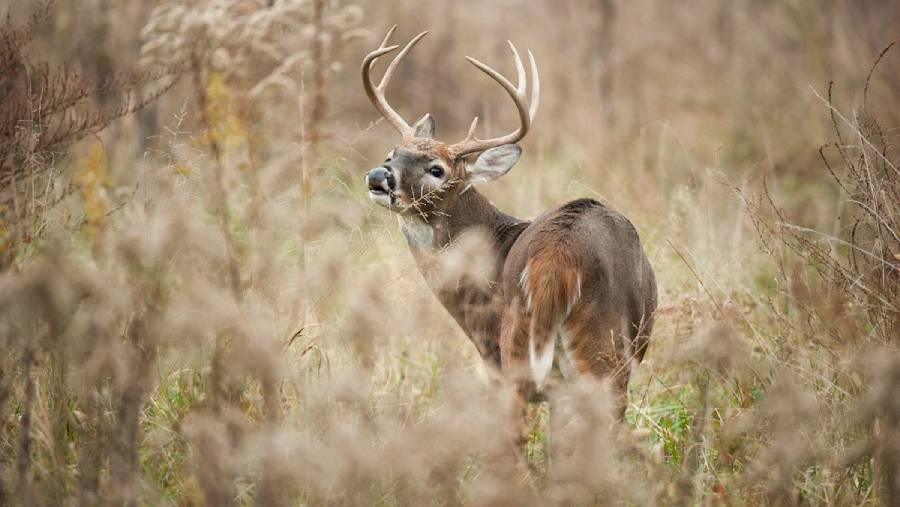
Yes, deer can smell blood, but detecting blood does not automatically cause a deer to identify danger or leave an area. Deer rely heavily on their sense of smell to collect information about their surroundings, and blood is one of many odors they can detect. A deer’s reaction depends on the source of the blood, other scents present nearby, wind direction, environmental conditions, and previous hunting pressure.
For hunters, the distinction between smelling blood and being spooked by blood is important. Blood from a wounded or harvested deer may occur alongside stronger indicators of hunting activity, including human body odor, disturbed vegetation, equipment scent, and repeated foot traffic. A deer that becomes alert or avoids a location after another deer has been shot therefore is not necessarily responding to the blood alone.
Understanding how deer interpret blood scent helps hunters evaluate what happens around a shot site, blood trail, or recently harvested deer. The key questions are whether blood scares deer, whether deer react differently to deer and human blood, how wind and rain influence scent detection, and whether deer will return to an area where blood has been left behind.
Can Deer Smell Blood?
Yes, deer can smell blood because their olfactory system detects odor molecules carried through the air. Blood produces an odor that can become part of the scent information available to a deer as it monitors its surroundings. However, detecting the odor and interpreting it as an immediate threat are separate processes. A deer may smell blood without automatically fleeing the area.
Blood also rarely exists as an isolated scent in a hunting environment. After a deer is shot, the area may contain blood along with body odor from the wounded deer, human scent from the hunter, disturbed soil, crushed vegetation, and odors transferred from boots or hunting equipment. A deer approaching the location can therefore encounter several scent cues at the same time. This makes it difficult to attribute a behavioral response solely to blood when other evidence of recent human activity is present.
The amount and movement of blood scent also depend on environmental conditions. Wind can transport airborne odor away from its source, while vegetation, terrain, moisture, and changing air currents affect how scent moves through an area. A deer positioned downwind of a blood source has a different opportunity to detect the odor than a deer approaching from a direction where the scent is not being carried toward it.
How Does a Deer’s Sense of Smell Detect Blood?
A deer detects blood when odor molecules associated with the blood reach its nasal passages and stimulate its olfactory system. Air movement is important because odor must travel from the source to the deer before it can be detected. Wind can create a scent plume extending downwind, while shifting air currents can change the direction and concentration of that plume.
Scent concentration decreases as odor disperses through the environment. Fresh blood concentrated around a shot site therefore creates a different scent situation from small, separated drops along a long blood trail. Vegetation, uneven terrain, temperature, and moisture can further change how odor is dispersed or retained around the source. For hunters, this means there is no single detection distance that applies to every blood trail or hunting area.
Most importantly, olfactory detection does not prove that a deer interprets blood itself as a warning signal. The deer may simultaneously detect blood, another deer, a hunter, disturbed vegetation, and other unfamiliar odors. Its eventual response depends on the combined information it receives rather than the mere presence of blood.
Does the Smell of Blood Scare Deer?
The smell of blood does not necessarily scare deer away because detecting blood is different from detecting an immediate threat. Blood can provide olfactory information about another animal or recent activity in an area, but its presence alone does not establish that a predator or hunter is currently nearby. A deer’s reaction must therefore be considered together with other scent and environmental cues.
A deer may become more alert when it encounters an unusual combination of odors. Alert behavior can include stopping, testing the air, changing direction, or spending more time evaluating the area. These responses should not automatically be classified as a flight response. Becoming alert, avoiding a specific path, and abandoning an area are different behavioral outcomes and may have different causes.
Human odor is especially important when evaluating what appears to be a reaction to blood at a hunting site. A hunter who approaches a shot location, follows a blood trail, retrieves a deer, or field dresses it can leave scent through sweat, skin, breath, footwear, clothing, and equipment. Foot traffic can also disturb leaves, soil, and vegetation. Another deer encountering the site is consequently exposed to more than the smell of blood.
For this reason, hunters should not assume that blood is what spooked a deer when blood and signs of human activity occur in the same location. The more useful distinction is between blood scent itself and the collection of odors and disturbances associated with a recent hunting event. This distinction becomes particularly important when evaluating whether deer blood or a blood trail will affect other deer using the same area.
Can Deer Smell Blood From Another Deer?
Yes, deer can smell blood from another deer, but the blood is only one part of the scent environment surrounding a wounded or harvested animal. A bleeding deer also leaves body odor, tracks, disturbed vegetation, and other scent cues as it moves. If a hunter follows the animal, human odor and ground disturbance can become part of the same scent trail.
This distinction matters because another deer does not encounter a blood trail under controlled conditions where blood is the only odor present. For example, a wounded deer that travels through bedding cover may leave drops of blood across leaves and vegetation while also physically disturbing the route. A hunter tracking that deer can add boot scent, skin odor, clothing odor, and additional disturbance. Another deer crossing the trail may detect several of these cues rather than blood alone.
The presence of another deer’s blood should therefore not be treated as automatic evidence of danger recognition. A deer can detect an odor without interpreting that odor as a signal that a hunter is nearby. Its response can also depend on its familiarity with the area and the other scents associated with the blood.
For hunters, this means a location where a deer was shot should be evaluated as a combination of scent and disturbance. Blood may contribute to what another deer detects, but human activity around the shot site can provide additional information that is directly associated with hunting pressure.
Does a Blood Trail Scare Other Deer Away?
A blood trail does not automatically scare other deer away, because a blood trail contains more than blood and does not represent a universal danger signal by itself. The behavioral response of another deer depends on the complete scent and disturbance pattern it encounters.
A short blood trail with limited human traffic creates a different situation from a trail that several people have repeatedly walked while searching for a wounded deer. In the second situation, the area contains more human scent, disturbed ground, and potentially unfamiliar equipment odors. If deer subsequently avoid the route, blood alone cannot be identified as the cause without separating these additional variables.
The location of the trail also matters. A blood trail passing through a frequently used bedding area, feeding area, or travel corridor intersects places where deer already have established movement patterns. Deer may continue using these areas when they do not perceive an immediate threat, while significant human disturbance can alter how or when they move through them.
Hunters should therefore treat human scent and physical disturbance as separate factors when assessing the effect of a blood trail. This provides a more useful explanation than assuming that every deer encountering blood will associate the smell with a wounded deer and leave the area.
Can Deer Smell Human Blood?
Yes, deer can detect the odor associated with human blood, but human blood should not be confused with the total human scent a hunter leaves behind. A hunter produces multiple odors through skin, sweat, breath, hair, clothing, footwear, and equipment. These odors can occur together, making it difficult to isolate blood as the scent responsible for a deer’s reaction.
For example, a hunter who cuts a hand while moving through cover may leave a small amount of blood on vegetation. The same hunter is also continuously leaving other human odors along the route. If a deer later becomes alert after crossing that path, the presence of blood does not demonstrate that human blood caused the response. The deer had access to a much broader collection of human scent cues.
The practical distinction is important because human presence is a more complete hunting-context signal than human blood alone. Hunters regularly enter stands, walk access routes, handle vegetation, touch equipment, and move through deer habitat without leaving blood. Deer can still encounter evidence of that activity through odor and physical disturbance.
Human blood should therefore be considered one component of an overall scent profile rather than a unique scent that determines deer behavior. For hunting purposes, controlling unnecessary human scent and reducing disturbance along access routes provides a more coherent framework for evaluating deer reactions than focusing exclusively on whether a small amount of human blood is present.
How Far Away Can Deer Smell Blood?
There is no scientifically established distance from which a deer can always smell blood. Blood-scent detection depends on whether enough odor reaches the deer, so a fixed claim such as a specific number of yards or miles would ignore the environmental conditions that control scent movement.
The 5 main factors are blood concentration, wind, humidity, terrain, and vegetation. A concentrated pool of fresh blood at a shot site creates a different odor source from individual drops spread across a long tracking route. Wind can carry odor away from either source, while terrain and vegetation can redirect or disrupt airflow. Moisture can also affect how scent behaves around soil, leaves, and other surfaces.
Distance alone is therefore a poor measure of whether a deer will detect blood. A deer relatively close to a blood source may receive little odor when the wind carries scent in the opposite direction. A deer farther away but positioned within the downwind scent stream may have a better opportunity to detect it. The relationship between the blood source, airflow, and the deer’s position matters more than distance by itself.
Hunters should be cautious with claims that deer can smell blood from a specific maximum distance. Deer have a highly developed reliance on scent, but that does not establish a universal range for blood detection. Without controlled evidence for a specific distance, the more accurate conclusion is that detection range changes with scent concentration and environmental conditions.
How Does Wind Affect a Deer’s Ability to Smell Blood?
Wind affects blood-scent detection by carrying airborne odor from the blood source toward or away from a deer. A deer positioned downwind has a greater opportunity to encounter scent carried from the source, while a deer upwind may receive little or none of the same airborne odor.
Scent does not necessarily travel as a uniform wall of odor. Air movement disperses scent as it travels, and changes in wind direction can shift where that scent moves. Terrain, trees, dense vegetation, and other physical features can further alter airflow. As a result, two deer at similar distances from the same blood source may encounter different scent concentrations.
Wind direction also makes it difficult to separate blood scent from other hunting-related odors. At a shot site, the same airflow that carries blood odor may carry human scent from a hunter who approached the location, tracked the animal, or handled the harvested deer. A downwind deer can therefore receive several odors associated with the event rather than an isolated blood scent.
For hunters, wind direction is more useful than a fixed blood-detection distance when evaluating whether another deer may encounter scent from a shot site or blood trail. Consider where the deer is expected to travel relative to both the blood source and the hunter’s route. This approach accounts for the way scent actually moves through a hunting area instead of assuming that blood creates an equal detection zone in every direction.
Does Rain Remove the Smell of Blood From a Hunting Area?
Rain can dilute, disperse, and wash away blood, but it does not guarantee that every odor associated with a blood trail or shot site disappears immediately. The effect depends on rainfall intensity, the amount of blood present, the surface it landed on, and how long the blood was exposed before the rain began.
Heavy rain can physically move blood from exposed surfaces such as leaves, grass, and bare ground. Small blood droplets are especially vulnerable because they contain less material and can be diluted quickly. A larger concentration of blood around a shot site may take longer to disperse, particularly when it has soaked into soil, leaf litter, or porous organic material.
Rain also affects more than blood. A tracking route contains disturbed vegetation, ground scent, human odor, and scent from the wounded deer. Rain can change these scent conditions at different rates. This is why the disappearance of visible blood does not prove that a hunting area has become completely free of odors associated with the event.
Hunters should therefore distinguish between losing a visible blood trail and eliminating blood-related scent. Rain may make tracking substantially harder by washing away visible evidence, but deer use olfactory information rather than relying on the visual blood trail a hunter sees. The two forms of detection should not be treated as equivalent.
How Long Can Deer Smell Blood After a Deer Has Been Shot?
There is no universal number of hours or days that blood remains detectable to deer after a deer has been shot. The available context does not support a reliable fixed duration, and giving one would create false precision. Blood scent changes as the blood dries, disperses, is diluted by precipitation, and interacts with the surface and surrounding environment.
There are 6 major variables to consider: the amount of blood, blood freshness, temperature, precipitation, airflow, and the surface receiving the blood. A large amount deposited in soil or leaf litter creates different conditions from several small drops on exposed vegetation. Warm, dry, windy conditions also affect the source differently from cool, wet, sheltered conditions.
Time since the shot is therefore only one part of the equation. A fresh blood source may produce a stronger odor near its origin, but the scent available to a deer still depends on airflow carrying odor toward the animal. As the blood ages, its odor profile changes rather than switching from detectable to undetectable at a precise point.
Human activity can persist as another variable after the blood itself has changed. Tracking, recovering, field dressing, or repeatedly visiting the location can introduce additional human odor and physical disturbance. A deer reacting to the location later may consequently be responding to a combination of cues rather than blood remaining from the original shot.
For hunting purposes, hunters should not use a fixed waiting period to assume that deer can no longer smell blood. Evaluate the amount of blood, weather conditions, wind, location, and human disturbance together. This provides a more defensible assessment than assuming that blood scent disappears after a predetermined number of hours.
Read more: Do Deer Recognize Individual Humans?
Will Deer Return to an Area After Smelling Blood?
Deer can return to an area after smelling blood because blood scent alone does not establish that the location remains dangerous. Whether deer resume using the area depends on the complete set of cues associated with the hunting event, including human scent, physical disturbance, hunting pressure, and the importance of the location to normal deer movement.
Human activity is an important variable after a deer has been shot. A hunter may walk to the shot site, follow the blood trail, return with another person, recover the animal, and move equipment through the area. Each trip can add human odor and disturb leaves, soil, and vegetation. If surviving deer temporarily change their movement afterward, these disturbances should be considered alongside the presence of blood.
Hunting pressure can also influence how quickly deer resume normal use of a location. A single blood trail with limited disturbance is different from repeated human entry into the same bedding area, feeding location, or travel corridor. Repeated disturbance provides deer with additional evidence of human activity and can affect how they use the location even after the original blood has dried or been washed away.
The function of the location matters as well. Deer regularly use areas that provide food, cover, bedding opportunities, or established travel routes. Blood appearing in one of these areas does not automatically eliminate the resources that made the location useful. The presence of blood should therefore not be treated as proof that deer will permanently abandon a hunting area.
Should Hunters Worry About Blood Scent Spooking Deer?
Hunters should consider blood scent, but they should not treat it as the only or necessarily the primary scent that can alert deer after a shot. There are 5 factors to evaluate together: blood scent, human odor, wind direction, physical disturbance, and hunting pressure. Focusing exclusively on blood ignores the other information deer can encounter at the same location.
Human odor deserves particular attention because recovering a deer normally requires hunters to enter the area where the animal was shot or traveled. Boots contact the ground, clothing touches vegetation, hands contact objects, and hunters may repeatedly cross deer travel routes while tracking. Wind can then carry these odors toward deer using nearby cover.
Hunters should also avoid assuming that every behavioral change observed after a harvest was caused by blood. A deer changing its route, becoming alert, or temporarily avoiding a location does not identify the specific scent that triggered the response. Blood, human odor, disturbed vegetation, noise, and repeated activity may all be present at the same time.
The practical priority is to minimize unnecessary human disturbance rather than trying to eliminate every trace of blood from the hunting area. Hunters can limit repeated trips through important deer cover, consider wind direction when entering and leaving the area, and avoid unnecessary movement through established travel routes. These actions address multiple hunting-related cues instead of concentrating on blood alone.
The central distinction remains simple: deer can smell blood, but smelling blood and being spooked by blood are not the same thing. Blood is one source of olfactory information within a larger scent environment. For hunters evaluating a shot site or blood trail, deer behavior is better understood by considering blood together with human scent, wind, environmental conditions, and the amount of hunting pressure placed on the area.