
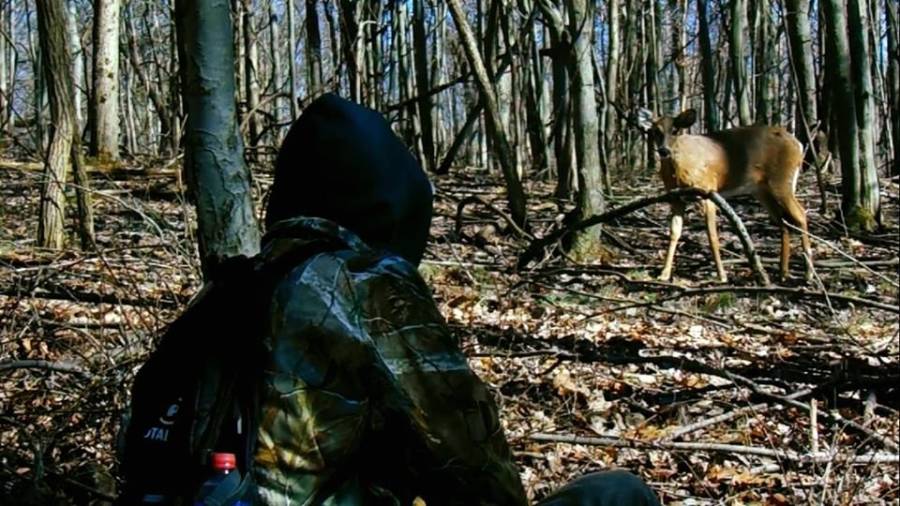
Deer can distinguish between individual humans when repeated encounters allow them to associate specific sensory cues with a person, but this does not mean they recognize human identity in the same way people recognize one another. Deer rely heavily on scent and can also use visual patterns, sounds, movement, location, and previous experiences to determine whether a human represents a threat. For hunters, this distinction matters because a deer does not necessarily need to identify a specific person to learn that the person’s scent, approach route, or repeated presence signals danger.
Deer recognition is closely connected to memory and associative learning. A deer that repeatedly encounters harmless human activity may become habituated and show a reduced flight response. In contrast, encounters that involve being startled, pursued, or otherwise threatened can create associations between human cues and risk. This means repeated hunting pressure can influence how deer respond to people as well as the locations and circumstances in which those encounters occur.
Understanding whether deer recognize individual humans therefore requires examining how deer detect people, what they remember from previous encounters, and how those memories affect future behavior. These mechanisms also explain why human scent, stand access, repeated disturbance, and predictable hunting patterns can influence deer behavior.
Do Deer Recognize Individual Humans?
Deer can distinguish between humans when they have enough sensory information and previous experience to associate a person or a recurring human pattern with a specific outcome. This ability is better understood as learned recognition rather than human-like identification. A deer does not need to understand who a person is by name or identity. It only needs to distinguish sensory cues associated with that person from other cues and remember whether previous encounters resulted in danger.
There are 3 separate processes involved: detection, discrimination, and recognition through memory. Detection occurs when a deer notices that a human is present. For example, smelling human odor downwind tells the deer that a person has been in the area, but it does not establish that the deer knows which person produced the scent. Discrimination requires the deer to respond differently to different sets of human cues. Recognition goes one step further because information from a current encounter must be connected with information retained from an earlier encounter.
This distinction is particularly important in hunting situations. A deer that changes its behavior after several encounters with a hunter may have learned a combination of human scent, approach direction, sounds, timing, and location. The behavioral response does not by itself prove that the deer recognizes the hunter as a unique individual. The deer may instead recognize a recurring pattern that has previously predicted danger.
Individual recognition should therefore not be treated as an all-or-nothing ability. Deer can learn from human encounters and use stored information to guide later behavior, while the evidence required to show true recognition of one particular human is more specific. For a hunter, however, the practical consequence can be similar: once reliable human cues become associated with danger, the deer has information it can use to avoid another encounter.
How Do Deer Recognize Individual Humans?
Deer can use at least 3 categories of sensory information to distinguish humans: smell, sight, and sound. These signals can operate together rather than independently. A scent encountered along the same access trail, familiar footsteps near a bedding area, and repeated human movement around the same stand create a richer pattern than any single cue alone.
Smell is especially relevant because deer can detect human odor without directly seeing the person who produced it. Human scent can originate from the body, breath, clothing, footwear, and objects a person touches. A hunter also leaves odor along an access route and around a hunting location. For recognition, however, an important distinction remains: detecting human odor does not automatically prove that a deer can identify the exact individual who left it. Scent can instead tell the animal that human activity occurred and provide information that becomes associated with previous disturbance.
Sight provides a second source of information. Deer can observe human movement, body position, direction of travel, and other visual patterns when visibility allows it. Repeated exposure can also change the meaning of those visual cues. A person performing predictable, non-threatening activity does not necessarily create the same learned response as a person repeatedly approaching or pursuing deer. This helps explain why the context surrounding human activity matters alongside the visual presence of a person.
Sound provides a third set of cues. Voices, footsteps, equipment noise, vehicle sounds, and repeated movement patterns can signal human presence before direct visual contact occurs. The value of these sounds increases through association. When a particular sound repeatedly precedes disturbance, a deer has an opportunity to learn the relationship between that auditory cue and the event that follows.
The strongest recognition pattern can therefore involve several cues simultaneously. For example, a deer may encounter human odor along an access trail, hear movement from the same direction, and then experience hunting pressure near a particular location. After repeated encounters, those cues can become associated with risk. The resulting avoidance behavior does not require the deer to think, “this is the same hunter.” Recognizing a reliable combination of scent, sound, movement, location, and previous danger can be sufficient to change its behavior.
Can Deer Remember Individual Humans?
Deer can remember information associated with previous human encounters and use that information to change their behavior during later encounters. The important mechanism is associative learning: a deer experiences a sensory cue, connects that cue with an outcome, and uses the learned association when it encounters the same or similar conditions again. For hunters, this means a deer does not need human-like recognition of a person’s identity to remember that a recurring human pattern has previously represented danger.
There are 3 elements involved in this process: a recognizable cue, a meaningful consequence, and a later encounter with the cue or context. A recognizable cue can include human scent, movement, sound, an access route, or activity around a particular location. The consequence may be being startled, approached, pursued, or otherwise disturbed. When similar circumstances occur again, information retained from the earlier encounter can contribute to an avoidance response.
Memory also helps explain why deer do not necessarily respond identically to every person they encounter. Repeated human activity that produces no negative consequence can create a different association from repeated encounters involving hunting pressure. A deer regularly exposed to predictable, non-threatening human activity may learn that the activity presents relatively little immediate danger. A deer repeatedly disturbed around a hunting location has a different history from which to make behavioral decisions.
However, remembering a human encounter is not the same as proving that a deer remembers the exact identity of an individual human. Observing a deer avoid a hunter after an earlier encounter demonstrates that the animal may remember cues, circumstances, or consequences associated with the event. It does not establish which individual cue caused the recognition. The deer could be responding to the person’s odor, the location, the approach pattern, or several signals combined.
For hunting, this distinction does not eliminate the practical importance of deer memory. A mature deer that survives repeated encounters has opportunities to learn which patterns precede danger. Consistent human activity can therefore become information the animal uses during future movement and risk assessment.
Do Deer Remember Humans Who Have Frightened Them?
Deer can remember threatening human encounters and associate elements of those encounters with future risk. Being frightened creates a meaningful consequence, which gives the animal a reason to respond differently when it later detects cues resembling those present during the original disturbance.
A deer that is spooked near a tree stand, for example, receives more information than simply “a human was nearby.” The encounter may include human odor, footsteps, movement, the direction of approach, the location, and the time at which the disturbance occurred. These cues form the context surrounding the event. A later encounter with one or several of the same cues can trigger increased vigilance or avoidance without requiring the deer to see the same hunter again.
Location can become particularly important after a negative encounter. A hunter may assume that avoiding direct visual contact prevents a deer from learning anything about the encounter. In reality, the deer can associate disturbance with environmental context as well as with the person who caused it. Repeatedly entering a bedding area from the same direction, walking the same access trail, or producing human odor near the same stand can create predictable patterns associated with hunting pressure.
The intensity and repetition of encounters also matter. One disturbance and repeated disturbances do not provide the same learning history. Repeated encounters give a deer additional opportunities to connect recurring cues with negative outcomes. As the pattern becomes more predictable, avoiding the situation can become an effective behavioral response.
This is why the question “Will this deer remember me?” is more useful for hunters when reframed as “What information from this encounter can the deer remember and encounter again?” The relevant information may include the hunter, but it can also include scent, sounds, access routes, locations, and patterns of disturbance. Deer do not need to identify a hunter in a human-like sense for a previous encounter to influence how they behave the next time that hunter enters the area.
Can Deer Recognize Individual Hunters?
Deer can learn to distinguish recurring cues associated with individual hunters, but this does not prove that they identify a hunter as a unique person in the human sense. For hunting purposes, the more important ability is threat recognition. A deer can associate a particular combination of scent, movement, sound, location, and repeated disturbance with danger and respond differently when that combination appears again.
Deer do not necessarily respond to every human in the same way. A person involved in routine, non-threatening activity can create a different behavioral association from a hunter who repeatedly enters cover, approaches bedding areas, or causes deer to flee. The difference comes from the history and consequences of the encounters, not necessarily from the deer understanding categories such as “hunter,” “farmer,” “hiker,” or “landowner.”
This distinction helps explain why deer can appear tolerant of people in one context while becoming highly alert to human activity in another. A deer may regularly observe people around houses, roads, agricultural areas, or other predictable locations without experiencing an immediate threat. That repeated exposure can reduce the importance of those specific human cues. Hunting encounters create a different learning opportunity because human presence can be followed by disturbance or pursuit.
Repeated encounters make these associations more useful. Consider a hunter who repeatedly enters the same property from one trail, walks toward the same stand, and leaves human odor along the route. Deer in that area receive a recurring combination of location, scent, timing, sound, and movement. If those cues repeatedly coincide with threatening encounters, the pattern itself can become a warning signal.
For this reason, apparent recognition of a specific hunter should be interpreted carefully. A deer avoiding one hunter may be distinguishing something specific about that person’s sensory signature, but it may also be reacting to a familiar access pattern or location associated with previous danger. Both mechanisms can produce behavior that looks like individual recognition to the hunter observing it.
The practical result remains significant. A deer does not need to know exactly who a hunter is to learn how that hunter behaves. Predictable human behavior supplies repeatable information, and repeatable information gives deer an opportunity to adjust their behavior.
Does Human Scent Help Deer Recognize Hunters?
Human scent helps deer detect hunters and can become part of a learned pattern associated with hunting pressure. Smell is especially important because scent can remain in an area after the hunter has moved away, allowing a deer to detect evidence of human activity without seeing or hearing the person responsible.
A hunter introduces several sources of odor into an environment. These include body odor, breath, clothing, footwear, and scent transferred to vegetation or objects through physical contact. Walking an access route also creates a scent trail. A deer crossing that trail later can therefore encounter information about human presence even when no direct encounter occurs.
However, detecting human scent and recognizing an individual hunter by scent are two different claims. The first requires the deer to determine that odor associated with a human is present. The second requires it to discriminate that person’s odor from the odors of other humans and connect the individual scent with previous encounters. Evidence that deer readily respond to human odor should not automatically be treated as evidence that they identify every person by a unique scent signature.
Scent also operates alongside environmental context. For example, human odor detected near a frequently hunted stand can carry different behavioral significance from human odor encountered around a location where people regularly perform non-threatening activities. Previous experience determines whether the cue has been associated with danger. The meaning of the scent therefore depends partly on what happened when the deer encountered similar human activity before.
Wind direction affects this process because airborne odor must reach the deer before it can provide information. Ground scent creates another pathway because odor deposited along an entry or exit route can remain available after the hunter passes. This is why reducing odor alone does not make a hunter functionally invisible. Movement, noise, access patterns, and disturbance can continue to provide information even when efforts are made to reduce scent.
For hunters, scent control is therefore better understood as reducing one category of detectable information rather than eliminating a deer’s ability to recognize hunting pressure. A hunter who minimizes odor but repeatedly approaches the same stand in a predictable way can still create recognizable patterns through other cues. Managing human intrusion requires considering the complete encounter rather than scent in isolation.
Does Hunting Pressure Change How Deer Respond to Humans?
Hunting pressure can change how deer respond to humans because repeated disturbances give deer opportunities to associate human activity with danger. The behavioral effect is not limited to recognizing a particular hunter. Deer can learn recurring patterns involving human scent, access routes, locations, sounds, and timing, then use those associations to reduce the likelihood of another threatening encounter.
There are 4 important behavioral responses to repeated hunting pressure: increased vigilance, avoidance of disturbed locations, changes in travel routes, and changes in movement timing. These responses serve the same basic function: reducing exposure to conditions previously associated with risk. A deer that repeatedly encounters hunters along a particular route, for example, has information it can use when deciding whether and when to travel through that area again.
Increased vigilance is one of the most direct responses. A deer that has experienced threatening encounters has a reason to pay closer attention to human-related cues. Human odor, unusual movement, equipment noise, or activity in an area that is normally quiet can provide information about potential danger. Increased vigilance can then affect whether the deer continues moving, remains in cover, or leaves the area.
Avoidance can also become spatial. Repeated disturbance can teach deer that particular locations are associated with higher risk. A productive stand location can therefore become less effective when accessing and hunting it repeatedly creates predictable human intrusion. The deer does not need to understand that a tree stand itself is dangerous. It only needs to learn that encounters around that location have repeatedly produced unfavorable outcomes.
Movement patterns can change for the same reason. Deer can use alternative travel routes or adjust when they enter exposed areas when existing patterns repeatedly result in disturbance. For a hunter, this can create the impression that deer have disappeared from a property even when they are still using nearby habitat under different conditions.
Hunting pressure should therefore be understood as information supplied to deer through repeated encounters. The more predictable a hunter’s behavior becomes, the more consistent the available cues can become. Repeatedly using the same entrance, crossing the same travel corridor, disturbing the same bedding cover, and hunting the same location can create a recognizable pattern even when the deer never clearly sees the hunter.
This is also why hunting pressure cannot be reduced to the number of days a property is hunted. The nature and location of human intrusion matter. One hunt that disturbs deer in a sensitive bedding area can provide different information from human activity confined to a location deer already experience as routinely occupied by people.
Can Deer Recognize Places Where They Encounter Hunters?
Deer can associate locations with previous threatening encounters, meaning they may avoid a place connected with hunting pressure even without recognizing the individual hunter who caused it. This is contextual learning: information about where an encounter occurred becomes part of what the deer can use during future decisions.
A hunting location contains multiple spatial cues. These can include a stand area, access trail, field entrance, bedding-area edge, feeding area, or travel corridor. When human scent, noise, or direct disturbance repeatedly occurs at one of these locations, the place itself becomes part of a recurring pattern. A deer returning under similar conditions can respond to that accumulated information.
This distinction matters because place recognition is not the same as individual human recognition. Suppose a buck encounters a hunter near the same stand on several occasions. If the buck later avoids the area, its behavior does not prove that it identified the individual hunter. The animal may instead have learned that the location, human odor, approach direction, or combination of those cues predicts risk.
Access routes can create the same problem before a hunter reaches the stand. Walking through a deer travel route or close to bedding cover introduces scent, sound, and physical disturbance into locations deer use for other purposes. Repeating the same entry pattern makes those disturbances more predictable. The hunting location therefore includes more than the exact point from which the hunter waits; the route used to enter and leave can also become part of the deer’s experience of hunting pressure.
Location learning also explains why simply changing hunters does not necessarily reset the situation. If several people approach the same area in similar ways, deer can continue responding to the dangerous context even though the individual human has changed. Conversely, a person encountered routinely in a non-threatening context may produce a weaker response because that location and activity have a different history.
For hunters, the practical distinction is important. Asking whether a deer recognizes you addresses only one possible source of information. A more complete question is whether the deer recognizes where, when, and how human intrusion occurs. Managing hunting pressure therefore involves limiting predictable disturbance around important deer locations, not merely preventing deer from seeing the hunter.
Do Deer Become Used to Humans They See Regularly?
Deer can become accustomed to humans they encounter repeatedly when those encounters do not result in a perceived threat. This process is habituation: repeated exposure to a stimulus without a negative consequence can reduce the animal’s behavioral response to that stimulus. As a result, the presence of a human does not always produce the same reaction in every location or situation.
The distinction between habituation and threat learning is important. Repeated non-threatening encounters can reduce avoidance, while repeated threatening encounters can strengthen it. For example, deer living around farms, residential properties, parks, or other areas with predictable human activity may regularly encounter people without being pursued. Those encounters provide a different learning history from encounters with hunters that result in alarm, displacement, or pursuit.
Context also affects the response. A deer tolerating a person around a house or agricultural area does not mean it will tolerate similar human activity near a bedding area. Deer can associate risk with the circumstances surrounding human presence rather than treating every human encounter as equivalent. Location, time, movement, scent, and previous consequences can all contribute to that distinction.
Habituation can also make apparent individual recognition difficult to interpret. A deer that remains calm around one familiar person but flees from another may appear to recognize the two people individually. That is one possible explanation, but the animal may also be responding to differences in movement, odor, behavior, location, or previous experience. Observed behavior alone does not reveal which cue produced the response.
For hunters, the important principle is that frequent human presence and frequent hunting pressure are not necessarily equivalent. Predictable human activity that repeatedly produces no threat can become background information. Human activity consistently associated with danger gives deer a reason to remain alert or avoid the circumstances surrounding it. This helps explain why deer may tolerate certain people while becoming much more cautious when human activity occurs under hunting conditions.
Read more: Can Deer See Trail Camera Flash? Types Explained
What Does Human Recognition Mean for Deer Hunters?
Human recognition means hunters should manage the complete pattern of information they expose to deer, not only whether deer physically see them. Scent, sound, access routes, stand locations, timing, and repeated disturbance can all become associated with hunting pressure. A hunter who consistently produces the same pattern makes that pattern easier for deer to encounter repeatedly and potentially learn.
Can Repeated Stand Access Teach Deer to Avoid a Hunter?
Repeated stand access can contribute to avoidance when entering and leaving the stand repeatedly exposes deer to human scent, noise, movement, or direct disturbance. The stand itself is only one part of the pattern. The route used to reach it can affect bedding cover, travel corridors, feeding areas, and other locations deer use before the hunter ever reaches the hunting position.
For example, repeatedly crossing a primary travel route on the way to a stand can leave human odor in a location deer later investigate. Walking close to bedding cover can create both scent and auditory disturbance. If these encounters repeatedly coincide with hunting activity, deer receive additional opportunities to associate that area and pattern of intrusion with risk.
Reducing unnecessary intrusion is therefore more useful than assuming deer only learn after seeing a hunter. A hunt can provide information without producing a direct hunter-deer encounter. Ground scent, equipment noise, disturbed vegetation, and activity around an access route can reveal human presence before or after the hunter occupies the stand.
Can Changing Access Routes Reduce Hunting Pressure?
Changing access routes can reduce predictable disturbance when the alternative route avoids locations where deer are likely to detect the hunter. The objective is not simply to make every hunt different. It is to reduce the amount of relevant information delivered to deer before, during, and after a hunt.
An effective access route should consider where deer are likely to bed, feed, and travel in relation to the hunter’s approach. Wind direction also matters because an entry route that carries human odor toward deer can expose the hunter before the hunting session begins. Similarly, an exit route that repeatedly disturbs a feeding area can create negative encounters after legal shooting opportunities have ended.
Changing routes without considering these mechanisms provides little advantage. The useful change is the one that reduces scent exposure, visual contact, noise, or intrusion into important deer locations. A longer route that avoids a bedding area, for example, may create less hunting pressure than a shorter route that repeatedly passes close to deer.
Does Scent Control Prevent Deer From Recognizing a Hunter?
Scent control can reduce human odor, but it should not be treated as a guarantee that deer cannot detect or recognize hunting pressure. Human scent is only one category of information available to deer. A hunter can reduce odor while still revealing a predictable pattern through wind exposure, ground scent, movement, noise, access routes, or repeated disturbance.
This distinction changes the objective of scent management. The practical goal is to reduce the probability and intensity of scent exposure, particularly where wind or physical contact can carry human odor toward deer. It is not necessary to assume that clothing, washing routines, or other scent-control measures make a hunter completely odorless for these measures to have a role.
Wind management remains connected to the same mechanism. Reducing odor has limited value when airflow repeatedly carries the remaining human scent directly toward the area deer occupy. Likewise, avoiding favorable wind exposure does not address ground scent deposited along poorly selected access routes. These are separate pathways through which deer can encounter human information.
The broader hunting strategy is therefore based on reducing predictable human intrusion rather than trying to defeat one deer sense in isolation. Scent management, access planning, wind direction, stand selection, and hunting frequency all affect the information deer receive. The fewer threatening patterns a hunter repeatedly exposes, the fewer opportunities deer have to associate those patterns with danger.
Can Deer Recognize You the Next Time They See You?
A deer can respond differently the next time it encounters you when it remembers sensory cues or circumstances associated with a previous encounter. Whether this amounts to recognition of you as a unique individual is harder to establish. From a hunting perspective, the more important point is that deer can use previous experience to recognize patterns associated with human presence and danger.
There are 5 main types of information that can carry over from one encounter to another: scent, sound, visual cues, location, and behavioral patterns. A deer that was previously disturbed by a hunter may encounter one or several of these cues again. The greater the similarity between the previous threatening situation and the new encounter, the more information the deer has available for associating the two events.
Scent is one possible recurring cue, but it should not be treated as definitive proof of individual recognition. A deer detecting human odor may recognize that a person has been present without determining exactly which person produced the odor. Similarly, hearing footsteps or seeing human movement can indicate danger based on previous experience without requiring the deer to identify the individual involved.
Location adds another layer to this process. A deer previously disturbed near a bedding area, travel corridor, feeding area, or hunting stand can associate the location with risk. The deer may therefore change its behavior the next time you hunt that location even when it does not recognize you personally. This can appear to the hunter as if the animal remembers the individual when it may actually remember the circumstances surrounding the earlier encounter.
Repeated encounters strengthen the relevance of these patterns because they provide additional opportunities for learning. A hunter who repeatedly follows the same access route, approaches at similar times, leaves scent in the same locations, and hunts the same stand creates recurring information. If those patterns repeatedly coincide with danger, avoiding them becomes a useful behavioral response for the deer.
The opposite pattern can occur with non-threatening human exposure. Deer that repeatedly encounter people without negative consequences can become habituated to that particular form of human activity. This explains why a deer may tolerate routine human presence in one setting while reacting much more cautiously to human activity in an area associated with hunting.
The most accurate answer is therefore that deer can remember and respond to recurring human cues, but recognizing a specific person and recognizing a familiar pattern of danger are not the same thing. For hunters, that distinction has a practical consequence. Managing human scent alone is not enough. Access routes, wind direction, noise, stand frequency, location, and previous encounters all contribute to the information deer can use.
A hunter should therefore think beyond the question, “Does this deer recognize me?” The more useful question is, “What did this deer learn from my previous presence?” If an encounter provided repeatable cues connected with danger, those cues can influence the animal’s response during a future hunt.