
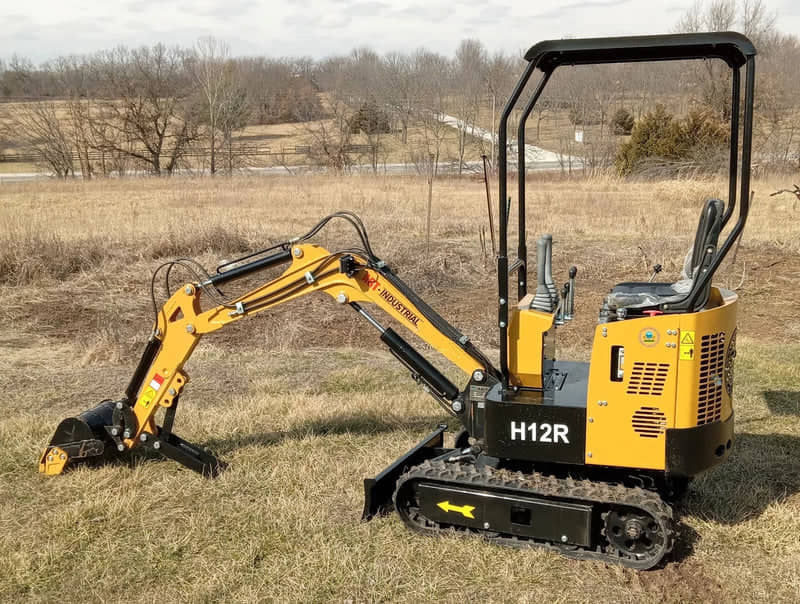
Most hunters who own or lease ground reach the same point sooner or later. The food plot needs a stump pulled, the creek crossing keeps washing out, the deer would use the back corner if there were water there, and the trail to the stand turns to mud every October. Hiring a dozer for each of those jobs adds up fast, and the work never lines up with the contractor’s calendar. That is why so many landowners end up renting or buying a small excavator and doing the dirt work themselves.
The hard part is picking the size. Too small and you spend a whole weekend on a job that should take an afternoon. Too big and you cannot get through the gate, you tear up the plot you were trying to improve, and you need a bigger truck just to haul it. This guide walks through the jobs hunters actually do and the size class that fits each one.
The three size classes, in plain terms
Mini excavators are usually sorted by operating weight.
• Micro (about 1 to 2 tons). Roughly 3 feet wide, so many will fit through a standard gate or between trees. Dig depth is usually around 5 to 7 feet. Light enough to tow behind a half-ton pickup on a small trailer.
• Compact (about 3 to 4 tons). The all-rounder. Dig depth around 8 to 10 feet, enough breakout force to pull most stumps, and still small enough to work in timber. Usually needs a heavier pickup and a proper equipment trailer.
• Midi (about 5 to 6 tons). Dig depth of 11 feet or more and a lot more lifting power. Best for ponds and big drainage work, but it leaves a wider footprint and needs a serious tow setup.
Exact numbers vary by make and model, so always check the spec sheet of the machine you are looking at.
Food plots: clearing, stumps and rocks
A new plot in timber usually means stumps, roots and rocks before you can ever disc or drill. A compact machine in the 3 to 4 ton range is the sweet spot here. It has the reach to dig around a stump and the weight to pry it out without rocking itself off its tracks. A micro excavator can do it, but expect to work a big stump from several sides and to chop roots more than pull them.
A thumb attachment makes plot clearing much faster. It lets the machine pick up brush, logs and rocks and pile them at the edge, where a brush pile also gives rabbits and birds some cover. Rubber tracks are worth having on plot ground, because steel tracks chew up the soil you are trying to build.
Ponds and water holes
Water can change how deer, turkey and ducks use a property, especially in a dry year. A small water hole, maybe 20 feet across and 3 to 4 feet deep, is well within reach of a micro or compact machine and can be dug in a day or two.
A real pond is a different job. Pond guides from state extension services commonly recommend that at least part of a pond be about 8 feet deep or more, so the water stays cooler and weeds have a harder time taking over in summer. That puts a pond in compact or midi territory, and a midi will move the dirt much faster. If you want fish, think about the deep end and the dam before you start.
Before digging any pond, talk to your local USDA Natural Resources Conservation Service office. They can help you judge whether the soil will hold water and whether the spot has enough drainage area to fill it, and in some areas there is cost-share help for wildlife water.
Trails, culverts and creek crossings
Access is where a small excavator pays for itself on hunting land. Quiet trails let you reach a stand without spooking deer, and a good crossing keeps your side-by-side out of the mud.
• Trail work (crowning, ditching, pulling roots) is easy for a micro or compact machine.
• Culverts need a trench a little deeper and wider than the pipe, plus room to set it. A compact machine handles most 12 to 24 inch pipe comfortably.
• Creek crossings often fall under state or federal rules. Check with your state agency before you dig in or near a stream.
Blinds, stands and fence work
A small excavator with an auger attachment sets posts for box blinds, food plot fencing and gates in minutes. Even a micro machine handles this well. Some landowners also use the bucket to set a stable gravel pad under a box blind, so the blind stays level and does not rot at the base.
Getting the machine there
This is the part most people forget. Before you choose, answer three questions:
1. Can your truck legally tow it? Add the machine, the trailer and any attachments, then compare that to your truck’s towing rating.
2. Can it get to the work? Measure the narrowest gate and the tightest spot between trees on the way in.
3. What is the ground like? Wet bottoms and soft plots favor a lighter machine with rubber tracks. Rocky hillsides favor more weight and stability.
Safety first, every time
Call 811 a few days before you dig, even on rural land. Buried power lines, gas lines and fiber are more common in the country than most people think, and the call is free. Wear your seat belt, keep the blade down when digging, work up and down slopes instead of across them, and keep everyone well clear of the swing area.
The short version
• Mostly trails, posts, small water holes and light clearing: a micro, about 1 to 2 tons.
• Stumps, food plots in timber, culverts, all-around use: a compact, about 3 to 4 tons.
• Real ponds and big drainage jobs: a midi, about 5 to 6 tons.
For a side-by-side look at how different mini excavator sizes compare on weight and dig depth, it helps to browse spec sheets before you rent or buy. Pick the machine that fits your gate, your truck and your biggest job, and the rest of the work gets a lot easier.
About the author: Braden Chupp is a consultant with Chupp Industrial, an equipment company based in Chouteau, Oklahoma.