
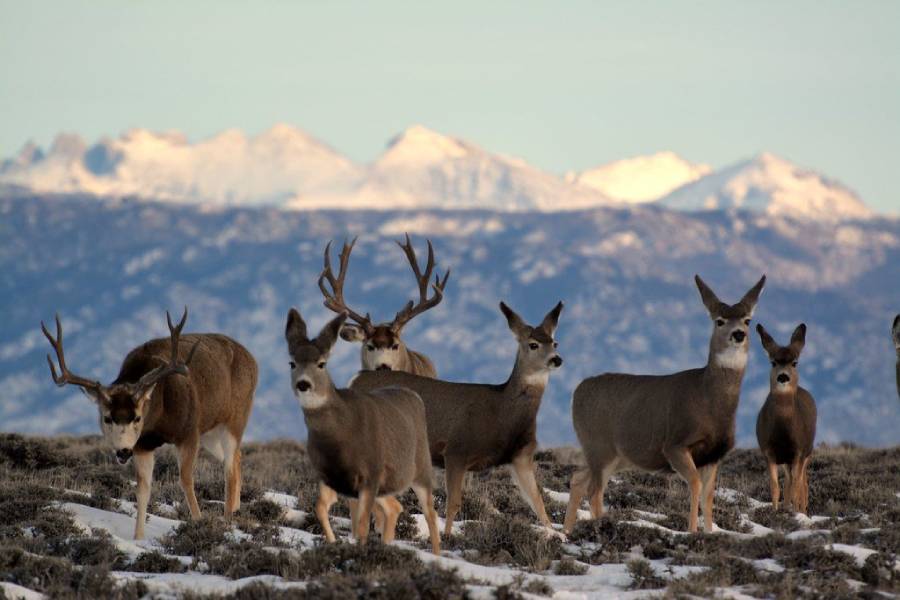
Deer can learn migration routes from their mothers, but they do not genetically inherit an exact geographic route. Young deer can acquire knowledge of migration corridors by following experienced adults, particularly their mothers, as they move between seasonal ranges. This process allows information about where and when to migrate to persist across generations without requiring the precise route to be encoded genetically.
Maternal learning is especially important because migration requires more than an instinct to move. Deer must navigate landscapes, locate seasonal forage, reach winter and summer ranges, and respond to environmental conditions encountered along the way. Repeated experience can strengthen this spatial knowledge, which helps explain why established migration corridors and seasonal ranges may be used across multiple years and generations.
For hunters, this behavior helps explain why historical migration routes can provide useful information about seasonal deer movement. However, a learned route is not necessarily a fixed route. Snow conditions, forage availability, habitat changes, and human disturbance can affect where and when deer move. Understanding how deer acquire, remember, and modify migration routes therefore provides a stronger basis for interpreting migration corridors during hunting season.
Do Deer Inherit Migration Routes From Their Mothers?
Deer can acquire migration routes from their mothers through social learning, rather than genetically inheriting an exact route across the landscape. A fawn that migrates alongside its mother can learn where seasonal ranges are located and which corridors connect them. The distinction matters because genes can influence whether an animal has migratory tendencies, while experience provides location-specific knowledge about where to travel.
A migration route requires geographic information that instinct alone does not fully provide. Migrating deer must move between specific seasonal ranges while navigating terrain, locating forage, and responding to conditions along the route. Young deer gain exposure to this information while accompanying experienced animals. As a result, a route used by a mother can become part of the offspring’s own spatial knowledge and influence its movements after it becomes independent.
This process also explains why migration behavior can persist within a population without every generation independently discovering an efficient route. Knowledge acquired from experienced deer provides young animals with an established movement pattern. The offspring can then reinforce that knowledge through repeated migrations and individual experience. In this sense, a migration route can be transmitted between generations even though the physical path itself is not directly encoded in DNA.
Genetics and learning therefore play different roles. Genetic inheritance can contribute to migratory behavior, while social learning and experience help determine the specific places a deer uses during migration. This distinction is particularly important when interpreting established migration corridors. Repeated use of a corridor does not prove that deer are genetically programmed to follow that exact path; it can also reflect knowledge maintained through learning and repeated experience.
How Do Fawns Learn Migration Routes From Their Mothers?
Fawns learn migration routes by accompanying their mothers during seasonal movements and gaining experience with the landscape along the way. Rather than receiving deliberate instruction, a young deer follows an experienced doe and is exposed to the locations, movement corridors, seasonal ranges, and environmental conditions associated with migration. The process is better described as social learning than as a mother intentionally teaching a route.
Following a doe gives a fawn repeated opportunities to build spatial knowledge. During a migration, the young deer encounters the terrain connecting seasonal ranges and experiences where movement is possible, where resources occur, and how the route relates to different parts of its range. These experiences provide geographic information that becomes increasingly useful when the animal later moves without its mother.
Repeated migrations can strengthen this knowledge. A fawn that travels a route with its mother does not need to rediscover the entire path when encountering the same landscape again. Previous experience provides a reference for future movement, while subsequent trips allow the animal to adjust its behavior based on current conditions. This combination of maternal association and individual experience helps established migration patterns persist over time.
For hunters, the important implication is that a migration corridor can represent more than a convenient path between two locations. It can be part of accumulated movement knowledge used by deer across seasons and potentially across generations. This helps explain why some seasonal movement patterns can remain recognizable over multiple years, although environmental conditions and disturbance can still alter how deer use a particular route.
Why Do Deer Keep Using Migration Routes They Learned From Their Mothers?
Deer keep using familiar migration routes because previous migrations give them spatial knowledge about how to move between seasonal ranges. A route learned while following the mother becomes part of the animal’s experience with the landscape. When seasonal conditions trigger another migration, returning to familiar areas reduces the need to navigate an entirely unknown route between summer and winter ranges.
Spatial memory is important because a migration route consists of more than a line connecting two destinations. Deer moving along an established route encounter terrain features, forage areas, resting locations, barriers, and passages that influence movement. Experience with these features gives a deer information it can use during later migrations. A young deer initially gains some of that information while accompanying its mother and can refine it through subsequent trips.
This repeated use contributes to route fidelity, or the tendency to return to familiar migration areas and movement patterns. Route fidelity does not mean an individual deer must place every hoof in exactly the same location each year. Instead, the animal can repeatedly use the same general corridor while making smaller adjustments within it. Changes in forage, snow, disturbance, or local habitat conditions can influence the exact path taken during a particular migration.
The same principle applies to seasonal ranges. Deer can return to familiar summer and winter ranges because previous experience gives those locations established value within their spatial knowledge. A winter range, for example, is not useful merely because a deer has visited it before. The area must continue to provide conditions that make it suitable during that season. Familiarity helps the animal locate the range, while current environmental conditions influence whether and how it uses the area.
Migration behavior therefore combines memory with flexibility. An experienced deer does not need to choose between blindly repeating an old route and discovering a completely new route every year. It can use previously acquired knowledge as the foundation for movement while responding to current conditions. This distinction explains why deer migration can be predictable at the landscape scale without being perfectly predictable at a specific location.
For hunters, route fidelity makes historical migration information useful, but not absolute. A corridor used repeatedly across previous seasons provides stronger evidence of an established movement pattern than a single observation of a deer passing through an area. However, hunters still need to consider current snow conditions, forage, habitat, and disturbance before assuming deer will move through exactly the same place at exactly the same time.
Can Deer Migration Routes Be Passed Down for Generations?
Deer migration routes can persist across generations when young deer acquire movement knowledge from experienced animals and later repeat those movements themselves. The process is a form of intergenerational knowledge transfer rather than genetic inheritance of a geographic path. A mother can expose her offspring to an established route, and those offspring can retain and reuse that information after becoming independent.
This creates a mechanism through which migration patterns can remain established within a population. Consider a doe that repeatedly travels between a particular summer range and winter range. Her fawn accompanies her and experiences the connecting corridor. If the offspring later returns to those areas and eventually migrates with its own young, knowledge associated with the route can continue into another generation. The route persists because deer repeatedly learn and use it, not because each fawn is born with an internal map of the corridor.
Intergenerational learning also helps explain why established migration corridors have value beyond the movement of a single deer. A corridor repeatedly used by multiple generations can reflect accumulated knowledge about how seasonal ranges are connected across the landscape. That knowledge can include broad information about terrain, resources, and viable passages encountered during migration. Individual deer can still modify their movements as conditions change, so the resulting pattern is persistent rather than permanently fixed.
The opposite process is also important. Migration patterns that depend partly on learned information are not guaranteed to persist indefinitely. Major habitat alteration, barriers, disturbance, changes in seasonal resources, or disruption of established movement patterns can reduce the usefulness of previously acquired knowledge. Deer may consequently adjust where or how they migrate rather than continue following a route that no longer provides an effective connection between seasonal ranges.
For hunters, generational persistence helps explain why some migration corridors remain relevant over long periods. Historical use becomes more informative when the same corridor supports repeated seasonal movements rather than a one-time movement event. However, the age of a migration route does not guarantee its current use. Present landscape and environmental conditions still determine whether historical movement knowledge remains useful to deer.
Do Mule Deer Learn Migration Routes From Their Mothers?
Mule deer can learn migration routes through social learning from their mothers and other experienced deer. Young mule deer accompany their mothers during seasonal movements, giving them direct experience with the corridors connecting summer and winter ranges. This acquired knowledge helps explain how specific migration patterns can persist even though deer are not genetically born with a detailed map of a particular route.
Mule deer provide a useful example because their seasonal movements can cover substantial landscapes rather than remaining within a small home range. A migrating animal must know more than the general direction of its destination. It must navigate terrain, move through suitable corridors, and reach seasonal ranges where current conditions support survival. Traveling with an experienced mother gives a young deer an opportunity to acquire this location-specific information before it must migrate independently.
Researchers can examine these movements by fitting deer with GPS collars and recording their locations over time. Multiple location points reveal when an animal leaves one seasonal range, the corridor it follows, and where it establishes the next seasonal range. Tracking the same individuals across multiple migrations also allows researchers to compare routes from year to year and determine whether deer repeatedly use familiar areas or substantially alter their movements.
GPS movement data are especially valuable when observations from related or socially associated deer can be compared. If young deer initially move with experienced animals and later reproduce similar seasonal movements, the pattern provides evidence for the role of experience and social learning. Researchers can also compare experienced migrants with animals that have less knowledge of the landscape to examine how familiarity influences migration behavior.
The important distinction is that mule deer can inherit a migratory tendency without genetically inheriting the precise geographic information required to follow one specific corridor. The geographic component can be acquired through experience. Maternal association gives young deer an early source of that experience, while later migrations allow them to reinforce or modify what they have learned.
For hunters, mule deer migration demonstrates why an established corridor can remain relevant across multiple seasons. Deer that possess knowledge of the same seasonal ranges have a reason to return to familiar portions of the landscape. However, repeated use should not be interpreted as a guarantee that every deer will follow an identical trail. Migration operates across a landscape, and individual movement can shift as conditions change.
What Causes Deer to Change Migration Routes They Already Know?
Deer can change a familiar migration route when current conditions make another movement path or seasonal location more suitable. Four important influences are snow conditions, forage availability, habitat changes, and human disturbance. These factors can affect the timing, location, or intensity of movement without necessarily causing deer to abandon all previously acquired migration knowledge.
Snow conditions can alter how deer move between seasonal ranges because snow changes both travel conditions and access to resources. Increasing snow accumulation can make parts of a landscape more difficult to use and influence movement toward suitable winter habitat. The timing and severity of snowfall can therefore affect when deer migrate and which portions of a familiar corridor remain practical during a particular season. A route observed during one winter should not automatically be expected to produce identical movement under substantially different snow conditions.
Forage availability can also influence migration decisions. Deer migrate partly within a changing landscape of seasonal food resources, so the distribution and timing of forage affect where movement provides the greatest benefit. Changes in plant growth, drought conditions, fire, or other environmental processes can alter the value of locations along a migration route. Deer can use previous knowledge while adjusting their movements to match current resource conditions.
Habitat changes can produce more lasting alterations. Roads, fencing, development, wildfire, vegetation changes, and other landscape modifications can affect how easily deer move through an established corridor. A familiar route remains useful only while the landscape continues to provide a viable connection between seasonal ranges. When a barrier blocks part of that connection, deer may need to alter a portion of the route, use an alternative passage, or change their movement pattern more substantially.
Human disturbance, including hunting activity, can influence deer movement as well. Deer can respond to people, vehicles, repeated access, and hunting pressure by changing when or where they move within an area. A short-term response to hunting pressure is not automatically a change in the underlying migration route. A deer may shift its movement timing, avoid a particular location, or use additional cover while still moving through the broader migration corridor connecting its seasonal ranges.
This distinction matters when hunters interpret deer observations. A trail that suddenly receives less daytime activity does not by itself demonstrate that deer have abandoned a migration corridor inherited through learned behavior. Local movement can change faster than a population-level migration pattern. Hunters should therefore separate changes in immediate deer activity from changes in the larger seasonal movement connecting summer and winter ranges.
Historical migration routes are most useful when combined with current conditions. Past use identifies where deer have established movement knowledge, while current snow, forage, habitat, and disturbance help determine how that knowledge is expressed during the present season. This combination provides a stronger explanation of deer movement than assuming either that migration routes never change or that deer select entirely new routes every year.
Read more: Do Deer Remember Food Sources? What Hunters Should Know
Do Deer Migration Routes Help Hunters Predict Deer Movement?
Deer migration routes can help hunters predict broad seasonal movement because deer may repeatedly use familiar corridors between established summer and winter ranges. A documented migration route identifies an area where deer have previously concentrated movement, making it more informative than an isolated trail or a single deer sighting. However, a migration corridor predicts a movement pattern rather than the exact location and time a deer will pass through it.
The value of a migration route comes from repeated use. Deer that have learned the locations of seasonal ranges can retain spatial knowledge of the landscape connecting those areas. When seasonal migration begins again, that knowledge gives experienced animals a familiar movement option. Younger deer that accompany them can acquire the same geographic information, allowing the broader pattern to persist across years and potentially across generations.
Hunters should therefore interpret historical migration information at the correct geographic scale. An established corridor indicates where seasonal movement is likely to occur across a landscape, while individual trails indicate how deer are using that landscape under current conditions. A corridor may contain several possible paths rather than one narrow trail. Deer can shift among those paths while still traveling through the same broader migration area.
Timing is less predictable than the existence of an established corridor. Snow accumulation, forage conditions, weather, habitat changes, and disturbance can influence when deer begin moving and how quickly they travel. Two hunting seasons can therefore involve the same general migration corridor but produce different periods of concentrated deer movement. Historical route information becomes more useful when hunters combine it with evidence from the current season.
Hunting pressure creates another reason to avoid treating migration routes as fixed travel schedules. Deer exposed to repeated human activity can alter local movement patterns, including where and when they move through an area. A change in daytime activity near a trail does not necessarily mean the larger migration corridor has been abandoned. The deer may still travel between the same seasonal ranges while using additional cover, shifting its timing, or moving through another portion of the corridor.
For this reason, migration knowledge is most useful for identifying where to investigate, not for guaranteeing where a deer will appear. Historical corridors can narrow a large landscape into areas with established seasonal movement. Current observations can then show which portions of those areas deer are actively using during the hunting season.
What Signs Show Deer Are Using an Established Migration Corridor?
Repeated deer movement through the same landscape provides stronger evidence of an active migration corridor than a single track, trail, or sighting. Hunters should look for multiple observations that indicate directional seasonal movement rather than assuming every heavily used deer trail represents migration.
Tracks can provide one source of evidence when numerous deer are moving consistently through an area. Their value increases when the movement follows terrain that logically connects seasonal ranges rather than circulating within a local feeding and bedding area. A single set of tracks only confirms that one deer passed through a location; repeated tracks over time provide better evidence of sustained movement.
Trail-camera observations can add a time component. Multiple deer appearing over several days while moving in a consistent direction can indicate a broader seasonal movement event. Comparing observations across different parts of a landscape can also help distinguish concentrated migration from routine movements within a resident deer’s home range.
Terrain can further strengthen the interpretation. Ridges, saddles, drainage systems, passes, and other landscape features can concentrate movement when they provide practical connections through otherwise difficult terrain. These features do not automatically become migration corridors simply because deer use them. Their significance increases when repeated deer observations show that they form part of a larger connection between seasonal ranges.
Hunters should also distinguish migration sign from ordinary feeding and bedding activity. Migration is directional movement between seasonal ranges, whereas daily movement generally occurs within an established home range. Deer traveling from bedding cover to a feeding location every evening may create a heavily used trail without migrating. Correctly identifying this difference prevents hunters from interpreting every high-traffic trail as evidence of an inherited or learned migration route.
The strongest field interpretation therefore combines historical movement information, repeated current observations, landscape structure, and seasonal timing. No single sign establishes the entire migration pattern. Several consistent indicators provide a better basis for determining whether deer are actively moving through an established corridor.
Should Hunters Expect Deer to Use the Same Migration Route Every Year?
Hunters can expect established deer migration corridors to show repeated use, but they should not expect deer to follow the exact same path at the exact same time every year. Learned spatial knowledge and route fidelity create continuity between seasons, while changing environmental conditions and disturbance create variation within that broader pattern.
This distinction separates a migration route from a fixed trail. A deer may return to the same winter range and travel through the same general corridor while shifting several portions of its path. Snow depth can make one passage less practical, changing forage can alter stopover use, and disturbance can push movement toward another part of the landscape. The resulting route can remain recognizably similar without being geographically identical.
Historical information becomes more valuable when the pattern has been repeated across several seasons. A corridor documented during multiple migrations provides stronger evidence of established movement than a location used during only one year. Maternal and social learning can contribute to this persistence because younger deer gain experience with routes already used by older animals.
Current conditions still determine how hunters should apply that information. Use historical migration routes as a starting point, then verify current deer movement before relying on a specific location. Tracks, trail-camera activity, seasonal conditions, habitat changes, and recent disturbance can reveal whether deer are currently using the expected portion of a corridor.
This approach accounts for both sides of deer migration behavior. Deer are not navigating an unfamiliar landscape from scratch every season, because previous experience can provide valuable spatial knowledge. They are also not mechanically repeating an unchangeable route, because migration remains responsive to current conditions.
For hunters, the practical relationship is straightforward: maternal learning can establish migration knowledge, repeated experience can reinforce route fidelity, and current landscape conditions determine how deer use that knowledge in a given season. Understanding all three provides a more reliable basis for interpreting deer migration than assuming historical routes are either permanent or irrelevant.