
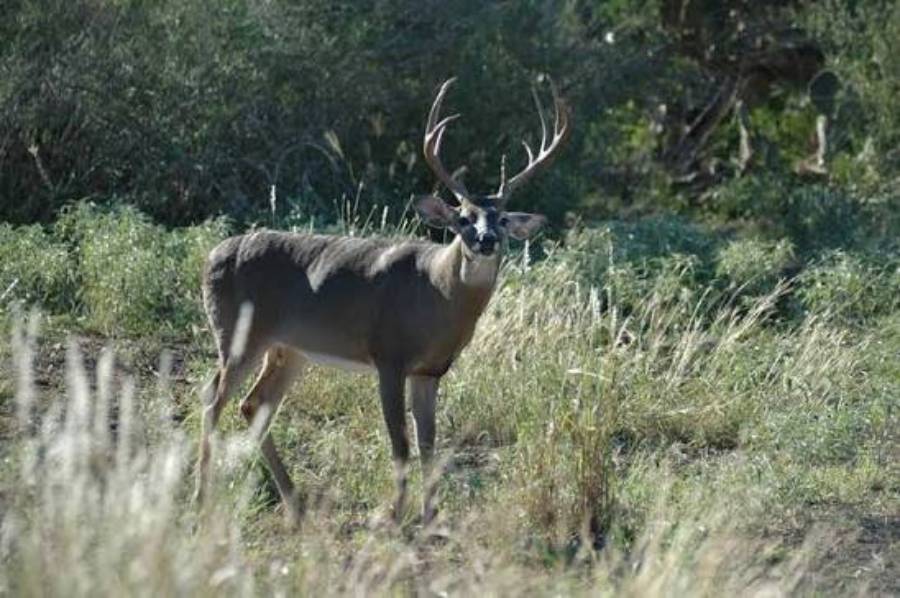
Deer can change their home ranges as they age, but getting older does not automatically cause a deer to move to a new area or consistently expand or shrink its range. One of the largest changes can occur when a young deer disperses from its natal range and establishes an adult home range. After that range is established, an adult deer may continue using the same general area across multiple years while changing where and when it beds, feeds, and travels within it.
For hunters, this distinction matters because a change in deer movement is not necessarily a change in home range. A mature buck that stops appearing on a trail camera may have shifted its core area, changed its movement timing, followed a seasonal food source, or temporarily traveled farther during the rut. The buck may still occupy much of the same overall home range.
Age is therefore only one factor to consider when tracking a deer across multiple seasons. Dispersal, seasonal movement, habitat conditions, food availability, breeding behavior, and hunting pressure can all affect where a deer is found. Understanding the difference between these influences helps hunters determine whether an older buck has actually relocated or is simply using a familiar range differently.
Do Deer Change Their Home Ranges as They Get Older?
Deer can change their home ranges as they get older, but age does not cause a predictable year-by-year shift in where every deer lives. The most substantial age-related change can occur when a young deer leaves its natal area and establishes a new adult range. Once established, adult deer can continue using familiar areas while adjusting how intensively they use different parts of those areas.
A home range includes the area a deer regularly uses for essential activities such as bedding, feeding, traveling, and breeding. It is different from a core area, which is a smaller portion of the home range that receives more concentrated use. This distinction explains why an older buck can appear to change locations without abandoning its established home range. For example, a buck can move its primary bedding activity from one side of its range to another while continuing to use both areas during the season.
Changes in core-area use are therefore not the same as changes in total home range. A hunter may see a mature buck regularly on one trail camera for several weeks and then receive no photographs of it from that location. That observation confirms a change in detection at the camera site, not a complete relocation. The buck could be bedding elsewhere within its existing range, using another travel corridor, visiting a different food source, or moving at times when the camera does not detect it.
Age also interacts with environmental and behavioral factors rather than operating independently. Food distribution, secure cover, breeding activity, seasonal conditions, habitat disturbance, and hunting pressure can alter how deer use space. As a result, two bucks of the same age can display different home-range patterns when they live in different habitats or face different levels of disturbance.
For hunters following the same buck across several seasons, the useful question is not simply whether the buck is older. The more useful question is whether its overall range has changed or whether its activity has shifted within a familiar range. Comparing observations across bedding areas, feeding locations, travel routes, trail-camera sites, and seasons provides more context than interpreting one change in movement as evidence of relocation.
How Does a Deer’s Home Range Change From a Yearling to a Mature Adult?
The transition from a young deer to an adult can produce a major change in home-range location because young deer can disperse from the area where they were born. Dispersal is fundamentally different from the routine movements a deer makes while feeding, bedding, or breeding. A dispersing deer leaves its natal area and establishes space use elsewhere, whereas normal movement occurs primarily within or around an existing home range.
For young bucks, this distinction is particularly important. A yearling buck that disappears from an area where it spent its early life has not necessarily become harder to detect because it is growing older. It may have dispersed and established an adult range elsewhere. Hunters should therefore avoid treating a young buck’s location as a permanent indication of where that individual will live throughout adulthood.
After an adult home range becomes established, the pattern can become more stable. An adult buck does not need to establish a completely new home range every time it gains another year of age. Familiarity with bedding cover, escape routes, feeding locations, terrain, and other landscape features gives an established range practical value. The buck can change its use of individual locations without abandoning the larger area that contains them.
A mature buck may, for example, stop using an exposed travel route while increasing its use of a nearby route with more cover. It may also concentrate activity around a different bedding site after habitat or human disturbance changes. These behavioral adjustments can substantially alter where hunters encounter the deer even when much of its overall home range remains familiar.
This creates an important distinction when hunters compare a buck at different ages. The change from a yearling to an established adult can involve relocation through dispersal, while changes during later adulthood can involve different use of an established landscape. Age should therefore be evaluated together with dispersal history, habitat conditions, seasonal behavior, and current movement evidence rather than used as a stand-alone explanation for where a mature buck lives.
Do Older Bucks Have Larger or Smaller Home Ranges?
Older bucks do not automatically have larger or smaller home ranges than younger bucks. Age can influence how a buck uses space, but home-range size also depends on habitat quality, the distribution of food and cover, deer density, breeding activity, season, and human disturbance. For this reason, a buck becoming older does not mean its home range will consistently shrink or expand each year.
Habitat quality can have a direct effect on the amount of space a buck needs to meet its daily requirements. A landscape that places secure bedding cover, food, water, and travel cover close together allows a deer to meet several needs within a relatively concentrated area. In a fragmented landscape where these resources are farther apart, the same deer may need to cover more ground. Two mature bucks can therefore use differently sized home ranges even when they are the same age.
Home-range size is also different from movement frequency. A buck can occupy a relatively large home range without traveling across the entire range every day. Instead, it may concentrate most of its activity within one or more core areas and visit other portions less frequently. Conversely, a buck that moves frequently around a compact area is not necessarily maintaining a large home range.
This difference becomes particularly important when hunters evaluate older bucks. A mature buck that appears less frequently during daylight may seem to be moving less, but reduced hunter or trail-camera detection does not establish that its total home range has become smaller. The deer may still use a substantial area while concentrating daylight activity in secure cover or traveling through less observable locations.
Season can further change the relationship between age and space use. Breeding activity can cause bucks to travel beyond their normal patterns, while concentrated seasonal food can pull activity toward a smaller portion of the landscape. These changes can temporarily alter the size or shape of the area being used without representing a permanent age-related change.
For hunters, the size of a mature buck’s home range should therefore be evaluated separately from how often, how far, and when the buck moves. Age provides useful context, but current habitat, resources, breeding behavior, and disturbance provide additional explanations for why an older buck is using a particular amount of space.
Do Mature Bucks Stay in the Same Home Range Every Year?
Mature bucks can use the same general home range across multiple years, although they do not necessarily use every part of that range in the same way each year. Annual range fidelity means an established buck may repeatedly return to or remain associated with a familiar landscape while changing individual bedding locations, feeding areas, travel routes, and the timing of its movements.
Familiarity provides several practical advantages. An established buck can become familiar with secure cover, terrain features, escape routes, feeding locations, and areas where human disturbance occurs. Remaining within a familiar landscape allows the deer to use this existing spatial information rather than requiring it to establish an entirely new range simply because it has aged another year.
This does not mean a mature buck follows an identical pattern every season. Home-range fidelity and location-specific fidelity are different behaviors. A buck may occupy substantially the same general area while shifting its core use from one portion to another. Changes in food availability, cover, breeding activity, habitat conditions, and hunting pressure can all change which parts of that range receive the most use.
For example, a hunter may photograph the same buck consistently near one food source during one season but find few photographs there the following year. If the buck begins using another resource within the surrounding landscape, its daily pattern can change even though its broader home range remains similar. Treating the loss of photographs at the original location as proof that the buck has relocated would confuse a local movement change with a home-range change.
Do Mature Bucks Use the Same Bedding Areas Every Year?
Mature bucks can reuse familiar bedding areas, but bedding-site use can change when security, cover, food distribution, or human disturbance changes. A bedding area is one component of a buck’s space use rather than its entire home range. A buck can therefore stop using one bedding location while remaining within the same broader range.
Security is especially relevant to bedding selection. Bedding cover that gives a buck protection from disturbance can remain useful across seasons, while repeated human intrusion can reduce the value of a particular location. Habitat changes can have a similar effect. Loss of cover, vegetation growth, logging, development, or changes in nearby food can alter how attractive an established bedding location is.
For hunters, historical bedding information remains valuable because it identifies areas a buck has previously considered usable. Previous-year bedding locations should be treated as starting points for current scouting rather than guarantees of current occupancy. Fresh sign, current trail-camera observations, changes in cover, access pressure, and nearby resources provide the additional context needed to determine whether an older buck is still concentrating activity there.
The same principle applies to annual home-range patterns as a whole. A mature buck can demonstrate meaningful fidelity to a familiar landscape without repeating its exact daily route from the previous season. Hunters who separate range fidelity from exact movement-pattern repetition can make better use of historical information without assuming that an older buck must behave exactly as it did the year before.
Why Do Mature Bucks Disappear From Their Normal Home Ranges?
A mature buck can disappear from a familiar area without permanently leaving its home range. A loss of sightings or trail-camera photographs only shows that the buck is no longer being detected at the same locations or times. Seasonal movement, changing food sources, habitat changes, breeding behavior, hunting pressure, and mortality can all explain why a previously visible buck suddenly becomes difficult to locate.
Changes in food availability are one reason a buck’s activity can shift within the landscape. Deer concentrate activity where useful resources are currently available, so a change in seasonal forage can alter feeding locations and the travel routes connecting those locations to bedding cover. A buck that regularly visited one feeding area may begin using another part of its established range when a different resource becomes more attractive. From a single trail-camera location, that shift can look like the deer has disappeared.
Habitat changes can produce a similar result. Logging, agricultural activity, development, vegetation growth, loss of cover, or other disturbances can change the value of specific bedding and feeding locations. A buck can respond by shifting its core area without abandoning its entire home range. The distinction matters because a hunter searching far outside the established range may overlook the possibility that the buck has simply concentrated its activity in another nearby section.
Seasonal behavior provides another explanation. A buck’s location during one portion of the year should not automatically be treated as its permanent year-round pattern. Changes in breeding activity and resource availability can cause different parts of the landscape to become more important at different times. A buck that becomes difficult to locate during one period can therefore reappear when its seasonal movement pattern changes again.
Mortality must also remain a possible explanation when a known buck disappears for an extended period. Hunting mortality, vehicle collisions, disease, predation, and other causes can permanently remove an individual from the population. Trail-camera absence alone cannot distinguish mortality from relocation or a shift in movement behavior.
For hunters, disappearance should therefore be treated as an observation rather than proof of relocation. Historical photographs, current sign, multiple camera locations, known bedding cover, seasonal food sources, and changes in habitat provide stronger evidence when determining whether a mature buck has actually changed its home range.
Does the Rut Change a Mature Buck’s Home Range?
The rut can temporarily change how a mature buck uses its home range and can cause movements beyond its normal-use areas, but these movements do not necessarily represent a permanent home-range change. Breeding creates a strong reason for bucks to search for receptive does, which can alter travel distances, routes, timing, and the portions of the landscape they use.
This distinction is important because rut movement can make an established buck appear in locations where it was rarely or never detected earlier in the season. A buck may travel outside its normal core area while searching for breeding opportunities and later return to familiar portions of its range. An observation made during this period therefore provides evidence that the buck used a location, but it does not by itself establish that the location has become part of a permanent new home range.
Rut excursions and home-range relocation are separate spatial behaviors. An excursion is a temporary movement away from the area a deer normally uses, whereas relocation involves a more persistent change in where the deer lives and meets its regular needs. Hunters who interpret every long-distance rut movement as relocation risk overestimating how much a mature buck’s established range has changed.
Breeding activity can also make movement patterns less representative of those observed before or after the rut. A buck that primarily traveled between secure bedding cover and feeding areas earlier in the season may spend more time searching areas used by does once breeding behavior intensifies. As breeding activity declines, those temporary incentives for expanded movement also change.
For hunting purposes, rut observations should be interpreted within the breeding-season context rather than used alone to define a buck’s normal home range. A new trail-camera appearance during the rut may identify a breeding-related travel route or temporary excursion. Conversely, a familiar buck disappearing during the same period may be temporarily searching elsewhere rather than permanently abandoning its established range.
Comparing pre-rut, rut, and post-rut observations gives hunters a stronger basis for interpreting these movements. If a buck repeatedly returns to familiar areas after breeding activity changes, that pattern supports continued use of an established range. This prevents a temporary seasonal movement from being mistaken for an age-related home-range shift.
Does Hunting Pressure Make Mature Bucks Change Their Home Ranges?
Hunting pressure can change where and when mature bucks move, but increased pressure does not automatically cause them to abandon their entire home range. A buck can respond to hunters by reducing daylight movement, shifting activity toward secure cover, changing travel routes, or relocating its core area. A larger home-range shift is possible when disturbance is persistent enough to make an important portion of the existing range less useful.
The first response hunters may notice is a change in movement timing. A mature buck that previously traveled through an exposed location during daylight may begin using the same general area at night or during periods with less human activity. This behavior can sharply reduce sightings and trail-camera photographs during legal hunting hours without requiring the deer to leave its established range. Reduced daylight detection is therefore evidence of a movement-pattern change, not proof of home-range abandonment.
A second response involves changes in travel routes or core-area use. Repeated human activity near bedding cover, stand sites, access trails, or other frequently used locations can change the security value of those places. A buck may begin using thicker cover or another bedding location while retaining access to familiar feeding areas and other resources within the broader landscape. In this situation, the buck has changed how it uses its home range rather than necessarily establishing a new one.
More substantial displacement becomes relevant when disturbance repeatedly affects the resources and secure areas a buck depends on. The mechanism is different from a single encounter with a hunter. One isolated disturbance may produce a temporary response, whereas repeated intrusion can make a location consistently less secure. Hunters should therefore evaluate the frequency, location, and duration of human activity before concluding that pressure caused a permanent range shift.
This distinction changes scouting strategy. If a known buck disappears after hunting activity increases, hunters should first examine nearby secure cover, alternative travel routes, changes in movement timing, and less-disturbed portions of the established range. Immediately assuming that the buck moved several miles away can cause hunters to abandon useful historical information before determining whether the animal simply adjusted its behavior.
The practical sequence is movement-timing change, possible core-area shift, and then potential home-range change when conditions support it. These responses should not be treated as interchangeable. Determining which response occurred requires observations from more than one location and more than a short period of time.
Read more: Do Deer Communicate Through Scent? How It Works
How Can Hunters Tell if a Buck Has Actually Changed Its Home Range?
Hunters can identify a likely home-range change by comparing repeated observations across multiple locations and time periods rather than relying on a single missing trail-camera detection. The strongest interpretation comes from determining whether the buck has made a temporary movement, shifted its core area, changed its seasonal range, or established a more persistent pattern elsewhere.
Temporary movement is the least convincing evidence of a home-range change. A buck can leave its normal-use area temporarily because of breeding activity, disturbance, or a short-term resource opportunity and later return. A photograph several miles from a familiar location can therefore demonstrate long-distance movement without proving permanent relocation.
A core-area shift is more persistent but still does not necessarily indicate a different home range. A buck may stop concentrating activity around one bedding area and begin using another portion of the same broader landscape. Hunters may observe fewer photographs, tracks, rubs, or sightings at the original location while finding fresh evidence nearby. In this case, the center of activity has changed more clearly than the entire home range.
Seasonal range changes require another distinction. A deer can use different areas during different parts of the year and repeat that seasonal pattern across years. If hunters compare observations from different seasons without accounting for this cycle, a predictable seasonal shift can look like permanent relocation. Comparing the same periods across consecutive years provides more useful information than comparing unrelated portions of the annual cycle.
Evidence for a longer-term home-range shift becomes stronger when repeated observations show that the buck has stopped using much of its previous range and consistently uses another area for its regular activities. Bedding, feeding, travel, and repeated camera detections provide more context together than any single observation. Even then, hunters should account for habitat changes, food availability, breeding activity, and pressure before attributing the shift to age alone.
Can Trail Cameras Show if a Buck’s Home Range Has Changed?
Trail cameras can help identify changes in a buck’s space use, but a camera does not directly measure the animal’s complete home range. Each camera records detections within a limited location. When a buck stops appearing on one camera, the data establish that detection changed at that site; they do not establish where the buck went or whether its overall range changed.
Multiple cameras provide stronger spatial information because they allow hunters to compare detections across different parts of the landscape. For example, a buck disappearing from a feeding-area camera while appearing more frequently near secure bedding cover suggests a shift in local activity. If the same individual stops appearing across several previously productive locations and begins appearing consistently in another area, the evidence for a larger spatial shift becomes stronger.
Time also matters. A few days without photographs provides less information than a repeated pattern observed over weeks or across comparable seasonal periods. Historical camera records become especially useful when hunters can compare the same individual across multiple years. Dates, times, locations, seasonal conditions, and habitat changes provide context that a collection of photographs without consistent records cannot provide.
Hunters should therefore use trail cameras as sampling points within a deer’s potential range rather than as complete maps of that range. Combining camera records with fresh sign, known bedding cover, feeding areas, terrain features, direct observations, and previous-season information creates a more reliable picture of how a mature buck is using the landscape.
The key is to look for a pattern rather than one event. A single disappearance can have several explanations. A consistent shift across locations and time provides stronger evidence that the buck’s spatial behavior has changed and helps determine whether that change involves a core area, a seasonal range, or the broader home range.
Should Hunters Scout the Same Areas for an Older Buck Each Year?
Hunters should scout areas an older buck used in previous years because mature bucks can maintain fidelity to familiar home ranges, but previous locations should be treated as starting points rather than guaranteed patterns. An older buck can remain within the same general range while changing its bedding locations, feeding areas, travel routes, core-area use, and movement timing. The most effective approach is to combine historical information with current evidence before choosing where to hunt.
Historical data is most useful when it reveals repeated use of persistent landscape features. Secure bedding cover, terrain funnels, protected travel corridors, creek crossings, field edges, and other features that remain relatively stable can continue influencing deer movement from one year to the next. A single trail-camera photograph provides less information than repeated detections showing that the same buck used a particular portion of the landscape during comparable periods in multiple seasons.
Previous bedding areas deserve attention, but hunters should verify that the conditions that made those locations useful still exist. A buck may continue bedding in the same general area when security cover and surrounding resources remain suitable. Logging, vegetation changes, agricultural activity, development, increased access, or repeated hunting intrusion can alter those conditions and make another bedding location more attractive.
Food sources should be evaluated in the same way. A feeding pattern from the previous season is most useful when the resource remains available and attractive during the current season. Changes in crops, mast availability, vegetation, or nearby habitat can redirect movement even when the buck continues living within the same broader home range. Hunters who focus only on last year’s feeding location can therefore miss a buck that has shifted its daily route toward a different resource.
Hunting pressure is another reason to verify rather than simply repeat a previous strategy. A stand location that produced encounters one year can become less effective after repeated access and disturbance. An older buck does not have to leave its home range to become harder to hunt from that location. It can change movement timing, use thicker cover, select another route, or concentrate activity in a less-disturbed portion of the same range.
A practical scouting sequence begins with historical range information, followed by current bedding cover, current food sources, fresh movement evidence, and current hunting pressure. Trail-camera data can then help determine whether the buck is still using familiar portions of the landscape and when those locations are active. This approach preserves the value of previous-season knowledge without assuming exact behavioral repetition.
Hunters should place less weight on previous-year patterns when the landscape has changed substantially. Major habitat alteration, loss of secure cover, significant changes in food distribution, or sustained human disturbance can reduce the predictive value of historical locations. Consistent evidence that a buck is now using another area should also outweigh an old pattern simply because that pattern was productive in the past.
Age alone is not a sufficient reason to abandon a mature buck’s previous home range or assume that it will remain unchanged. The stronger strategy is to start with areas the buck has repeatedly used, identify what made those areas valuable, and confirm whether those conditions still exist. This allows hunters to distinguish an actual home-range change from a core-area shift, seasonal movement, or adjustment in daily behavior.