
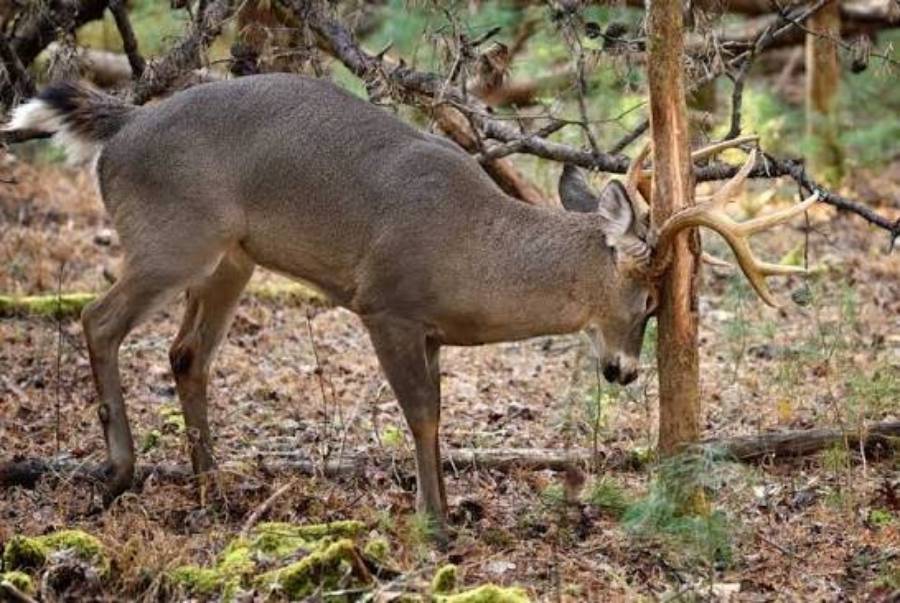
Bucks rub many tree species, but the best trees for deer rubs are typically smaller trees and saplings that provide a suitable trunk for antler rubbing and occur along areas bucks regularly travel. Pines, cedars, maples, and several other locally abundant species can receive rubs, although the trees bucks use vary by habitat, geographic region, and the species available within a buck’s home range.
Tree species alone does not determine whether a buck will make a rub. Trunk diameter, bark characteristics, tree location, and surrounding deer activity also affect which trees receive attention. A small tree along an active travel corridor, for example, can provide more useful hunting information than the same species growing where bucks rarely travel. This is why hunters should evaluate the tree and the location of the rub together rather than search for one supposedly universal “rub tree.”
For hunters, rubs provide more than evidence that a buck has visited an area. Fresh rubs, concentrations of rubbed trees, and rub lines can help identify areas of recent buck activity and potential travel patterns. This guide explains which trees bucks rub, what characteristics they select, when and where rubbing occurs, and how to use those signs when scouting whitetails.
What Are the Best Trees for Deer Rubs?
The best trees for deer rubs are generally small-diameter trees and saplings located where bucks regularly travel, with pine, cedar, and maple among the tree types hunters may find rubbed. However, there is no single tree species that bucks consistently prefer across every whitetail habitat. Local tree availability, trunk size, bark characteristics, and the location of the tree all influence which trees receive rubs.
Pine trees can be common rub targets where young pines are abundant. Their relatively small trunks give bucks a practical surface for working their antlers, while rubbing can expose lighter wood beneath the outer bark and make fresh sign easier for hunters to notice. Pines growing along deer trails, habitat transitions, and travel routes are more relevant to scouting than an isolated rubbed pine with no additional buck sign nearby.
Cedar and related evergreen trees can also receive repeated rubbing in habitats where they are readily available. Hunters should evaluate these trees as part of the surrounding sign rather than assume cedar itself attracts every buck. A rubbed cedar positioned along a trail between cover and a feeding area, for example, provides different information from a similar rub located away from an identifiable travel route.
Maples and other hardwood saplings are also used for rubs. Their importance depends heavily on the forest composition of the area being hunted. In hardwood-dominated habitat, bucks naturally encounter a different selection of potential rub trees than they would in pine plantations, cedar thickets, or mixed forests. For this reason, identifying locally abundant rubbed species can be more useful than searching specifically for one species recommended for deer rubs.
Hunters should therefore judge a rub tree using species, trunk size, location, freshness, and nearby deer sign together. Tree species identifies what the buck rubbed, but the surrounding context determines how useful that rub is for hunting. Multiple fresh rubs associated with a recognizable trail or travel corridor provide stronger evidence of concentrated buck activity than one rubbed tree found by itself.
What Size Trees Do Bucks Prefer to Rub?
Bucks commonly rub saplings and relatively small trees that allow them to work their antlers around the trunk. Tree diameter matters because the physical interaction between the antlers and trunk changes as the tree becomes larger. A small trunk can contact the antlers between individual tines and along the beams, while a substantially larger trunk provides a different rubbing surface.
Hunters should not assume that a large rubbed tree automatically identifies a large or mature buck. A mature buck is physically capable of damaging a substantial tree, but rub size alone does not establish the age or antler size of the deer responsible for it. Tree species, bark thickness, trunk condition, and the intensity of rubbing can all affect how large a rub appears.
A better scouting approach is to evaluate the pattern of rubs rather than the diameter of one tree. Several rubs of different sizes concentrated along the same travel route provide evidence that bucks are using that location. When those rubs are fresh and occur alongside tracks, trails, scrapes, bedding cover, or other deer sign, the combined evidence provides more hunting value than trying to estimate buck size from a single damaged trunk.
Why Do Bucks Choose Certain Trees to Rub?
Bucks choose rub trees based on a combination of tree characteristics, availability, and location within their normal movement areas. Species can influence which trees receive rubs, but it is only one part of the selection process. Trunk diameter, bark characteristics, surrounding cover, and proximity to deer travel routes can make one tree more likely to receive a rub than another tree of the same species.
Tree diameter affects how a buck can position its antlers against the trunk. Smaller trees and saplings allow the antlers to contact the trunk from several angles as the buck pushes, twists, and moves its head. This helps explain why hunters frequently encounter rubs on relatively small trees even when much larger trees are available nearby. Larger trees can still be rubbed, but their presence should not be interpreted as a requirement for mature-buck activity.
Bark characteristics also affect the appearance and detectability of a rub. Rubbing removes or damages the outer bark and can expose the lighter material underneath, creating a visible contrast that hunters can identify while scouting. The amount of visible damage depends partly on the tree itself, so two bucks applying similar force to different tree species can leave rubs that look substantially different.
Location provides the hunting context that tree characteristics alone cannot supply. A suitable sapling positioned along a frequently used travel route has more opportunity to be rubbed than an identical tree located where bucks rarely move. This is why hunters should examine trails, cover edges, habitat transitions, bedding-area approaches, and other movement routes when searching for rubs instead of concentrating exclusively on a particular tree species.
Tree preference should therefore be evaluated locally. The most useful rub tree for a hunter is a suitable tree that bucks in that specific habitat are actually using. Once a hunter identifies which locally common trees repeatedly receive fresh rubs, those trees become useful visual markers for locating additional buck sign throughout similar habitat.
Why Do Bucks Rub Their Antlers on Trees?
Bucks rub trees as part of normal antler and breeding-season behavior, including removing velvet from hardened antlers and interacting physically with trees as seasonal buck behavior changes. A rub is therefore not random tree damage. It is physical evidence that a buck was present at that location and interacted with the tree.
Velvet removal is associated with the period when antlers finish developing and harden. During antler growth, velvet supplies the developing antler with blood and nutrients. Once antler development is complete, the velvet dries and is shed. Rubbing vegetation and trees can help remove remaining velvet from the hardened antlers.
Rubbing activity is not limited to the initial removal of velvet. Bucks continue making rubs after their antlers are hard, which means hunters should not interpret every rub simply as evidence of velvet removal. Rubs occur within a broader set of seasonal behaviors associated with buck movement and the breeding period.
For scouting purposes, the distinction matters because a rub confirms buck activity at a location but does not by itself reveal when the buck will return. One rub shows that a buck used the location at least once. Several fresh rubs distributed along a trail or corridor create a stronger pattern that hunters can combine with tracks, scrapes, bedding cover, feeding areas, and direct observations.
When Do Bucks Start Rubbing Trees?
Bucks begin making noticeable rubs as their antlers harden and velvet is shed, with rubbing activity continuing into the fall breeding season. The exact calendar timing varies with latitude, local deer biology, and individual animals, so hunters should use seasonal conditions and fresh field sign rather than rely on one fixed date.
Early rubs can indicate that bucks are transitioning away from their summer antler-growth period. At this stage, hunters may begin finding newly exposed wood and recently damaged bark on small trees. These signs establish that bucks are using the area, but early-season rub locations should not automatically be treated as permanent fall movement patterns because buck behavior and ranges can change as the season progresses.
Rubs become more useful when hunters can connect them to repeated movement. A series of fresh rubs along a trail, cover edge, or corridor provides more information than a single early rub. Hunters can then compare the sign with bedding cover, food sources, tracks, scrapes, trail-camera observations, or direct sightings to determine whether the area continues to receive buck activity.
Bucks can continue rubbing during the rut, so a rub should be interpreted according to its freshness and surrounding sign rather than the calendar alone. Fresh damage indicates more recent activity than an old, weathered rub. For a hunter deciding where to spend scouting or hunting time, current sign has greater practical value than knowing only when bucks generally begin rubbing each year.
Where Are Deer Rubs Most Commonly Found?
Deer rubs are most useful to hunters when they occur along established buck travel routes, habitat transitions, and areas connecting bedding cover with feeding areas. Bucks can rub isolated trees almost anywhere they travel, but concentrations of rubs provide more information because they reveal repeated activity within a defined area.
Travel corridors are productive places to search because they funnel deer movement between important resources. These corridors can include narrow strips of cover, terrain features, field edges, creek bottoms, logging roads, and trails connecting bedding and feeding areas. Finding several rubs along the same corridor indicates that bucks have moved through that route, although the rubs alone do not establish whether the movement occurred during daylight.
Areas near bedding cover deserve particular attention. Bucks often use thicker vegetation for security, and trails entering or leaving that cover can contain rubs. A fresh concentration of rubs near a bedding-area approach can therefore have greater hunting value than an equally fresh rub beside an exposed feeding area because the former may occur closer to where a buck spends daylight hours.
Habitat transitions can also concentrate sign. A transition occurs where two types of cover or vegetation meet, such as mature timber adjoining young growth or thick cover meeting a more open area. These edges can influence deer travel and give hunters defined locations to inspect for rubs, tracks, trails, and other buck sign.
Hunters should evaluate rub location and surrounding sign together. A single rub confirms that a buck interacted with one tree. Several rubs associated with a defined trail, tracks, nearby cover, and other fresh sign provide stronger evidence of a travel pattern that can be investigated further.
How Can You Tell if a Deer Rub Is Fresh?
A fresh deer rub typically has recently exposed wood, relatively clean bark damage, and little weathering compared with an older rub. Hunters can use these physical characteristics to estimate whether the rubbing activity occurred recently, although the exact appearance varies according to tree species, weather, and how aggressively the tree was rubbed.
Exposed wood provides one of the easiest visual clues. Freshly damaged bark can reveal brighter material beneath the tree’s outer surface. As the rub ages, exposure to sunlight, moisture, oxidation, dirt, and weather gradually changes its appearance. Hunters should therefore compare the damaged surface with older rubs on similar trees in the same area instead of relying on color alone.
Fresh debris can provide another clue. Pieces of bark or wood material around the base of a recently rubbed tree may indicate relatively recent damage. Sap or moisture can also be visible on certain species after fresh injury. These indicators are species-dependent, however, so their absence does not automatically mean a rub is old.
Weather conditions affect how quickly these signs disappear. Rain can wash exposed surfaces and move bark fragments, while prolonged exposure changes the color of damaged wood. A rub found immediately after several days of rain may consequently look different from an equally recent rub made during dry weather.
Freshness establishes recency, not a guaranteed return. A fresh rub means a buck recently used the location, but it does not prove the buck will revisit that exact tree during legal shooting hours. Hunters should look for additional fresh rubs, tracks, trails, scrapes, bedding cover, and other current sign before treating the location as a hunting setup.
What Does a Rub Line Tell You About Buck Movement?
A rub line is a sequence or concentration of rubbed trees that can help hunters identify a route bucks have used. Its hunting value comes from the spatial relationship between multiple rubs rather than any single damaged tree. When several fresh rubs follow the same trail, terrain feature, or cover edge, hunters have stronger evidence of repeated buck movement through that corridor.
The first step is to determine whether the rubs form a meaningful pattern. Hunters should examine the distance between rubs, their relationship to visible trails, surrounding cover, terrain, and nearby feeding or bedding areas. Several rubs scattered randomly across a large property provide less directional information than fresh rubs concentrated along a defined route.
A rub line should then be connected to the surrounding habitat. For example, a line extending from thick bedding cover toward a food source suggests a potential travel connection between the two areas. That observation creates a hypothesis about buck movement; it does not prove that the buck travels from bedding to feeding along the line every day. Tracks, trail-camera data, direct observations, and additional fresh sign can strengthen or weaken that interpretation.
Hunters should also distinguish between evidence of movement and evidence of huntable movement. A heavily rubbed trail may receive most of its activity after dark. Conversely, sign positioned closer to secure bedding cover can sometimes provide a more useful starting point for investigating daylight movement. This distinction prevents hunters from selecting a stand simply because an area contains numerous impressive rubs.
The strongest hunting interpretation therefore comes from combining rub concentration, freshness, travel routes, cover, food, and additional deer sign. A rub line narrows the area that deserves attention; subsequent scouting determines whether that route provides a realistic hunting opportunity.
Can You Tell the Size of a Buck From a Tree Rub?
You cannot reliably determine a buck’s body size, age, or antler size from a single tree rub. A large rub can show that a buck was capable of working a substantial tree, but tree diameter alone does not identify the size of the deer that made it. Tree species, bark thickness, trunk condition, and rubbing intensity all influence the amount of visible damage.
Rub height can provide additional information, but it also has limits. Antler contact with a tree depends on the buck’s posture, the angle of the trunk, surrounding terrain, branches, and the way the deer moves its head while rubbing. A high rub is therefore not definitive evidence that an exceptionally large buck produced it.
Hunters can obtain more useful information by examining the entire group of signs surrounding a rub. Multiple heavily worked trees, tracks, scrapes, trail-camera images, and repeated activity along the same travel corridor provide a stronger basis for evaluating the deer using an area. A single impressive rub should be treated as evidence of buck presence rather than proof of a mature buck.
The practical distinction is important when scouting. Rub size indicates the characteristics of the damaged tree more reliably than it indicates the characteristics of the buck. Hunters trying to identify a mature deer should confirm the animal through direct observation, trail-camera evidence, tracks, or a combination of several signs instead of estimating age from tree diameter alone.
Read more: Best Shrubs for Whitetail Deer: Food & Cover
What Is the Difference Between a Deer Rub and a Scrape?
A deer rub is damage created when a buck works its antlers against a tree, while a scrape is a ground-based sign created when a buck clears leaves and debris from an area. Both are forms of buck sign, but hunters should interpret them differently because they represent different physical behaviors.
Rubs are immediately associated with trees or woody vegetation. Bark may be stripped, scraped, or polished where the antlers contacted the trunk. Hunters can use the location and distribution of these rubbed trees to investigate where bucks have traveled, particularly when several fresh rubs occur along the same route.
Scrapes are identified primarily by disturbed ground. They are commonly associated with scent communication and may also involve an overhanging or licking branch. Because bucks can revisit scrape locations, scrapes can provide a different type of information about deer behavior than a single rub.
The two signs become more valuable when they occur within the same movement context. A hunter who finds fresh rubs along a trail and active scrapes nearby has multiple indicators of buck activity rather than one isolated sign. Tracks, cover, food sources, bedding areas, and trail-camera observations can then help determine how the location fits into a broader movement pattern.
Hunters should therefore avoid treating rubs and scrapes as interchangeable. Rubs primarily show where bucks have physically interacted with trees, while scrapes provide a separate form of behavioral and scent-related sign. Reading both within the surrounding habitat produces more useful scouting information than judging either sign in isolation.
Should You Hunt Directly Over a Deer Rub?
You should not choose a hunting location solely because you find a deer rub. A rub proves that a buck visited and interacted with that tree, but it does not establish how frequently the deer uses the location, whether it will return, or whether the activity occurs during legal shooting hours.
An isolated rub deserves additional scouting before it influences stand placement. Hunters should first determine whether the rub appears fresh, then search for other current signs nearby. Additional rubs, tracks, scrapes, established trails, and trail-camera activity can show whether the tree is part of a larger pattern or simply records a single visit.
The next step is to connect that pattern with habitat. Bedding cover, feeding areas, terrain features, habitat transitions, and secure travel corridors can explain why a buck is moving through a particular location. A fresh rub line positioned along a covered route near bedding habitat, for example, gives a hunter more information to evaluate than an isolated rub in an open area.
Timing must also be considered. A location can contain extensive buck sign while receiving most deer traffic at night. Trail cameras, direct observation, fresh tracks, and knowledge of bedding-to-feeding movement can help determine whether bucks are using the route during huntable hours. Hunters should also consider wind direction and entry and exit routes so that scouting information can be converted into a practical setup without unnecessarily disturbing the area.
A useful decision process is identify the rub, evaluate its freshness, locate additional sign, determine the likely travel route, connect that route with bedding and feeding cover, verify current activity, and then select a hunting position. This approach uses rubs for what they provide best: evidence that helps narrow down where a hunter should investigate buck movement.
The best trees for deer rubs are therefore not valuable simply because of their species. Their hunting value comes from the relationship between the rubbed tree, fresh buck sign, habitat, and movement. A pine, cedar, maple, or other locally available tree becomes meaningful when its rub helps reveal where and how bucks are using the property.