
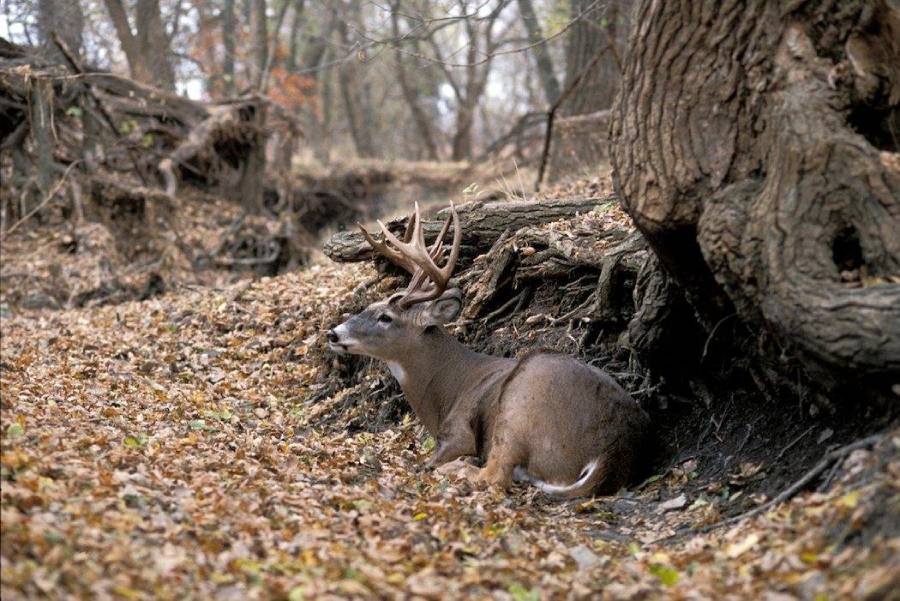
The best native grasses for deer bedding cover are switchgrass, big bluestem, Indiangrass, little bluestem, and eastern gamagrass. These grasses can create the height, density, and vertical structure whitetails need for concealment, but they do not provide the same level of bedding cover on every property. Switchgrass is particularly useful where dense screening and persistent upright cover are priorities, while big bluestem and Indiangrass can add tall structural cover to a more diverse native grass stand.
A good deer bedding grass must do more than grow tall during summer. Its value depends on how much visual security the stand provides, how well the stems remain upright later in the year, and whether the species can establish under the soil, moisture, and sunlight conditions of the planting site. A grass that performs well on one hunting property can produce weaker cover on a site with different drainage, fertility, or competition.
Choosing the best native grass therefore requires matching the species or seed mix to both the property and the habitat objective. This guide compares five native grasses for deer bedding cover, explains what makes grass suitable for bedding habitat, and covers site selection, planting, maintenance, and integration with woody cover.
What Are the Best Native Grasses for Deer Bedding Cover?
The best native grasses for deer bedding cover are switchgrass, big bluestem, Indiangrass, little bluestem, and eastern gamagrass. Switchgrass is the strongest choice when the primary objective is dense, upright security cover, while big bluestem and Indiangrass are valuable where a landowner wants tall cover within a more diverse native grass stand. Little bluestem provides shorter structural diversity, and eastern gamagrass is better suited to specific sites with adequate moisture.
| Native grass | Mature height | Cover density | Winter structure | Suitable site | Primary bedding-cover role |
|---|---|---|---|---|---|
| Switchgrass | About 3–6+ ft | High in established stands | Strong | Wide range; varies by cultivar | Dense security and screening cover |
| Big bluestem | About 4–8 ft | Moderate to high | Moderate | Well-drained to moderately moist soils | Tall structural cover |
| Indiangrass | About 3–7 ft | Moderate to high | Moderate | Well-drained soils with full sun | Tall cover in mixed stands |
| Little bluestem | About 2–4 ft | Moderate | Moderate | Dry, well-drained sites | Shorter structural and transitional cover |
| Eastern gamagrass | About 4–8 ft | High individual plant mass | Moderate | Moist, fertile sites | Tall cover on suitable sites |
The exact mature height and stand structure vary with cultivar, soil, moisture, competition, climate, and management. For deer habitat, these measurements matter because plant height alone does not determine whether a field functions as bedding cover. Stem density, horizontal visibility, lodging resistance, and the amount of structure remaining during hunting season are also important.
Switchgrass is generally the most practical native grass when dense deer bedding and security cover are the main objectives. It is a tall native warm-season perennial that can form relatively dense stands and retain substantial upright structure after the growing season. That structure limits visibility through a planting and can give deer greater concealment when moving or bedding within the field. Cultivar selection matters because switchgrass varieties differ in mature height, adaptation, and growth characteristics.
Switchgrass also works well when a landowner needs visual screening around bedding habitat. A strategically positioned stand can separate secure habitat from roads, neighboring properties, access routes, or other areas where human activity occurs. However, planting an entire property in an extremely uniform stand is not automatically better. Deer habitat also benefits from structural diversity, transitions, woody vegetation, and access to forage.
Big bluestem is a strong choice for adding tall vertical structure to deer bedding habitat. Mature plants can reach several feet in height and form substantial warm-season cover during the growing season. Its primary advantage is the combination of height and compatibility with other native prairie species, which makes it useful when the goal is a diverse native stand rather than a switchgrass-dominated screen.
Big bluestem can be planted with species such as Indiangrass and little bluestem to produce multiple vegetation heights within the same habitat area. This variation creates a less uniform field and allows grass cover to transition into forbs, shrubs, or timber edges. Its actual bedding value depends on stand density and how much usable structure remains after weather begins flattening mature vegetation.
Indiangrass provides tall cover and works particularly well as part of a native warm-season grass mixture. It commonly grows alongside big bluestem in native grass communities and contributes additional vertical structure without requiring the planting to consist of a single grass species. This makes it useful for landowners managing deer habitat alongside broader wildlife and native vegetation objectives.
Indiangrass should not be selected simply because it reaches a substantial mature height. A successful bedding stand must still provide enough horizontal concealment near deer level. Combining Indiangrass with compatible grasses, forbs, and scattered woody cover can produce more structural variation than relying on tall stems alone.
Little bluestem is better suited to supporting diverse deer cover than creating the tallest standalone bedding screen. It generally remains shorter than switchgrass, big bluestem, and Indiangrass, but it performs well on many dry, well-drained sites where taller species may not produce equally vigorous growth. Its dense basal growth can add lower-level structure to a mixed planting.
For this reason, little bluestem is especially useful in transitional habitat. It can help connect taller native grass stands with open areas, upland sites, field edges, or other early-successional vegetation. A landowner whose only objective is maximum visual screening would normally prioritize a taller grass, but little bluestem can increase structural diversity across a larger bedding complex.
Eastern gamagrass is a tall native warm-season grass best considered for moist, productive locations. Individual plants develop large clumps with substantial leaves and stems, creating considerable vegetation where site conditions support strong growth. Its moisture preference makes it a more site-specific choice than simply planting the same bedding grass across every acre.
Eastern gamagrass is therefore most useful when habitat planning starts with existing soil and drainage conditions. Moist portions of a property can support a different native grass community than dry uplands. Using species according to those differences creates stronger vegetation and reduces the need to force one grass species into every part of a hunting property.
For most deer properties, the choice is therefore not simply which native grass grows tallest. Switchgrass is the leading option for dense security and screening cover; big bluestem and Indiangrass provide tall structural cover in diverse stands; little bluestem fits drier sites and lower structural layers; and eastern gamagrass fits moist sites where it can develop vigorous growth. The best planting uses these characteristics according to the site’s conditions and the specific function each area needs to perform.
What Makes a Native Grass Good for Deer Bedding Cover?
A good native grass for deer bedding cover provides sufficient height, horizontal density, structural strength, and seasonal persistence to reduce visibility and create secure habitat. Height matters, but a tall grass with widely spaced stems can provide less effective concealment than a shorter stand with stronger horizontal structure. The practical goal is not to grow the tallest possible grass; it is to establish vegetation that makes deer less exposed while bedding and moving through the area.
Height determines how much vertical cover surrounds a deer. Tall native warm-season grasses such as switchgrass, big bluestem, and Indiangrass can extend well above a bedded whitetail during the growing season. This helps break up sight lines from roads, neighboring properties, field edges, and hunter access routes. However, mature height should be evaluated together with stand density because deer can remain visible through a tall but open planting.
Horizontal density determines how effectively a grass stand blocks visibility near deer level. A bedding area needs enough vegetation between individual plants to create concealment rather than a field of isolated tall stems. Switchgrass can perform well for this purpose because an established stand can produce both vertical height and substantial stem density. Mixed native grass stands can also create effective cover when several grasses and other plants occupy different levels of the vegetation profile.
More density is not automatically better. A uniform stand that becomes extremely thick can provide excellent visual screening while offering less structural diversity than a combination of grasses, forbs, shrubs, and scattered woody growth. Deer bedding habitat should therefore be evaluated as a complete vegetation structure rather than by counting grass stems alone. A property manager can use dense grass for security while maintaining more diverse vegetation around or within the larger bedding complex.
Structural strength determines whether native grass remains useful after summer growth ends. Bedding cover has limited hunting value if tall vegetation collapses before or during the period when deer need security from increased human pressure. Rain, wind, snow, ice, and plant maturity can cause stems to lodge, reducing both effective height and visual concealment. Species and cultivars that retain more upright structure can therefore provide a longer period of functional cover.
This distinction is particularly important when evaluating a native grass planting during summer. A field that reaches five or six feet in August can appear ideal, yet its structure may look substantially different after repeated autumn storms or winter snowfall. Bedding-cover decisions should be based on the vegetation present during the period the property is actually hunted, not solely on peak summer height.
Seasonal persistence determines how long the bedding structure remains functional throughout the year. Native warm-season grasses become dormant after the growing season, but their standing stems can continue providing physical cover. The amount that remains depends on the grass species, cultivar, stand maturity, weather, and management. This is one reason switchgrass is frequently prioritized for security-cover applications: its value is tied not only to summer growth but also to its ability to maintain useful standing structure after dormancy.
The best deer bedding cover consequently combines several vegetation layers. Tall grasses create vertical concealment, dense lower vegetation limits horizontal visibility, and shrubs or woody growth can add stronger year-round structure. Native grass should be viewed as one component of a bedding system rather than a substitute for every other habitat feature.
Is Switchgrass Better Than a Native Grass Mix for Deer Bedding?
Switchgrass is better when dense screening and persistent grass structure are the primary objectives, while a native grass mix is better when the property needs greater plant and structural diversity. Neither option is automatically superior for every deer property. The correct choice depends on what the specific planting is intended to accomplish.
A switchgrass-dominant planting concentrates the characteristics of one tall native warm-season grass across the stand. This approach is useful for creating visual barriers, screening human activity, separating secure habitat from access routes, or establishing relatively consistent grass cover in a designated bedding area. Where the primary objective is security rather than maximum plant diversity, concentrating switchgrass can make the function of the planting more predictable.
A mixed native grass planting uses species such as switchgrass, big bluestem, Indiangrass, and little bluestem to create different vegetation heights and growth forms. Forbs can also occur within or be incorporated into a diverse native stand. Instead of producing one relatively uniform layer, the mixture creates several forms of cover and allows individual species to perform differently across changes in soil, drainage, and microtopography.
A native grass mix also reduces dependence on one species performing equally well across the entire site. A field can contain dry slopes, productive lower ground, and transitional areas within a relatively small acreage. Little bluestem may compete effectively on a drier portion while taller warm-season grasses dominate more productive locations. This site-driven variation can produce a heterogeneous habitat structure that a single-species planting is less likely to provide.
The two approaches can also be combined on the same hunting property. Dense switchgrass can be concentrated where visual screening is most valuable, while mixed native grasses can occupy larger habitat blocks where structural diversity is the priority. For example, a landowner could use switchgrass along an access route or exposed field edge and transition into big bluestem, Indiangrass, little bluestem, forbs, and woody vegetation farther inside the bedding area.
For deer habitat management, the decision should therefore be based on function: plant switchgrass where dependable grass screening is the priority, and use a diverse native mixture where multiple vegetation layers and broader habitat diversity are more important. Designing each planting around its specific function is more effective than using one seed mix uniformly across every acre of a hunting property.
Which Native Grass Is Best for Different Soil and Site Conditions?
The best native grass for a deer bedding area is the species that can develop strong, persistent cover under the site’s actual soil moisture, drainage, sunlight, and growing conditions. Switchgrass has relatively broad site adaptability, big bluestem and Indiangrass perform well across many productive upland sites, little bluestem is particularly useful on drier ground, and eastern gamagrass is better matched to moist, productive soils. Selecting grass according to the site produces more dependable bedding structure than choosing a species based only on maximum height.
Dry upland sites favor grasses capable of maintaining growth where soil moisture becomes limited. Little bluestem is one of the strongest candidates for dry, well-drained portions of a bedding area. It does not normally provide the same tall screening structure as vigorous switchgrass or big bluestem, but its adaptation to drier sites makes it useful where taller grasses may develop less consistently. Big bluestem can also occupy well-drained uplands when soil conditions provide adequate productivity.
More productive sites provide additional options. Big bluestem and Indiangrass are useful choices where full sunlight and suitable soil conditions allow them to develop tall warm-season growth. Both species can contribute substantial vertical structure to mixed native stands. Combining them with shorter grasses and other native vegetation can create several vegetation layers rather than one uniform canopy.
Moist ground requires a different selection strategy. Eastern gamagrass is particularly relevant on moist, fertile sites because it develops large clumps and substantial above-ground growth when its moisture requirements are met. Switchgrass can also perform across a range of moisture conditions, although cultivar and local adaptation remain important. A low portion of a field should therefore not automatically receive the same seed mixture as a dry ridge simply because both areas are intended for deer bedding.
Sunlight is another major limitation. Native warm-season grasses generally produce their strongest bedding-cover structure in open areas receiving abundant sunlight. As tree canopy increases, competition for light, moisture, and nutrients can reduce grass vigor and stand density. Planting tall native grasses beneath a heavily closed canopy is therefore unlikely to produce the same structure found in an open field.
This sunlight requirement affects where grass bedding areas should be established on hunting land. Existing fields, old agricultural ground, utility corridors where planting is permitted, open woodland edges, and other sunny areas can provide suitable opportunities. Heavily shaded timber is usually better managed according to vegetation types adapted to woodland conditions rather than forcing a grass-based bedding strategy into the site.
Site variation within the same field should also influence the seed mixture. A 10-acre planting does not necessarily contain 10 acres of identical growing conditions. Changes in slope, drainage, soil depth, previous land use, and shade can alter which grasses become dominant. Matching species to these differences can produce stronger cover while also creating natural variation across the bedding area.
For hunting properties, the practical sequence is to evaluate the site before purchasing seed. Identify dry and moist areas, determine how much direct sunlight reaches the ground, examine existing vegetation, and define whether each location needs dense screening or diverse bedding structure. The best deer bedding grass is ultimately the grass that can maintain the required cover on that specific site.
How Do You Plant Native Grasses for Deer Bedding Cover?
Plant native grasses for deer bedding cover by evaluating the site, controlling competing vegetation, selecting locally adapted seed, using an appropriate planting method, and managing competition during establishment. Native warm-season grasses can take time to form mature stands, so successful bedding cover begins with establishment planning rather than simply broadcasting seed into existing vegetation.
The first step is controlling existing vegetation. Established cool-season grasses, agricultural weeds, and invasive plants can compete with native grass seedlings for sunlight, moisture, nutrients, and growing space. Seeding directly into a dense stand of competing vegetation can result in poor establishment even when the native seed itself is suitable for the site. The amount and method of vegetation control should be based on the plants already occupying the field.
Seed selection comes after site evaluation. Choose species and cultivars adapted to the region and match the mixture to the habitat objective. A planting intended primarily as a dense visual screen can justify a different species composition from a large bedding field intended to contain several vegetation layers. Soil moisture should also influence the mixture rather than using an identical seed blend across dry and wet portions of the property.
Seeding rate should be based on the seed specification rather than pounds of bulk seed alone. Native grass mixtures can differ substantially in seed size, purity, germination, and composition. For this reason, recommendations are often expressed using pure live seed, or PLS, which accounts for the proportion of viable seed within a seed lot. The correct rate depends on the species, mixture, establishment method, and conservation or habitat objective.
Planting depth is equally important because many native warm-season grass seeds should be established relatively shallowly. Placing seed too deep can reduce emergence and weaken establishment. Specialized native-grass drills are commonly used because fluffy seeds from species such as big bluestem and Indiangrass can be difficult to handle with conventional equipment. Other establishment methods can work when seed placement and soil contact are properly managed.
Planting time varies by region and establishment method, so there is no single calendar date that applies to every hunting property. Local climate, frost patterns, seed dormancy, soil conditions, and the species being planted should determine the planting window. Regional recommendations from state wildlife agencies, university extension programs, or the USDA Natural Resources Conservation Service are more useful than applying a planting date developed for a distant climate.
Native grass bedding cover should also be evaluated over multiple growing seasons rather than judged after the first summer. Establishment commonly emphasizes root development before the stand reaches its mature above-ground structure. First-year weed growth can make a planting appear unsuccessful even when native seedlings are becoming established underneath the competing vegetation.
This slower establishment changes how a deer manager should plan habitat improvements. A newly seeded field should not be expected to function immediately like a mature bedding area. Existing cover elsewhere on the property remains important while the new stand develops. Once established, the native grasses can begin providing the height, density, and persistent structure that motivated the planting.
The planting process therefore has five connected stages: evaluate the site, suppress competition, select suitable seed, establish it correctly, and manage the developing stand until mature cover forms. Skipping one of these stages can reduce stand quality and ultimately limit the amount of usable deer bedding cover produced from the planting.
How Do You Maintain Native Grass for Deer Bedding Cover?
Maintain native grass for deer bedding cover by controlling competing vegetation, preventing excessive woody encroachment, and periodically using management practices such as prescribed fire or mowing when they support the habitat objective. The goal is not to keep a native grass field visually clean. Management should preserve enough standing vegetation and structural diversity to provide deer with security while preventing undesirable plants from replacing the native stand.
Weed control is particularly important during establishment. Young native warm-season grasses invest substantial energy below ground, so weeds can grow above the seedlings and dominate the field before the native grasses develop their mature structure. This does not automatically mean the planting has failed. Management should target vegetation that directly threatens establishment rather than treating every non-grass plant as undesirable.
Once the stand matures, complete elimination of broadleaf vegetation is not necessary for creating useful deer habitat. Native forbs and other compatible plants can add structural diversity to a grass-dominated field. The management priority is controlling invasive or aggressive vegetation that suppresses the desired native community and reduces the cover characteristics the bedding area was designed to provide.
Prescribed fire is one method used to maintain native warm-season grass communities. Fire can remove accumulated plant litter, suppress certain woody plants, recycle nutrients, and stimulate new warm-season vegetation when applied under an appropriate management plan. Its effects depend on burn timing, frequency, weather, vegetation, and the objectives for the site.
A deer bedding area should not be burned simply because native grass is present. Removing standing vegetation temporarily removes much of the physical cover deer were using, so the location and timing of treatment matter. On larger properties, treating sections at different times can preserve cover elsewhere while managed acreage regenerates. Prescribed burning also requires appropriate expertise, weather conditions, equipment, permits where applicable, and a safe burn plan.
Mowing is primarily a vegetation-management tool rather than a routine requirement for mature deer bedding cover. During establishment, correctly timed mowing can reduce the height of competing vegetation before it shades young native grasses. In a mature bedding area, frequent mowing can work against the habitat objective by repeatedly removing the tall structure that provides concealment.
Mowing an entire mature stand every year can also create a uniform vegetation height. Deer habitat generally benefits from having different forms and ages of cover across the property. Where mechanical treatment is needed, managing selected sections rather than cutting every acre simultaneously can retain undisturbed security cover nearby.
Woody encroachment requires a more deliberate decision because some woody vegetation can improve deer bedding habitat while excessive succession can eventually replace the grass stand. Scattered shrubs, brush, and young trees can increase horizontal screening and structural diversity. If woody plants become dense enough to shade the native grasses, however, grass production and stand density can decline.
The correct amount of woody vegetation therefore depends on the purpose of the planting. A dedicated switchgrass screen may need more aggressive woody control to maintain dense grass structure. A larger bedding complex can benefit from pockets of shrubs and brush interspersed with native grasses. Management should maintain the intended habitat structure rather than applying the same treatment to every acre.
Read more: Best Trees for Deer Habitat: 10 Trees to Plant
Should Deer Bedding Areas Combine Native Grass With Woody Cover?
Deer bedding areas should generally combine native grass with shrubs, brush, or other woody cover when the site allows it because multiple vegetation layers provide more structural diversity than grass alone. Native grasses can create excellent vertical screening, but woody vegetation adds persistent horizontal structure and creates irregular pockets of concealment within a bedding area.
A grass-only stand tends to produce vegetation with similar growth patterns across a field, especially when one species dominates the planting. Adding scattered shrubs, brushy edges, or patches of early-successional woody vegetation breaks up that uniformity. A bedded deer can then have vegetation beside and behind it rather than relying entirely on upright grass stems for concealment.
Woody cover also changes more slowly through the seasons. Shrub stems, brush, and young woody growth can retain physical structure after herbaceous vegetation becomes dormant or is flattened by severe weather. Combining this structure with standing native grass creates several layers of cover that respond differently to wind, precipitation, snow, and seasonal dormancy.
The strongest layout does not require woody vegetation to cover the entire grass planting. Pockets and edges can create the structural variation needed while leaving enough open sunlight for native warm-season grasses. If tree and shrub canopy becomes too extensive, reduced sunlight can weaken the grass component. Maintaining a patchwork of grass, forbs, shrubs, and woody edges can therefore provide greater habitat variation than allowing either grass or trees to completely dominate the site.
Where Should Native Grass Bedding Cover Be Located on a Hunting Property?
Native grass bedding cover should be located where deer can obtain security while hunters can approach and leave hunting locations without repeatedly disturbing the bedding area. Suitable locations often connect or complement existing timber, brush, food sources, and travel cover rather than functioning as isolated grass fields.
Human visibility is one factor in placement. Native grasses can be positioned between secure habitat and roads, houses, parking locations, field entrances, or frequently traveled areas to reduce direct sight lines. Dense switchgrass is particularly useful for this screening function because a relatively narrow planting can provide a visual barrier when the stand is well established.
Access is equally important in a hunting context. A bedding improvement loses part of its strategic value if the only route to a stand requires a hunter to repeatedly walk through the cover. Entry and exit routes should therefore be considered before planting. Grass screens can sometimes help conceal hunter movement, but their position should complement wind direction, terrain, existing vegetation, and the locations being hunted.
Food and bedding cover should also be considered as connected habitat components. Deer commonly move between secure daytime cover and feeding areas, creating travel patterns that hunters may attempt to anticipate. Native grass can strengthen weak portions of this cover network by connecting timber, brush, field edges, and other secure vegetation.
However, bedding cover should not simply be planted immediately beside every food plot. The appropriate distance and location depend on property size, terrain, existing cover, hunting pressure, neighboring land use, and access. A small property with limited secure habitat requires a different layout from a large property containing extensive timber and multiple bedding complexes.
The most useful native grass planting therefore has a defined function before seed is planted. One area may serve as a visual screen along an access route, another may enlarge an existing bedding area, and another may connect two blocks of secure cover. Designing each planting around a specific habitat and hunting function makes native grass more useful than treating every open acre as a candidate for the same seed mixture.
Which Native Grass Should You Choose for Deer Bedding Cover?
Choose switchgrass when dense security cover and visual screening are the primary goals, big bluestem or Indiangrass when tall structural diversity is more important, little bluestem for drier sites, and eastern gamagrass for suitable moist ground. A native grass mix is the stronger choice when the objective is to create several vegetation layers instead of maximizing the characteristics of a single species.
Choose switchgrass for areas that need dense, tall grass structure. It is particularly useful for screening exposed bedding areas, blocking sight lines from roads or access routes, and creating grass-dominated security cover. Its ability to maintain substantial standing structure after the growing season also makes it relevant where cover is needed during hunting season. Site adaptation and cultivar selection still matter, so switchgrass should not be treated as a universal solution for every acre.
Choose big bluestem when the site can support tall native warm-season grasses and the habitat plan calls for a more diverse stand. Its height makes it valuable for vertical cover, while its compatibility with Indiangrass, little bluestem, and native forbs allows it to function as part of a structurally varied bedding area. Big bluestem is therefore better viewed as a major component of a diverse native stand than simply as a replacement for switchgrass.
Choose Indiangrass when tall cover is needed within a mixed native grass planting. It contributes substantial warm-season growth and complements other native prairie grasses rather than requiring a single-species stand. On hunting properties where habitat diversity is a priority, Indiangrass can help create variation in plant height and structure across the bedding area.
Choose little bluestem for dry, well-drained locations where its site adaptation is more valuable than maximum plant height. It generally provides less vertical screening than taller species, so it is not the first choice for a dedicated tall screen. Its value comes from adding lower structural cover and occupying portions of a property where moisture conditions may favor it over larger grasses.
Choose eastern gamagrass for moist, productive locations capable of supporting its vigorous growth. Its large growth form can add substantial vegetation to suitable sites, but its moisture requirements make it a targeted option rather than the default grass for an entire property. It is most useful when a bedding plan recognizes differences between wetter ground and dry uplands.
Choose a native grass mix when habitat diversity is more important than producing one uniform type of cover. A mixture containing compatible tall and shorter grasses can respond to variations in soil, moisture, and microtopography while producing several vegetation heights. Native forbs and selected woody vegetation can further increase structural diversity within the same bedding complex.
For many hunting properties, the strongest strategy is not choosing one grass for every location. A landowner can use switchgrass where dense screening is required, establish mixed native warm-season grasses across larger bedding areas, retain appropriate shrubs or brush for horizontal structure, and adapt the species composition to changes in soil and moisture.
The final selection should therefore follow a simple sequence: define the function of the bedding area, evaluate the site, select grasses adapted to those conditions, and manage the resulting vegetation for persistent security cover. Native grasses produce their greatest value for deer when species selection, establishment, vegetation structure, and hunting access are planned as parts of the same habitat system.