
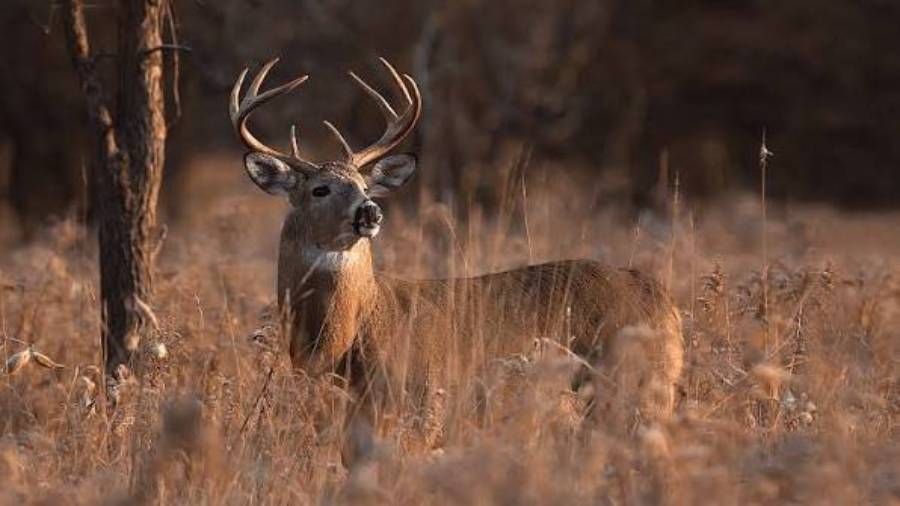
Using a thermal when deer hunting involves scanning likely deer habitat for heat signatures, identifying the animal, observing its movement, and using that information to make better hunting decisions. A thermal device detects infrared radiation emitted by animals and surrounding objects, allowing a hunter to locate warm-bodied deer when darkness, distance, or low visible-light conditions make conventional observation more difficult.
Effective thermal use depends on three separate tasks: detection, identification, and observation. Detecting a heat signature only confirms that the device has found a warmer or colder object relative to its surroundings. The hunter must still determine whether that object is a deer by evaluating its body shape, size, posture, and movement. Once identified, the deer can be observed to determine its direction of travel and position within the terrain.
Thermal imaging also has physical, practical, and legal limitations. Vegetation and solid objects can block thermal radiation, environmental conditions can reduce image contrast, and a visible heat signature does not automatically provide positive target identification. Hunting regulations governing thermal equipment also differ by jurisdiction. This guide explains how to set up a thermal, scan for deer, recognize heat signatures, estimate useful detection distance, track deer movement, and account for the equipment’s major limitations.
How Do You Use a Thermal When Deer Hunting?
To use a thermal when deer hunting, scan likely deer habitat for heat signatures, stop when you detect a potential animal, identify the deer from its physical characteristics and movement, and then observe its direction of travel. Thermal imaging works best as a detection and observation tool because it highlights temperature differences between deer and their surroundings. It can reveal the presence of an animal that may be difficult to notice with the naked eye under low-light conditions.
A practical thermal scanning process has 6 main steps. Start from a stable observation position with a broad view of the surrounding terrain. Scan the area systematically instead of moving the thermal randomly. Pause when a distinct heat signature appears, then use focus or appropriate magnification to examine it. Determine whether the heat source is a deer by looking at its body proportions, posture, and movement. Continue observing the identified deer to establish its direction of travel. Finally, use that information to decide whether remaining in your current position or repositioning is appropriate.
Do not treat every bright heat signature as a deer. Thermal devices visualize differences in infrared radiation, so other animals and warm objects can also appear prominently on the display. A partial heat signature behind vegetation can make identification particularly difficult because only sections of the animal may be visible. Positive identification therefore requires more information than the presence of heat alone.
Thermal use should also complement normal field awareness rather than replace it. A hunter still needs to account for terrain, vegetation, wind direction, deer movement, visibility, and applicable hunting regulations. Most importantly, locating an animal through a thermal is different from positively identifying a safe and legal target. Thermal information should be treated as one source of information within the broader hunting process.
How Should You Set Up a Thermal Before Deer Hunting?
Set up a thermal before deer hunting by checking the battery, focusing the image, adjusting display brightness and contrast, selecting a suitable thermal palette, and starting with a wide field of view. Completing these adjustments before actively scanning reduces unnecessary device handling in the field and makes heat signatures easier to evaluate when an animal appears.
Start with the power system because thermal devices depend continuously on their sensor, processor, and display. Charge the main battery before the hunt and carry a compatible spare when the expected hunting period approaches the device’s normal operating time. Cold environmental conditions can also affect battery performance, so the advertised maximum runtime should not automatically be treated as guaranteed field runtime.
Next, adjust the focus and image settings for the terrain you expect to observe. The image should provide enough definition to distinguish an animal’s outline from surrounding vegetation and terrain. Set screen brightness only as high as necessary for comfortable viewing. An excessively bright display can be distracting in darkness, while insufficient brightness can make subtle temperature differences harder to interpret.
Choose a thermal color palette that makes heat sources easy to distinguish from the background. Common options include white-hot and black-hot, although available palettes depend on the device. The most useful palette is the one that gives the hunter clear separation between the deer and its surroundings under the current conditions. Changing palettes does not remove physical obstructions or create additional thermal detail that the sensor did not capture.
Begin scanning at low magnification when possible. Lower magnification provides a wider field of view, which makes it easier to cover large areas and locate heat signatures. Increase magnification after detecting an animal when additional visual information is needed for observation. Heavy digital magnification enlarges the existing image rather than creating new sensor detail, so excessive zoom can make an image larger without making identification more reliable.
Complete a final functional check before relying on the thermal in the field. Confirm that the lens is clean, the display is readable, the controls are familiar, and the device can be operated without searching through menus repeatedly. A properly configured thermal lets the hunter spend more time observing the terrain and less time adjusting equipment when deer activity occurs.
How Do You Scan for Deer With a Thermal?
To scan for deer with a thermal, divide the visible terrain into sections and sweep each section slowly enough to detect heat signatures before moving to the next area. Start with a wide field of view and low magnification rather than zooming into individual locations immediately. The objective of the first scan is detection: find heat sources that deserve closer examination before spending time identifying them.
Use a consistent scanning pattern instead of moving the thermal randomly across the landscape. One practical method is to begin at one edge of the observable area, sweep horizontally across it, shift the viewing area slightly, and scan back in the opposite direction. Overlap adjacent passes so narrow sections of terrain are not skipped. Pause periodically during each sweep because stationary viewing makes small or partially obscured heat signatures easier to notice than continuous movement.
Stop scanning when you detect a heat source that could be an animal. Center the heat signature in the display, refine the focus, and observe it before increasing magnification. Look for changes in position, body movement, and the appearance of additional warm areas that may reveal more of the animal. Resume the systematic scan only after determining what useful information can be obtained from that heat signature.
Terrain should determine where you spend the most scanning time. Field edges, openings, trails, gaps between vegetation, and other locations with an unobstructed line of sight provide better opportunities to detect a complete heat signature. Dense vegetation requires a slower approach because branches, leaves, and terrain can hide portions of an animal’s thermal radiation. A thermal may reveal exposed parts of a deer through gaps in brush, but it does not provide an unobstructed image through solid vegetation.
Where Should You Scan for Deer First?
Scan areas where deer are most likely to be visible and where the thermal has a clear line of sight first. Open fields, field edges, trails, gaps in vegetation, and transitions between cover and open terrain provide useful starting points because a larger portion of the animal can remain exposed to the thermal sensor.
Prioritize locations according to the hunting situation rather than repeatedly scanning every visible acre with equal attention. For example, a hunter overlooking an open field can check the field edges and visible travel routes before examining dense cover. Once the high-priority areas have been checked, expand the scan systematically to the remaining terrain. This sequence improves scanning efficiency without assuming that deer will only appear in obvious locations.
Repeat scans of important areas during the hunt. A location that produced no heat signature during the first sweep can contain deer several minutes later because animals move through the landscape. Repeated systematic scanning therefore provides more useful information than treating a single sweep as confirmation that an area is empty.
How Do You Recognize a Deer on a Thermal?
Recognize a deer on a thermal by evaluating its body shape, proportions, posture, movement, and visible heat pattern together rather than relying on the brightness of the heat signature. Thermal imaging can make a warm-bodied animal stand out from its surroundings, but a bright object alone does not identify the species.
Begin with the overall silhouette when enough of the animal is visible. A deer presents a recognizable combination of a horizontal torso, relatively long legs, a defined neck, and a smaller head extending from the front of the body. These features become more informative when the animal turns, walks, feeds, or changes posture. Movement can reveal body proportions that are difficult to interpret from a single stationary thermal image.
Observe the heat source for several moments when identification is uncertain. Walking, raising or lowering the head, turning the body, and interacting with nearby animals provide additional visual information. Multiple deer appearing together can also make identification easier because repeated similarities in size, posture, and movement provide more context than an isolated partial heat signature.
Distance and vegetation reduce the amount of identifying information available. At longer ranges, a deer may occupy too few sensor pixels to show useful anatomical detail. Brush can create a different problem by exposing only the head, torso, or legs while blocking the rest of the thermal radiation. In either case, detecting an animal does not mean the hunter has enough information to identify it positively.
Treat uncertain thermal signatures as unidentified objects until additional information resolves the uncertainty. This distinction is essential because thermal detection, species recognition, and positive target identification are separate stages. A device may detect heat at a distance where it cannot provide enough detail to confirm that the source is a deer, much less establish all information required for a safe and legal hunting decision.
How Far Can You Detect a Deer With a Thermal?
A thermal can detect a deer farther away than it can reliably identify the animal because detection, recognition, and identification require different levels of image detail. There is no single detection distance that applies to every thermal device. Sensor resolution, objective lens, magnification, weather, temperature contrast, vegetation, terrain, and the amount of the animal exposed to the sensor all affect usable range.
Detection is the first and longest-range stage. At this distance, the thermal provides enough information to show that a heat source is present, but the image may contain little information about the animal’s species. A distant deer, for example, may appear as a small warm shape against a cooler background. This information is useful for locating potential animals, but it is insufficient for concluding that every detected heat source is a deer.
Recognition requires more visual information. The hunter needs to see characteristics such as the approximate size, body proportions, posture, or movement of the heat source. Identification requires greater detail again because the observer needs enough information to determine what the animal actually is. For this reason, a manufacturer’s stated detection range should not automatically be interpreted as the distance at which a deer can be positively identified.
Thermal hardware has a direct effect on these distances. Higher sensor resolution provides more pixels across the observed animal, while the objective lens and field of view affect how much detail can be captured at a given distance. Optical characteristics therefore matter more for identification than simply enlarging an image with digital zoom. Digital magnification increases the apparent size of existing pixels but does not add thermal information that the sensor failed to capture.
Environmental conditions can shorten practical detection and identification distances even when the device specifications remain unchanged. Thermal images depend on temperature differences, so strong contrast between a deer and its surroundings generally makes the animal easier to separate from the background. Warm terrain, rain, fog, dense vegetation, and physical obstructions can reduce the amount or clarity of thermal information reaching the sensor.
Use the device’s detection specification as a capability reference rather than a guaranteed identification distance. In the field, the useful range ends when the thermal image no longer provides enough information for the task being performed. A heat signature may be sufficient for detection while remaining insufficient for recognition or positive identification.
How Do You Track Deer Movement With a Thermal?
To track deer movement with a thermal, keep the identified animal within the field of view and observe its direction, speed, stops, and changes in position relative to recognizable terrain features. The purpose is to establish where the deer is moving rather than continuously increasing magnification or concentrating only on the heat signature itself.
Begin with a field of view wide enough to show both the deer and part of the surrounding terrain. A tightly magnified image may provide a larger view of the animal but remove the environmental references needed to understand its direction of travel. Trees, field edges, openings, ridges, trails, and changes in vegetation can provide reference points for estimating where the deer has moved.
Observe movement patterns over time rather than drawing a conclusion from a few seconds of activity. A deer may walk several yards, stop to feed, change direction, or disappear temporarily behind vegetation. Maintaining observation makes it easier to distinguish a consistent travel direction from a temporary movement. For example, an animal repeatedly moving along the same field edge provides more useful directional information than one brief change in position.
When a deer enters cover, remember the last confirmed location and direction of movement instead of assuming the thermal will continue showing it through the obstruction. Trees, terrain, and sufficiently dense vegetation block thermal radiation. Small gaps may expose parts of the animal again, but an absent heat signature does not prove that the deer has left the area.
Use thermal tracking to maintain situational awareness, not to replace positive visual identification or normal hunting judgment. The device can show where an identified deer moves while a usable heat signature remains visible, but uncertainty increases when distance, terrain, or vegetation removes identifying detail. Re-establish identification when necessary rather than assuming that every subsequent heat signature belongs to the same animal.
How Can You Use a Thermal to Reposition While Deer Hunting?
Use a thermal to reposition while deer hunting by observing the deer’s confirmed location and direction of travel, then choosing a new observation position that maintains useful visibility without assuming the animal will continue on the same path. Thermal information is most valuable for repositioning when it is combined with terrain, vegetation, wind direction, and known travel routes.
Start by establishing the deer’s movement before changing positions. Observe whether the animal is traveling consistently, feeding within a limited area, standing still, or moving in and out of cover. A deer walking steadily along a field edge provides a clearer movement pattern than a deer repeatedly changing direction while feeding. The longer the movement remains consistent, the more useful that information becomes for deciding whether repositioning makes sense.
Use visible terrain features to record the deer’s last confirmed position. A tree line, field corner, trail intersection, opening, ridge, or other recognizable feature provides a better reference than remembering where the heat signature appeared on the thermal display. This becomes particularly important when the animal enters vegetation and its heat signature disappears. Thermal imaging does not show a continuous path through solid obstructions, so the last confirmed position should remain the reference point until the deer is detected again.
Consider wind direction before selecting a new position. Thermal imaging can reveal where a deer is located, but it does not eliminate the importance of scent. A route that provides a better viewing angle may still be a poor repositioning choice when it places the hunter where wind carries human scent toward the animal. Terrain and available cover also determine whether moving is practical without creating unnecessary disturbance.
Avoid using excessive magnification while repositioning. A wider field of view provides more environmental context and makes it easier to relocate an animal after changing observation angles. Once the deer is detected again, additional magnification can be used when necessary to examine the heat signature. This detection-first approach reduces the chance of searching a large landscape through a narrow, highly magnified field of view.
Re-establish identification after changing position, especially when multiple animals are present. Losing sight of one deer and detecting another heat signature nearby does not prove that both observations involve the same animal. Changes in distance, viewing angle, vegetation, and animal movement can alter the appearance of a thermal signature. Confirm the animal again instead of relying on the previous identification.
Thermal-assisted repositioning therefore follows a simple sequence: confirm the deer, establish its movement, mark its position against the terrain, evaluate wind and cover, reposition when appropriate, and reacquire the animal before making further decisions. The thermal supplies location and movement information, while field conditions determine how that information should be used.
When Does Thermal Imaging Work Best for Deer Hunting?
Thermal imaging works best for detecting deer when there is enough temperature contrast between the animal and its surroundings for the sensor to produce a distinct heat signature. Darkness itself is not what makes thermal imaging effective. The device detects infrared radiation rather than visible light, so the temperature relationship between the deer, vegetation, ground, and other objects has a major effect on image contrast.
Cool environmental conditions can create strong thermal contrast when a deer’s body is substantially warmer than the surrounding terrain. Under these conditions, the animal’s heat signature can stand out clearly against cooler vegetation or ground. This is one reason thermal equipment can be particularly effective during nighttime and cooler periods, when surfaces are no longer absorbing as much solar energy as they do during the day.
Warm conditions can make thermal interpretation more difficult. Ground, rocks, trees, and other surfaces absorb solar energy and may remain warm after exposure to sunlight. When background temperatures approach the apparent temperature of an animal, the difference between the deer and its surroundings becomes less distinct. The thermal can still detect infrared radiation, but the image may provide less contrast for quickly separating an animal from the background.
Rain, fog, and high atmospheric moisture can also reduce useful thermal performance. Water absorbs and scatters portions of infrared radiation between the target and the sensor, which can reduce image contrast and practical detection distance. The effect becomes more important as the distance between the hunter and deer increases because the thermal radiation must travel through more atmosphere before reaching the device.
Vegetation creates a different limitation because it physically blocks the thermal radiation emitted by the deer. Thin branches or gaps in foliage may allow parts of the animal to remain visible, while dense brush can hide most or all of its heat signature. A thermal therefore performs most effectively when there is both adequate temperature contrast and a relatively unobstructed line of sight between the sensor and the animal.
Evaluate thermal performance according to the actual field conditions rather than assuming one setting will work throughout a hunt. Changes in temperature, sunlight, precipitation, terrain, and vegetation can change image quality over several hours. Adjusting focus, contrast, palette, and observation distance can improve usability, but device settings cannot recover thermal information that has been blocked by a physical obstruction.
Can You Use a Thermal for Deer Hunting During the Day?
Yes, thermal imaging works during daylight because a thermal sensor detects infrared radiation emitted by objects rather than relying on visible light to form an image. Sunlight is therefore not required for a thermal to detect a deer, and daylight does not automatically prevent the device from operating.
Daytime conditions can nevertheless make deer detection more difficult when solar heating reduces temperature contrast. Sunlight warms soil, rocks, tree trunks, vegetation, buildings, and other surfaces at different rates. These heated objects can create a more complex thermal image than a cool nighttime landscape, making the deer’s heat signature less visually distinct from its surroundings.
The time of day and location of the target affect this contrast. A deer standing against a relatively cool background may remain easy to detect, while the same deer against sun-heated terrain may be harder to separate. Moving from a shaded area into an exposed field can also change the thermal background significantly even though the device settings remain unchanged.
Use a wider field of view for initial daytime scanning and evaluate suspicious heat signatures by their shape and movement rather than brightness alone. A sun-heated rock, tree trunk, patch of ground, or other object can produce a prominent thermal signature without being an animal. Movement and recognizable anatomy provide additional information for separating deer from heated environmental objects.
Thermal equipment can therefore be useful during both daylight and darkness, but the reason differs from conventional night-vision equipment. Thermal imaging depends primarily on infrared radiation and temperature contrast, while conventional visible-light observation depends on available light. The practical question is not whether daylight is present, but whether the deer produces a distinguishable thermal signature under the current environmental conditions.
Whether a thermal may legally be used as part of deer hunting is a separate question from whether the technology functions during daylight. Equipment restrictions vary by jurisdiction, season, species, and permitted hunting method. Hunters should therefore distinguish the technical capability of a thermal device from the regulations governing its use.
Can Thermal Imaging See Deer Through Trees or Brush?
Thermal imaging cannot see through solid trees, dense brush, or other physical barriers, but it can detect exposed parts of a deer through gaps in vegetation. A thermal sensor needs infrared radiation from the animal to reach the device. When a tree trunk, terrain feature, or dense layer of vegetation blocks that radiation, the thermal cannot produce an image of the hidden portion of the deer.
Thin or uneven vegetation can create the impression that a thermal sees through brush. For example, a deer’s torso may be concealed while its head, legs, or another part of its body remains visible between branches. The thermal detects those exposed areas because there is still a direct path between the animal and the sensor. The resulting image may appear fragmented rather than showing the complete outline of the deer.
Dense vegetation makes identification more difficult even when some heat remains visible. A small warm area behind brush may confirm that a heat source is present without providing enough information to determine its species. Body proportions, posture, and movement become harder to evaluate when vegetation removes sections of the animal’s silhouette. Detection should therefore remain separate from identification when only a partial heat signature is available.
Scanning from a different angle can sometimes reveal more of an animal without requiring the thermal to penetrate the vegetation. A deer hidden behind brush from one observation point may become partially or completely visible when the line of sight changes. Openings, field edges, trails, and gaps between trees are therefore useful scanning locations because they increase the amount of thermal radiation that can reach the sensor.
Terrain creates the same physical limitation. A ridge, embankment, large rock, or depression can block a deer completely regardless of the thermal’s detection specification or magnification. Increasing digital zoom does not overcome the obstruction because no additional thermal information is reaching the sensor.
Treat thermal imaging as a line-of-sight technology rather than a way to see through cover. It can make exposed portions of a deer easier to detect in difficult visual conditions, but it cannot reveal parts of an animal hidden behind solid objects. This distinction prevents partial heat signatures from being interpreted as complete information about an animal’s location or identity.
What Are the Main Limitations of Using Thermals for Deer Hunting?
The main limitations of using thermals for deer hunting fall into 3 groups: environmental limitations, equipment limitations, and identification limitations. Understanding these constraints is important because a thermal’s ability to detect heat does not guarantee a clear image, unlimited range, or positive identification.
Environmental limitations affect how much useful thermal information reaches the sensor. Dense vegetation, trees, terrain, and other physical objects can block infrared radiation from a deer. Rain, fog, atmospheric moisture, and reduced temperature contrast can decrease image clarity or practical detection distance. Sun-heated ground and objects can also create complex thermal backgrounds that make animals harder to distinguish during warm daytime conditions.
Equipment limitations determine how much detail the thermal can reproduce from the radiation it receives. Sensor resolution, objective lens, field of view, focus, display quality, battery runtime, and available magnification all influence practical performance. A thermal with sufficient capability to detect a distant heat source may still lack enough detail to show the physical characteristics required for recognition. Digital zoom has an additional limitation because it enlarges existing image information rather than increasing the sensor’s native resolution.
Identification limitations become important whenever the image contains too little anatomical or contextual information. Deer, other animals, people, and warm environmental objects can all produce prominent heat signatures. Distance and vegetation can reduce an animal to a small or incomplete shape, making species identification unreliable. Observing body proportions, posture, movement, and surrounding context provides more information, but an unclear heat signature should remain unidentified until sufficient evidence is available.
Thermal imaging also provides a different visual representation from conventional observation. Colors or grayscale values represent differences in detected thermal radiation rather than the natural colors and visual details seen by the human eye. Features that are obvious under visible light may therefore appear differently or may not provide the same identifying information through a thermal display.
Battery dependence is another practical constraint during longer hunts. Unlike conventional optics, thermal devices require electrical power for the sensor, processor, and display. Runtime varies by device and operating conditions, making battery preparation part of reliable field use. Carrying compatible backup power is particularly relevant when the thermal will be used repeatedly over an extended period.
Legal restrictions form an additional limitation outside the technology itself. A thermal may be technically capable of locating deer while its use for a particular hunting activity is restricted or prohibited under local regulations. Rules can distinguish between equipment used for observation and equipment used during the taking of game. Technical capability should therefore never be interpreted as automatic legal permission.
The most important practical limitation is that thermal detection does not equal positive target identification. Use thermal equipment to gather location and movement information within its capabilities, while treating incomplete or ambiguous heat signatures as insufficient for decisions that require certainty.
Read more: How to Hunt Deer Around Mast Crops
Is It Legal to Use Thermal Imaging for Deer Hunting?
The legality of using thermal imaging for deer hunting depends on the jurisdiction, hunting season, species, equipment type, and how the thermal device is being used. A thermal being commercially available or technically capable of detecting deer does not mean hunters are legally permitted to use it for every deer hunting activity.
Regulations may distinguish between using a handheld thermal device to observe or locate wildlife and using thermal equipment as part of taking an animal. Other rules may regulate electronic optics, artificial light, night hunting, hunting hours, or specific equipment attached to a firearm or other hunting implement. As a result, two thermal devices with similar imaging capabilities may be treated differently depending on their configuration and intended use.
Check the current regulations issued by the wildlife authority responsible for the location where the hunt takes place. Review the rules for the specific deer species, season, hunting method, legal hunting hours, and electronic equipment rather than relying on a general statement that thermal hunting is legal or illegal. Regulations can also change between hunting seasons, so information from a previous year should not automatically be treated as current.
Pay particular attention to the difference between scouting and taking game. A jurisdiction may apply different restrictions to equipment used for wildlife observation, locating animals, or active hunting. The exact legal distinction must come from the applicable regulations rather than assumptions based on what the thermal device can technically accomplish.
When a regulation is unclear, confirm its meaning with the relevant wildlife agency before using the device during a hunt. This is more reliable than depending on equipment marketing, online discussions, or regulations from another state or jurisdiction. Technical capability and legal permission are separate questions: verify both before using thermal equipment for deer hunting.
What Safety Rules Should You Follow When Using a Thermal for Deer Hunting?
The primary safety rule when using a thermal for deer hunting is to positively identify the animal and its surroundings rather than treating a heat signature as sufficient target confirmation. Thermal equipment is effective at detecting temperature differences, but detection alone does not establish species, legal status, or whether the conditions around the animal are safe.
Treat every uncertain heat signature as unidentified. A thermal image can represent deer, other wildlife, people, livestock, or heated objects, and distance or vegetation can remove details needed to distinguish between them. If body shape, movement, and other identifying characteristics do not provide sufficient certainty, continue observing rather than making assumptions based on brightness or apparent size.
Maintain awareness of what is around and beyond the detected animal. A thermal display emphasizes temperature differences and may not present terrain, structures, people, or other environmental features with the same visual clarity as conventional observation. Positive identification of the deer does not eliminate the need to understand the surrounding area.
Reconfirm identification after losing visual contact. If a deer disappears behind vegetation, terrain, or another obstruction and a heat signature later appears elsewhere, do not automatically assume it is the same animal. Multiple animals can occupy the same area, and viewing angle or distance can change the appearance of a thermal image substantially.
Avoid allowing magnification to reduce situational awareness. High magnification narrows the field of view, making it harder to monitor nearby movement and surrounding terrain. Use a wider view for detection and general observation, then increase magnification only when additional image detail is useful. Return to a wider view when broader environmental awareness is required.
Use thermal imaging as an additional observation tool rather than a substitute for established hunting safety practices. The device can improve the hunter’s ability to detect animals and monitor movement, but it does not remove uncertainty created by distance, vegetation, weather, terrain, or limited image detail.
The safest thermal workflow follows 4 principles: detect the heat source, identify the animal, confirm the surrounding conditions, and proceed only when the situation satisfies applicable safety and hunting requirements. If any of those elements remains uncertain, the thermal image alone does not provide enough information to resolve that uncertainty.