
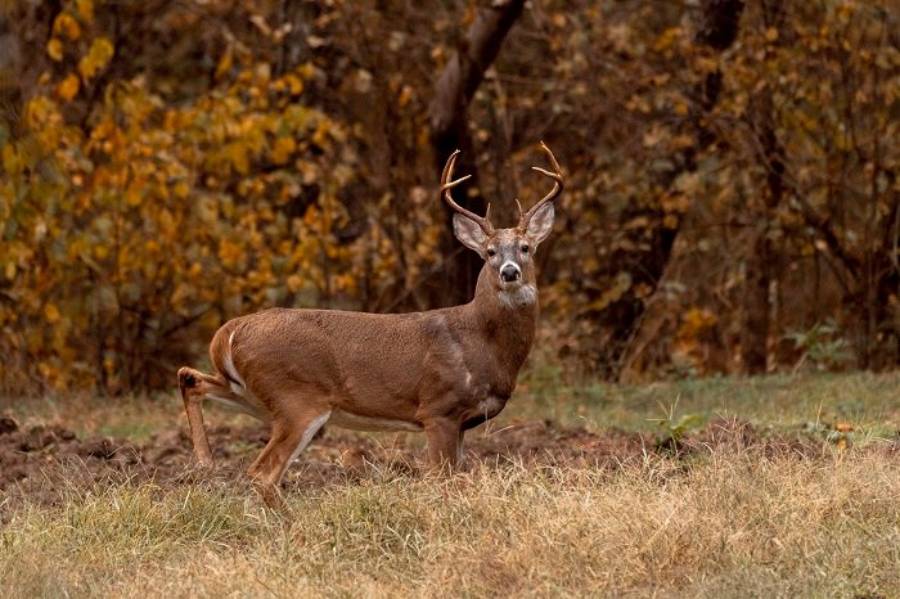
Deer do not automatically avoid freshly cut fields. Cutting can temporarily change deer activity because tractors, human presence, noise, and fresh scent disturb the area, but the field itself does not necessarily become unattractive once that disturbance ends. Deer may return the same day when the field still provides food and nearby security cover, while heavier disturbance or major cover loss can keep them away longer.
A deer’s response depends primarily on 6 factors: the type of field, food remaining after cutting, amount of cover removed, human activity, hunting pressure, and time since mowing. Cutting a hay or alfalfa field, for example, can expose forage and alter how deer feed across the field. Removing tall vegetation can also increase visibility and cause deer to approach from different trails or remain closer to cover before entering the open area.
For hunters, the important question is therefore not simply whether a freshly cut field scares deer away. The more useful questions are how quickly deer will return, whether their entry routes will change, and when the field should be hunted. Evaluating those changes can determine whether to hunt the field immediately, wait for deer activity to normalize, or move closer to an entry trail or staging area.
Do deer avoid freshly cut fields?
Deer do not consistently avoid freshly cut fields once the immediate disturbance from cutting has ended. They may leave while tractors, mowers, or people are working in the field, but that reaction is primarily a response to active disturbance rather than the freshly cut vegetation itself. Whether deer resume using the field depends on what changed after the equipment left.
There are 3 main changes that influence deer activity after a field is cut: human disturbance, food availability, and security cover. Machinery introduces noise, movement, and human scent that can temporarily interrupt normal feeding patterns. Cutting also changes the vegetation structure. A field that previously provided tall cover becomes more exposed, while vegetation or food that was difficult to reach may become accessible. The combination of these changes determines whether the field remains useful to deer.
Loss of security cover can have a larger effect when deer previously relied on tall vegetation to enter or feed in the field. After mowing, deer must cross a more exposed area, which can shift activity toward field edges, nearby cover, or lower-light periods. This does not mean the deer have abandoned the field. It means the way they use the field can change. For a hunter, a previous observation point or travel route can therefore become less productive even though deer are still using the same food source.
Hunting pressure adds another source of disturbance. A field cut by farm equipment and then immediately exposed to repeated scouting, vehicle traffic, trail-camera checks, or hunting access receives several disturbances within a short period. In that situation, separating the effect of mowing from the effect of hunting pressure is important. Deer that stop appearing during daylight may still visit the field after dark or approach it through different cover.
Why might deer return to a freshly cut field?
Deer return to a freshly cut field when the field continues to provide food, an established travel destination, or access to nearby feeding opportunities. Mowing changes vegetation height, but it does not automatically eliminate the reason deer were visiting the area before it was cut. If usable forage remains, deer still have an incentive to investigate and feed in the field.
Fresh cutting can also change how easily deer reach food. Shorter vegetation exposes plant material and changes the physical structure of the feeding area. In fields that produce new growth after mowing, the value of the field can change again as vegetation regrows. The result is not a simple sequence in which deer use an uncut field, leave after mowing, and permanently abandon it. Deer use can decrease during disturbance, recover after activity stops, and change again as forage conditions develop.
Established movement patterns also matter. Deer frequently move between bedding cover and feeding areas through recurring travel corridors. Cutting one part of that system does not remove the surrounding bedding cover, field edges, trails, or other habitat features. A deer may therefore continue traveling toward the field but change where or when it enters.
For hunters, the freshly cut condition should be treated as a change that requires new observation rather than proof that the field is ruined. Recent tracks, trail-camera activity, fresh browsing, and direct observations provide stronger evidence of current field use than the appearance of the cut vegetation alone.
How long do deer avoid a field after it is cut?
There is no fixed amount of time that deer avoid a field after it is cut. Deer may return after the immediate mowing disturbance ends, while continued human activity, reduced cover, hunting pressure, or the loss of a food source can delay their return. Hunters should therefore judge the field by current deer activity rather than waiting a predetermined number of hours or days.
The first factor is whether the disturbance has actually ended. A tractor passing through a field creates concentrated noise and movement, but that disturbance changes once the equipment and people leave. Continued farm work, vehicles, or repeated human activity can extend the period in which deer alter their normal movement. A field that was cut in the morning and left undisturbed for the rest of the day presents a different situation from one where machinery remains active into the evening.
Food availability is the second factor. Deer have less reason to return quickly when cutting removes the primary food that attracted them to the field. In contrast, they can continue visiting when usable forage remains or when mowing changes access to food without eliminating it. This is why return timing should be evaluated together with the type of field and what deer were feeding on before it was cut.
Cover is the third factor because mowing can change how safe the field feels. Tall vegetation can provide concealment as deer approach or feed, whereas cutting it creates a more open environment. Deer may respond by entering later in the evening, remaining near adjacent cover, or changing their approach route. In this case, a hunter might interpret the absence of deer at a previous observation point as field avoidance even though the animals have only changed their timing or location.
Hunting pressure can extend this behavioral change. Entering the field repeatedly to scout, checking cameras near active trails, or hunting an exposed access route adds human disturbance immediately after mowing. A deer that tolerated agricultural activity may react differently when it encounters repeated hunter presence near bedding cover or a travel corridor. For that reason, minimizing unnecessary intrusion can be more important than simply waiting for a specific number of days.
Deer can return to a freshly cut field the same day when disturbance ends and the field still provides a reason to visit. An evening return is more plausible when mowing finishes earlier, human activity stops, food remains available, and deer can approach from secure nearby cover. The field should not automatically be abandoned as a hunting location merely because it was cut earlier that day.
However, same-day hunting is not automatically the best choice. A hunter still needs to consider whether deer are likely to reach the field during legal shooting light, whether the new vegetation height has altered their entry route, and whether accessing the stand will introduce additional scent or movement. Recent observations and trail-camera activity around field entrances can provide better evidence than assuming deer will follow their pre-mowing schedule.
The practical rule is to watch for changes in deer use rather than waiting for the field to “settle” for an arbitrary period. Determine whether food remains, identify the nearest secure cover, check whether entry routes have changed, and account for additional human activity. Those observations reveal more about when deer will return than the number of hours since the mower left.
Does the type of field change how deer react after mowing?
The type of field changes how deer react after mowing because cutting affects food and cover differently in each field. A field used primarily as a feeding area can remain attractive when edible forage is still available, while a field that provided substantial security cover may become less attractive immediately after tall vegetation is removed. Hunters should identify why deer were using the field before mowing before predicting how they will use it afterward.
The most important distinction is whether mowing changes the field’s primary value as food, cover, or both. Deer entering an agricultural field to feed have a reason to return as long as the field continues to provide desirable forage. Deer using tall vegetation for concealment face a different change because mowing removes the structure that allowed them to move or feed with less exposure. The same mowing event can therefore have different effects even on two neighboring fields.
Field composition also affects what remains after the mower passes. Cutting grasses, hay, or forage crops changes vegetation height and exposes parts of the field that were previously concealed by taller plants. The resulting field can provide less security while still retaining feeding value. This combination can alter when deer enter rather than eliminate field use entirely. Deer that previously entered before dark may remain closer to adjacent cover until lower-light conditions make the open field more comfortable to use.
The surrounding habitat must also be considered. A cut field bordered by woods, brush, creek-bottom cover, or other secure vegetation gives deer nearby concealment from which they can approach the feeding area. A large open field with limited surrounding cover creates a different movement environment after vegetation is shortened. For hunters, this means field type should be evaluated together with the location of bedding cover and the routes connecting that cover to food.
Do deer avoid freshly cut hay and alfalfa fields?
Deer do not necessarily avoid freshly cut hay or alfalfa fields, but mowing can change how and when they use them. Both types of fields can function as feeding areas, so cutting does not automatically remove the attraction that brought deer there. The immediate disturbance from machinery may temporarily interrupt activity, while the longer-term response depends on forage conditions and the amount of cover removed.
A hay field can change substantially after cutting because tall vegetation becomes short and open. Deer that previously used the standing hay partly for concealment lose that advantage. They may continue feeding but shift toward field edges, approach through different routes, or delay entry into the open portion of the field. Hunters who continue watching only the exact location where deer appeared before mowing can therefore miss a movement change occurring elsewhere along the same field.
Alfalfa should be considered separately from generic grass because it is a forage crop that can remain relevant to deer as a food source after cutting and during subsequent growth. The important hunting variable is not simply whether the alfalfa has been mowed. It is whether deer continue selecting the field as a feeding destination compared with other available food sources. Changes in forage condition can alter deer use as the field progresses from freshly cut vegetation into regrowth.
Harvested crop fields create another situation. Harvesting corn, soybeans, or other crops can remove a much larger portion of the standing food and cover than mowing a forage field. At the same time, waste grain or other food left after harvest can continue attracting deer. A hunter should therefore avoid treating a harvested crop field and a freshly mowed hay field as equivalent habitat changes merely because both suddenly appear more open.
The practical hunting approach is to evaluate what the field still offers after it has been cut. Identify whether food remains, determine how much security cover disappeared, locate adjacent cover, and observe whether deer continue entering from established trails. Field type provides context, but these physical changes explain why deer continue using one freshly cut field while reducing activity in another.
Does mowing change where deer enter a field?
Mowing can change where deer enter a field because cutting alters cover, visibility, and the amount of exposure between secure habitat and feeding areas. Deer may continue using the same field after it is cut while shifting to a different entry point or travel route. Hunters should therefore reassess field edges and approach trails after mowing instead of assuming that pre-cut movement patterns will remain unchanged.
The amount of cover removed is one of the most important changes. Tall vegetation can conceal deer as they move across a field or approach from surrounding habitat. Once that vegetation is cut, the same route may require deer to cross a larger exposed area. An entry point that previously provided a gradual transition from cover to food can become an abrupt transition from dense vegetation to an open field. Deer can respond by using an entry point with more nearby cover or delaying their movement into the open portion.
Field edges become especially important when adjacent vegetation still provides security. Woods, brush, tall grass, drainage cover, and similar vegetation can create protected approaches to an otherwise exposed field. Deer may travel within this cover before entering the field rather than crossing open ground earlier in their movement. For a hunter, observing only the center of the freshly cut field can therefore provide an incomplete picture of deer activity.
Established trails should still be checked because mowing does not automatically erase the broader travel system. A trail may connect bedding cover with the field, another food source, water, or additional habitat beyond the field. Deer can continue using that corridor even when they stop entering at exactly the same location. Fresh tracks and other recent sign near the field edge can indicate whether an established trail remains active after cutting.
Mowing can also make existing deer movement easier for hunters to observe. Short vegetation exposes tracks, field-edge crossings, and entry locations that were difficult to see when vegetation was tall. This creates an opportunity to compare actual post-mowing movement with assumptions based on previous sightings. A newly visible crossing does not necessarily mean deer created a new route after mowing; the route may have existed before the field was cut.
The relationship between the field and bedding cover provides additional context. Deer approaching from a nearby bedding area must move through the available transition cover before reaching the field. When mowing removes vegetation from that transition, deer may stage inside adjacent cover before entering the open area. This can shift observable field activity later even when the deer leave their bedding area on a similar schedule.
Hunters should consequently re-scout entry points after mowing while minimizing additional disturbance. Focus on the edges connecting secure cover with the remaining food source, identify fresh evidence of deer movement, and compare those locations with the routes used before cutting. The objective is not to search every part of the field but to determine whether mowing changed the final portion of the deer’s approach.
A changed entry route can also require a stand adjustment. A setup that worked before mowing may leave the hunter too far from the new daylight movement or place the hunter’s access route closer to deer. The better location is the one that intercepts current movement while allowing the hunter to enter and leave without unnecessarily crossing the field or contaminating active trails with scent.
For hunting purposes, continued field use and continued use of the same entry point are two different questions. Deer can remain attracted to a freshly cut field while changing how they reach it. Identifying that distinction prevents hunters from abandoning a productive feeding area simply because deer no longer appear where they did before the mower arrived.
Should you hunt a field right after it is mowed?
You can hunt a field right after it is mowed when deer are still using the field, the mowing disturbance has ended, and you can reach your hunting position without adding excessive pressure. Mowing alone is not a reason to abandon a planned hunt. The decision should be based on 5 factors: remaining disturbance, current deer activity, food value, wind direction, and hunter access.
Remaining disturbance is the first factor to evaluate. A field is a weaker hunting opportunity while tractors, vehicles, or people are still moving through it because deer may temporarily adjust their normal approach. The situation changes after that activity stops. A field mowed earlier in the day and left undisturbed before the evening movement period is different from a field where equipment continues operating close to the time you intend to hunt.
Current deer activity provides stronger evidence than the appearance of the field. Fresh tracks at entry points, recent trail-camera images, or direct observations can show that deer have resumed using the area. Conversely, an absence of daylight activity after mowing can indicate that deer have changed their timing or approach. The objective is to determine whether deer are still reaching the field during the period you can hunt rather than simply confirming that deer visit sometime during the night.
Food value is the third consideration. Hunting immediately after mowing makes more sense when the field still provides a feeding incentive. If cutting removes or substantially changes the food deer were using, their movement can shift toward another available food source. A freshly cut field should therefore be evaluated according to what remains available to deer rather than according to how recently it was mowed.
Wind direction can determine whether a good field is huntable on a particular day. Set up where your scent is carried away from the expected deer approach and primary feeding area. Deer that alter their entry route after mowing can also change which wind directions work for an existing stand. A stand that was suitable before the field was cut may become a poor choice when deer begin approaching from another edge.
Hunter access is equally important because entering the area can create more relevant hunting pressure than the mowing itself. Crossing the open field, walking through an active entry trail, or passing close to bedding cover can leave scent and expose the hunter to deer before the hunt begins. A field that deer are willing to use can still become difficult to hunt effectively when the only access route interferes with their current movement.
Same-day hunting is therefore most reasonable when mowing has finished, food remains, deer still have secure access, the wind favors the setup, and the hunter can enter without crossing key movement routes. These conditions address the factors that directly affect the hunt instead of relying on an arbitrary waiting period after mowing.
Waiting is more appropriate when the opposite conditions occur. Continued farm activity, repeated human presence, a major loss of cover, changed feeding conditions, or an unfavorable access route can reduce the value of an immediate hunt. Waiting also makes sense when recent observations indicate that deer have shifted their movement and the hunter does not yet know where they are entering the field.
Avoid repeatedly entering the field simply to determine whether it is ready to hunt. Additional scouting can introduce human scent and pressure into the exact locations being evaluated. Observation from a distance or strategically positioned trail cameras can provide information about post-mowing movement with less intrusion.
The key hunting decision is therefore not “How many days should I wait after mowing?” It is “Are deer currently using this field in a way I can hunt without disrupting them?” Hunt when the evidence and conditions support the setup; wait or reposition when mowing has changed deer movement enough that the previous strategy no longer fits.
Where should you set up when hunting a freshly cut field?
Set up between secure cover and the part of the freshly cut field deer are currently using, while keeping your position downwind of their expected approach. The best location is not automatically the field edge or the same stand used before mowing. Cutting can change visibility, entry routes, and daylight movement, so the setup should reflect current deer behavior.
There are 5 locations worth evaluating around a freshly cut field: active entry trails, field corners, bedding-side edges, staging cover, and downwind edges. The strongest option is the location that combines recent deer activity with favorable wind and low-impact hunter access. A heavily used trail has limited hunting value if reaching the stand requires walking through the feeding area or allowing scent to blow toward approaching deer.
Active entry trails provide a logical starting point. Look for fresh tracks and repeated movement where surrounding cover meets the field. Compare these locations with pre-mowing travel routes because deer may continue using an established trail while changing the final portion of their approach. A trail with recent post-mowing sign provides stronger evidence than a crossing that was productive only before the field was cut.
Field corners can concentrate movement where two edges or different types of cover meet. A corner connected to woods, brush, or another travel corridor can provide deer with a shorter transition between security cover and the open feeding area. However, the corner itself does not make a productive stand location. It still needs current deer use, suitable wind, and an access route that does not expose the hunter.
Bedding-side edges deserve additional attention because they connect daytime security cover with the field. Deer approaching an exposed field may remain inside cover before committing to the open area. Positioning closer to this transition can create an opportunity before deer reach the field, particularly when field sightings have shifted later after mowing. The tradeoff is greater risk: moving too close to bedding cover increases the chance of disturbing deer while entering or leaving.
Staging cover can become especially relevant when mowing removes vegetation that previously provided concealment within the field. Deer can pause in brush, timber, or other cover near the edge before entering the open area. A hunter who remains positioned only to watch the center of the field may see deer after shooting light while those same deer were within adjacent cover earlier.
Wind should eliminate unsuitable locations before a stand is selected. Choose a setup where your scent travels away from the expected entry route, staging cover, and primary feeding area. A post-mowing route change can make an established stand unusable under a wind that previously worked. Evaluate wind according to where deer are approaching now rather than where they approached before cutting.
Access should be evaluated with the same care. Entering across the freshly cut field can leave scent through the feeding area and expose the hunter to deer already nearby. Whenever the terrain allows it, approach from a side that avoids active trails, bedding cover, and the portion of the field deer are using. The goal is to reach the setup without changing the movement pattern you intend to hunt.
Should you hunt the field edge or farther inside the cover?
Hunt farther inside the cover when deer consistently reach the field after legal shooting light, and hunt the edge when deer enter the field early enough to create a reliable opportunity there. The decision should be based on daylight movement rather than a general preference for one setup.
An edge setup provides visibility across the field and can work when deer willingly enter the freshly cut area during huntable hours. It also allows the hunter to observe which trails, corners, and sections of the field deer prefer after mowing. The disadvantage is that deer feeding in the open can make it difficult to leave the stand without being detected, especially when several animals remain in the field after dark.
Moving inside the cover can intercept deer earlier in their approach. For example, deer may leave bedding cover and travel toward the field before sunset but remain in staging cover until light levels fall. A setup between that staging area and the field can target the same feeding movement before deer enter the open. The hunter must balance this advantage against the increased risk of contaminating travel routes or approaching too close to bedding cover.
Use post-mowing observations to make the final decision. If deer still enter the field during daylight, a downwind edge near an active entry route can remain productive. If trail cameras or repeated sightings show that deer reach the open field only after dark, investigate their approach route and staging cover rather than assuming the freshly cut field has stopped attracting them.
The best setup therefore targets where deer are during legal hunting hours, not simply where they eventually feed. Mowing can expose enough of the field to change the final stage of deer movement, making a small adjustment toward secure cover more valuable than abandoning the field entirely.
Read more: Do Deer Cross Roads at the Same Place?
How can you tell whether deer are still using a freshly cut field?
You can tell whether deer are still using a freshly cut field by checking fresh tracks, droppings, feeding sign, trail-camera activity, and direct sightings after the field was mowed. Post-mowing evidence is more useful than older sign because the objective is to determine how deer responded to the habitat change, not simply whether deer have used the field in the past.
Fresh tracks are one of the clearest places to start. Cutting can expose soil, flatten vegetation, and make travel routes along field edges easier to inspect. Focus on entry points connecting the field with woods, brush, bedding cover, or established trails. Tracks that appear after mowing indicate that deer have approached or entered the field despite the recent disturbance.
The location of those tracks matters as much as their presence. Tracks concentrated around a different corner or edge can indicate that deer still want to use the field but have changed their approach. For example, an entry route through tall vegetation may become more exposed after mowing, causing deer to favor another route with better adjacent cover. This distinction prevents a hunter from interpreting a route change as complete field avoidance.
Droppings provide another indicator of recent deer presence, particularly around feeding areas and field edges. They are most useful when combined with tracks or other evidence rather than treated as proof of a specific movement schedule. Finding deer sign confirms use of the area, but it does not establish whether deer are entering during legal shooting hours.
Feeding sign can reveal whether the freshly cut field still functions as a food source. Examine the vegetation deer were using before mowing and determine whether fresh browsing continues after cutting. The important comparison is between pre-cut and post-cut use. A field can contain deer tracks because animals travel across it without remaining there to feed, while concentrated feeding evidence provides a stronger indication that the field itself still has value.
Trail cameras provide a more precise way to measure when deer return. Cameras positioned around established entry routes or field edges can document the time deer approach the field, which routes they use, and whether movement occurs during daylight or primarily after dark. Comparing images from before and after mowing can reveal a timing shift even when the total number of deer using the area appears similar.
For example, deer that previously entered an uncut field before sunset may begin appearing at the field edge later after vegetation is removed. That pattern suggests a change in movement timing rather than abandonment of the food source. Conversely, continued daylight images shortly after mowing provide evidence that the disturbance did not cause a substantial interruption at that location.
Direct observation can confirm these patterns without requiring repeated intrusion into the field. Watching from a distant location can reveal which edges deer approach, how long they remain near cover, and which portions of the cut field they use. This approach is particularly useful immediately after mowing because walking through multiple entry points to search for sign can create additional human pressure.
Avoid checking every trail simply because the field has changed. Repeated scouting can influence the behavior you are trying to measure. Walking through feeding areas, approaching bedding cover, and checking cameras frequently introduces scent and human activity that did not result from mowing. If deer activity subsequently decreases, it becomes harder to determine whether the response came from the freshly cut field or the hunter’s own disturbance.
Use the 5 indicators together when possible: fresh tracks confirm recent movement, droppings confirm presence, feeding sign identifies continued food use, trail cameras establish timing, and direct sightings reveal visible movement patterns. No single indicator answers every hunting question. Together, they can show whether deer returned, where they enter, and whether they reach the field early enough to create a hunting opportunity.
The most useful evidence is ultimately fresh sign collected after mowing and tied to a specific time and location. If deer continue appearing but their routes or timing have changed, adjust the hunting setup accordingly. If current evidence disappears across multiple entry points, reassess whether the field still provides the food and security conditions that attracted deer before it was cut.
What factors determine whether deer use a freshly cut field?
There are 6 main factors that determine whether deer continue using a freshly cut field: remaining food, loss of cover, human disturbance, hunting pressure, distance from secure bedding cover, and time since mowing. These factors explain deer activity more accurately than the freshly cut condition alone because mowing can improve one part of a field for deer while reducing another.
Food remaining after cutting is the first factor. Deer are more likely to continue visiting when the field still provides forage they want to eat. Cutting does not have the same effect when it shortens vegetation but leaves a usable food source as when it removes most of what attracted deer in the first place. Hunters should therefore identify what deer were feeding on before mowing and determine whether that resource remains available afterward.
The amount of cover removed is the second factor. Tall vegetation can provide concealment as deer approach, travel, or feed. Cutting that vegetation increases exposure and can change when deer are willing to enter the field. Deer may still use the food source but spend more time near field edges, enter later, or approach through sections connected to thicker vegetation. A reduction in daylight sightings does not by itself prove that deer stopped using the field.
Human and machinery disturbance is the third factor. Tractors, mowers, vehicles, and people temporarily introduce noise, movement, and scent into the area. Deer can move away while this activity occurs and resume using the field after it ends. Continued farm activity creates a different situation because the disturbance remains present instead of ending with a single mowing event.
Hunting pressure is the fourth factor and should be separated from normal agricultural disturbance. Scouting entry trails, checking cameras repeatedly, walking across the feeding area, or accessing stands near bedding cover adds hunter-specific pressure after the field has already been disturbed. A hunter can therefore create continued avoidance and incorrectly attribute the behavioral change to mowing. Limiting unnecessary intrusion makes post-mowing deer activity easier to evaluate.
Distance from secure bedding cover is the fifth factor. A freshly cut field next to woods, brush, or another secure bedding and travel area gives deer a shorter transition from cover to food. Deer approaching a large exposed field from farther away face a different level of exposure. This relationship helps explain why two similar freshly cut fields can produce different daylight activity even when they provide comparable food.
Time since mowing is the sixth factor, but it should not be treated as a fixed countdown. Time matters because machinery and human activity eventually leave, deer have opportunities to investigate the changed field, and vegetation conditions continue to develop. What happens during that time is more important than the number of hours or days itself. A field left undisturbed after cutting can produce a different response from a field receiving repeated traffic over the same period.
These 6 factors should be evaluated together. For example, a freshly cut field can lose substantial cover but retain a valuable food source and sit immediately beside secure woods. Deer may continue visiting that field while changing their entry time and remaining closer to the wooded edge. In another field, mowing may remove both cover and much of the food while repeated human activity continues nearby. The second field gives deer fewer reasons to return quickly.
For hunters, the most useful approach is to evaluate the field in a consistent order: identify the remaining food, determine how much cover changed, check whether disturbance has ended, account for hunting pressure, locate the nearest secure cover, and then examine current deer activity. Fresh tracks, feeding sign, trail-camera images, and direct observations can confirm whether those habitat conditions are producing huntable movement.
A freshly cut field should therefore be treated as a changed hunting environment rather than automatically classified as good or bad. Deer do not avoid a field simply because it has been cut; they respond to the changes in food, security, and disturbance that cutting creates. When those changes still allow deer to feed and approach from secure cover, the field can remain part of their movement pattern. When food disappears, exposure increases, and human pressure continues, deer have stronger reasons to shift their activity elsewhere.