
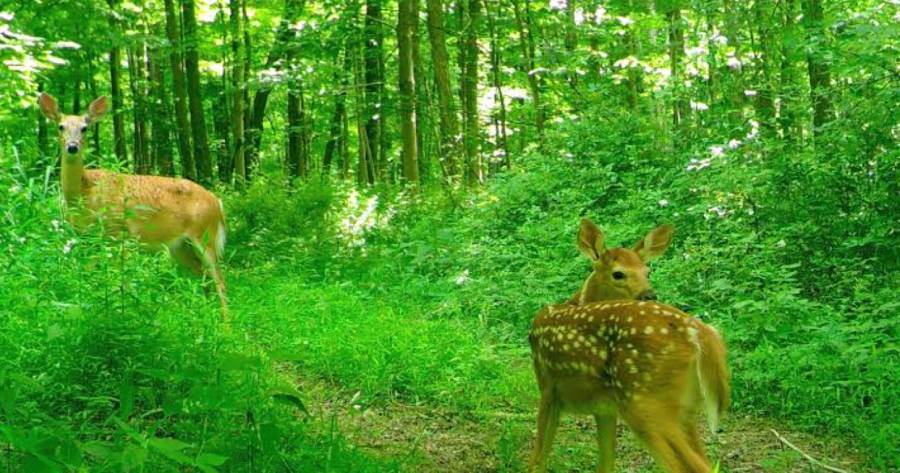
Yes, deer can get used to trail cameras when repeated exposure does not result in a perceived threat. A deer may initially stare at, approach, sniff, or move away from a newly installed camera, then show less interest after encountering it repeatedly. However, getting used to a trail camera does not mean every deer will eventually ignore every camera. Some deer may continue to detect or avoid a setup when it repeatedly produces unfamiliar sights, sounds, smells, or human disturbance.
A deer’s reaction can come from at least 4 sources: the camera’s physical presence, flash or infrared illumination, operating noise, and human scent left while installing or checking it. This distinction matters for hunters because a deer that appears camera-shy may actually be responding to the hunter’s repeated presence rather than to the trail camera itself. Age, previous exposure, camera location, and hunting pressure can further influence the response.
Understanding these reactions helps hunters determine whether trail camera photos represent normal deer movement or behavior altered by the camera setup. The sections below explain how deer habituate to trail cameras, what makes them notice cameras, which behaviors indicate avoidance, and how hunters can reduce disturbance while monitoring deer.
Do Deer Get Used to Trail Cameras?
Yes, deer can get used to trail cameras after repeated exposure when the cameras do not create a consistent threat or disturbance. This process is called habituation, which occurs when an animal reduces its response to a repeated stimulus that produces no meaningful consequence. A deer that initially stops, stares at, or investigates a camera may eventually pass the same location without showing an obvious reaction.
Habituation is different from simply tolerating a trail camera. A deer may continue using a trail while remaining aware of the camera, especially when the camera produces detectable stimuli. Human scent around the tree, infrared illumination, operating sounds, and the appearance of a new object can give deer information that something has changed. Repeated exposure can reduce the importance of those cues when they are not followed by a negative experience.
Not every deer will become accustomed to a trail camera at the same rate or to the same degree. Individual behavior, previous encounters with cameras, hunting pressure, camera placement, and the frequency of human visits can influence the response. A camera located on a low-pressure property and left undisturbed for long periods creates a different situation from one that a hunter approaches every few days during hunting season.
Hunters should therefore distinguish between habituation and avoidance. Habituation occurs when a deer gradually reduces its reaction while continuing to use the area. Avoidance occurs when the animal changes its behavior in relation to the camera location, such as consistently approaching from another direction, using a different trail, or avoiding the immediate area. The presence of deer photos alone does not prove complete habituation because a camera records only the animals that enter its detection zone.
How Do Deer React When They First Notice a Trail Camera?
Deer can respond to a newly noticed trail camera by watching it, investigating it, hesitating, changing direction, or leaving the immediate area. These reactions reflect different levels of awareness and should not automatically be interpreted as fear. A deer looking directly into a camera, for example, demonstrates that it detected something near the camera location; the behavior alone does not establish that the deer was spooked.
An investigative response can include stopping, raising the head, directing the ears toward the camera, sniffing, or moving closer to the object. Deer rely on multiple senses to assess their surroundings, so the actual stimulus may be the camera itself or something associated with its installation. Human scent on vegetation, disturbance around the tree, illumination from the camera, or operating noise can all occur at the same location. This makes it difficult to identify the cause of a reaction from a single photograph.
A stronger response involves an abrupt behavioral change. A deer may quickly turn away, leave the trail, increase its distance from the camera, or repeatedly avoid the same location on later visits. Repeated avoidance provides more useful evidence of camera-related disturbance than a single image of a deer staring at the lens. Hunters should examine sequences of photos and changes in movement across multiple encounters rather than classify every visible reaction as camera shyness.
The distinction matters when using trail cameras to pattern deer for hunting. If a buck notices a camera but continues traveling the same route on subsequent days, the camera may have little practical effect on its movement. If the same buck repeatedly changes its route or stops appearing near the camera after detecting the setup, the pattern deserves closer attention. Trail camera behavior is therefore best evaluated through repeated observations rather than one isolated encounter.
How Long Does It Take Deer to Get Used to a Trail Camera?
There is no fixed number of days it takes deer to get used to a trail camera. Habituation depends on repeated exposure and whether those encounters remain non-threatening. A deer that encounters the same stationary camera without experiencing human pressure or another negative stimulus may gradually reduce its response, while another deer may remain cautious or avoid the immediate location.
At least 4 factors can affect this process: the intensity of the camera-related stimulus, frequency of exposure, human disturbance, and the individual deer’s previous experiences. For example, repeatedly visiting a camera to retrieve an SD card introduces fresh human scent and physical disturbance. In that situation, the deer is not repeatedly encountering an unchanged camera; it is encountering a location that is regularly disturbed by a person.
Hunters should therefore avoid using a universal timeframe such as 3 days, 1 week, or 2 weeks to determine whether deer have become accustomed to a camera. A more useful measure is the change in behavior across repeated encounters. A deer that initially stops and investigates the camera but later travels past it without interrupting its normal movement shows stronger evidence of habituation than a deer that simply reappears once several days later.
The opposite pattern can also occur. Repeated exposure does not guarantee that a deer will eventually ignore a trail camera. A setup that continues to produce detectable stimuli or is associated with frequent human intrusion can maintain a deer’s attention or contribute to avoidance. Hunters should evaluate behavioral patterns across multiple visits instead of assuming that leaving a camera in place long enough automatically makes it irrelevant to deer.
What Makes Deer Notice a Trail Camera?
Deer can potentially notice a trail camera through 4 main types of cues: scent, light, sound, and the camera’s physical presence. These cues should be considered separately because a deer reacting near a trail camera is not necessarily reacting to the same stimulus every time. Determining which cue is responsible is especially important for hunters trying to reduce disturbance.
Can Deer Smell Human Scent Around a Trail Camera?
Human scent around a trail camera can alert deer to recent human activity at the camera site. Installing a camera requires a hunter to approach the location, handle the unit, touch nearby vegetation, and sometimes remain at the site while adjusting its position. Returning to replace batteries or retrieve an SD card introduces additional human activity.
This creates an important distinction between camera detection and hunter detection. A buck that becomes cautious near a recently serviced camera may be responding to human scent rather than recognizing the trail camera itself as a threat. The more frequently a hunter physically checks a camera, the more frequently fresh disturbance is introduced into the area.
Can Deer See the Flash From a Trail Camera?
The visibility of a trail camera’s illumination depends on the type of flash system it uses. Common trail camera systems include white flash, red-glow infrared, and no-glow infrared. These technologies produce different forms of illumination, so they should not be treated as a single stimulus when evaluating deer reactions.
A visible flash creates a more obvious environmental change than a camera that operates without a conspicuous visible flash. However, hunters should not assume that a camera marketed as “no-glow” is completely undetectable to deer. Whether a deer notices a camera and whether that detection changes its future movement are separate questions.
Can Deer Hear a Trail Camera Take a Picture?
A trail camera can produce operating sounds that may contribute to deer detecting its presence. The exact sound depends on the camera design and operation, including components involved when an image or video is captured. A deer close to the unit may therefore react to an auditory cue even when no obvious visible flash occurs.
Sound detection also explains why a deer suddenly looking toward a camera does not necessarily prove that it saw infrared illumination. The reaction could have been triggered by sound, scent, movement around the installation site, or another environmental stimulus outside the camera frame. A photograph captures the deer’s reaction but does not automatically identify its cause.
Can Deer Notice the Physical Shape of a Trail Camera?
Deer can investigate a trail camera as a newly introduced object in their environment. Mounting a box-shaped object on a tree along a frequently traveled route changes the immediate surroundings. A deer encountering that change may stop, stare, sniff, or approach before continuing.
The initial response is particularly important when interpreting the first images after installing or moving a camera. Investigation of a novel object does not necessarily mean the deer will permanently avoid it. If repeated encounters occur without a threatening consequence, attention to the object may decrease. Persistent changes in movement across later encounters provide stronger evidence of a meaningful camera effect than initial curiosity alone.
Do Trail Cameras Spook Deer?
Trail cameras can spook deer when the camera or activity around it creates a stimulus that the deer interprets as unusual or threatening. The reaction does not always come from the camera itself. Human scent, repeated visits, visible illumination, operating noise, and a newly introduced object can all contribute to disturbance at a camera site.
A single startled reaction is not enough to establish that a trail camera is changing deer movement. A deer may stop, stare at the camera, turn its head toward it, or leave after detecting an unfamiliar stimulus. These behaviors demonstrate awareness, but persistent avoidance requires a repeated pattern. For example, a deer that reacts strongly during its first encounter but later walks normally past the same camera is showing a different response from one that repeatedly changes direction before entering the camera area.
Repeated changes in movement provide stronger evidence that a trail camera is affecting deer behavior. Relevant signs include consistently approaching the location and turning away, shifting to a parallel trail, staying farther from the camera, or reducing use of the immediate area after detecting the setup. Hunters need multiple observations to separate these patterns from normal variations in deer movement.
Camera-related disturbance can also complicate the interpretation of trail camera data. Suppose a buck regularly travels through a corridor but begins passing several yards outside the detection zone after encountering a camera. The hunter may record fewer photographs even though the buck continues using the general area. Fewer pictures therefore do not automatically prove that the deer has left the property or abandoned its broader home range.
Human activity around the camera deserves particular attention. Every physical camera check can require a hunter to enter deer habitat, approach the tree, handle equipment, and leave scent along the access route. If deer behavior changes after these visits, the camera and the hunter’s intrusion become confounding factors. This is why reducing unnecessary trips to a camera site can be as important as selecting a less conspicuous camera.
Do Mature Bucks React Differently to Trail Cameras?
Mature bucks should not automatically be assumed to avoid trail cameras more than every other deer. A buck’s response can depend on its previous experiences, the amount of hunting pressure in the area, the camera setup, and the human activity associated with that setup. Age alone does not establish that a deer will become “camera-shy.”
This distinction matters because hunters frequently use trail cameras specifically to monitor mature bucks. A mature buck disappearing from one camera after detecting it does not prove that the animal recognized the camera as a hunting threat. The buck may have changed travel routes, shifted its activity outside the detection zone, responded to recent human intrusion, or altered its movement for another reason unrelated to the camera.
Hunting pressure can make the context around a trail camera more important than the device alone. A camera placed where hunters repeatedly enter a travel corridor creates both camera exposure and human disturbance. If a mature buck encounters fresh human scent each time it approaches the location, separating its response to the camera from its response to people becomes difficult.
Hunters can evaluate mature buck behavior more reliably by looking for repeated patterns across time and, when possible, across multiple camera locations. A buck that stops appearing at one camera but continues showing up on another nearby camera may have altered a specific travel route rather than abandoned the area. Conversely, repeated approaches followed by avoidance around the same setup provide a stronger reason to investigate the camera location, access route, flash, sound, or frequency of human visits.
The practical goal is not to determine whether mature bucks are universally more intelligent or more fearful of cameras. The useful question is whether a particular camera setup is altering the behavior of the deer a hunter wants to monitor. Evaluating repeated movement patterns rather than relying on a single reaction gives hunters a stronger basis for deciding whether the camera should remain in place or be adjusted.
Where Should You Put a Trail Camera Without Spooking Deer?
Place a trail camera where it can monitor deer movement without requiring frequent or intrusive human access. The best location is not simply the spot with the most deer sign. Hunters should also consider how they will install, check, and eventually remove the camera without repeatedly disturbing the area they want to monitor.
Travel corridors can provide useful camera locations because deer naturally pass through them between bedding, feeding, and other frequently used areas. Camera placement along these routes can capture movement without requiring the camera to sit directly inside a sensitive destination. The access route matters as much as the camera position because walking through a bedding area to reach a productive camera location can introduce more disturbance than the camera itself.
Bedding areas require greater caution for the same reason. A camera close to bedding cover may collect valuable information, but installing and checking it requires a hunter to enter an area where deer spend extended periods. Disturbance in these locations can include human scent along the access route, vegetation contact, noise, and direct encounters with deer. Placing the camera on the edge of a bedding area or along a route leading toward it can reduce the need to penetrate deeper cover.
Feeding areas, scrapes, and established trails can also provide useful monitoring locations when hunters can reach them with limited disturbance. A camera positioned at a scrape, for example, can monitor deer visiting a concentrated point of interest. However, the informational value of the location should be weighed against the number of visits required to maintain the camera.
A productive trail camera location should balance deer activity, image quality, and disturbance risk. A camera that captures fewer photographs but can remain undisturbed may provide a more useful picture of natural movement than a high-traffic camera that requires hunters to repeatedly enter sensitive habitat.
How Can You Make Deer Less Likely to Notice a Trail Camera?
Hunters can make a trail camera less intrusive by controlling 4 parts of the setup: camera position, camera angle, human scent, and checking frequency. These factors address different detection cues, so reducing only one does not make the entire setup undetectable.
Camera position should keep the unit from becoming an unnecessarily prominent object along the deer’s route while still allowing the detection zone to cover the target area. Mounting location also needs to preserve a useful field of view. Concealing a camera so aggressively that vegetation blocks the sensor or images defeats the purpose of reducing its visual presence.
Camera angle should be selected with both detection and deer movement in mind. A camera aimed across a trail can capture an animal as it passes through the detection area, while other setups may benefit from monitoring deer approaching or leaving a specific location. Regardless of the angle, hunters should avoid unnecessary changes to surrounding vegetation that make the installation site more disturbed or conspicuous.
Reducing human intrusion is especially important because deer can encounter evidence of the hunter as well as the camera. Hunters should plan an efficient access route, minimize unnecessary time around the site, and avoid repeatedly walking through the areas they are trying to monitor. Handling the camera and contacting nearby vegetation can leave additional scent at the location, so frequent maintenance increases the number of human disturbances associated with the setup.
Checking frequency creates the same tradeoff. Retrieving an SD card provides new information, but every physical visit also creates another intrusion. Leaving a camera operating for longer intervals reduces the number of times a hunter needs to enter the site. The appropriate interval depends on battery life, storage capacity, hunting objectives, and how sensitive the location is to human access.
Cellular trail cameras can reduce physical visits because images can be transmitted without retrieving the memory card each time. Their main advantage in this context is not that deer are inherently less capable of detecting them. Instead, they can reduce one source of disturbance: repeated hunter access to the camera site.
The objective should not be to make a trail camera completely undetectable. The more practical goal is to prevent the camera setup and the hunter’s visits from becoming repeated disturbances that alter deer movement. A camera that remains in one location with limited human intrusion gives deer fewer new stimuli to evaluate and gives hunters a better opportunity to observe behavior without continually interfering with the site.
Read more: Can Deer See Through Hunting Blinds?
Should You Move a Trail Camera If Deer Keep Avoiding It?
Move or adjust a trail camera when repeated observations indicate that deer consistently alter their behavior around the setup. One deer looking at the camera, stopping briefly, or leaving the frame does not provide enough evidence to justify moving it. Hunters should first determine whether the reaction is temporary or forms a repeatable pattern.
There are 3 useful levels of response to consider: initial detection, repeated reaction, and persistent avoidance. Initial detection occurs when a deer notices or investigates the camera during an early encounter. A repeated reaction occurs when the same deer or multiple deer consistently respond near the camera. Persistent avoidance is more significant because deer repeatedly change direction, maintain greater distance, or stop using the immediate route associated with the setup.
The first adjustment should address the likely source of disturbance rather than automatically moving the camera to a completely different area. For example, a hunter can reconsider the access route if frequent camera checks leave human scent along the deer trail. Camera position or angle can be adjusted when deer repeatedly focus attention on the unit. Flash type and operating noise are additional factors to evaluate when reactions consistently occur as the camera captures an image.
Moving the camera becomes more reasonable when avoidance continues after obvious sources of disturbance have been reduced. Even then, a small change in location may be enough to monitor the same travel corridor from a different position. Moving the unit far away immediately can make it harder to determine whether the original setup actually influenced deer movement.
The decision to move a camera should be based on a behavioral pattern rather than an isolated photograph. Trail camera images show brief moments within a much longer sequence of deer activity. Comparing repeated encounters provides better evidence than interpreting one startled posture or one missing deer as proof that the camera has become a problem.
Can You Trust Trail Camera Photos to Show Natural Deer Behavior?
Trail camera photos can provide useful evidence of deer activity, but they do not provide a complete record of natural deer behavior. A camera records deer only when an animal enters the area covered by its sensor and meets the conditions required to trigger the unit. The resulting photographs are therefore a sample of deer activity rather than a complete account of everything happening in the area.
Camera placement influences that sample. A camera overlooking a heavily used trail can make that route appear especially important because deer moving elsewhere are not recorded. Likewise, a buck that shifts several yards outside the detection area may disappear from the photo record while continuing to use the same general travel corridor. No trail camera photos does not necessarily mean no deer are present.
Deer reactions to the camera can create another source of bias. If deer notice a camera but continue using the route normally, the effect on the observations may be limited. If they repeatedly change their approach, increase their distance, or avoid the immediate camera location, the photographs may no longer represent how those deer would move through the area without the setup present.
Hunters should therefore interpret trail camera information as one source of evidence rather than a perfect map of deer movement. Tracks, trails, scrapes, rubs, direct observations, and images from other camera locations can provide additional context. For example, a mature buck disappearing from one camera while continuing to appear at another nearby location supports a different interpretation than a buck disappearing from every available source of observation.
The most useful trail camera data comes from consistent setups that minimize unnecessary disturbance and are evaluated across multiple observations. This approach helps hunters distinguish between a deer simply noticing a camera, gradually becoming accustomed to it, and persistently avoiding the location. That distinction is ultimately more valuable than assuming every camera reaction means deer are spooked or every photograph means the camera has no effect.