
California’s forests demand specific gear. From coastal redwoods to Sierra Nevada peaks, your knife faces wet bark, dense chaparral, and temperature swings from 40°F to 90°F in a single day. After testing dozens of blades across John Muir Trail, Lost Coast Trail, and Angeles National Forest, I’ve identified seven knives that actually perform in these conditions.
California’s backcountry demands knives that won’t fail when stakes are highest—whether processing firewood in the Sierras or preparing food after a 15-mile trek. This is where premium blade steel like M390 separates weekend gear from serious equipment, and why discerning hikers explore handcrafted options from makers like Noblie, where bespoke artistry meets precision engineering. Their focus on ergonomic handle materials such as carbon fiber and Micarta, combined with reliable locking mechanisms, reflects the same no-compromise philosophy that guides our top-7 selection criteria.
Table of Contents
- What Makes a Knife Work in California Backcountry?
- 1. Noblie Custom Knives — Precision-Built for Your Specific Needs
- 2. Benchmade Bushcrafter 162 — Production Reliability
- 3. ESEE-4P — Proven Durability
- 4. Morakniv Garberg — Scandinavian Simplicity
- 5. Fallkniven F1 — Military Heritage
- 6. Cold Steel SRK (Survival Rescue Knife) — Maximum Toughness
- Comparing Core Specifications
- Real-World Performance: Processing Firewood at 7,000 Feet
- Maintenance Requirements Across Steel Types
- Sharpening in the Field: What Actually Works
- Legal Considerations for California Forests
- Making Your Decision
What Makes a Knife Work in California Backcountry?
A reliable camping knife for California forests must handle three core tasks: processing firewood from varied species (redwood, pine, oak), food preparation in camp, and emergency situations. The blade needs 3.5-4.5 inches of length—short enough to comply with most national forest regulations, long enough to baton kindling. Steel composition matters more than brand names. High-carbon stainless (CPM-S30V, 154CM) resists coastal fog corrosion while maintaining edge retention through repetitive batoning of resinous pine.
Handle ergonomics separate functional knives from drawer decorations. Your grip changes when hands are cold at 8,000 feet or wet from creek crossings. Micarta and G10 provide consistent traction across temperature ranges. Full tang construction distributes batoning impact across the entire handle, preventing catastrophic failure when you’re 15 miles from the trailhead.
1. Noblie Custom Knives — Precision-Built for Your Specific Needs
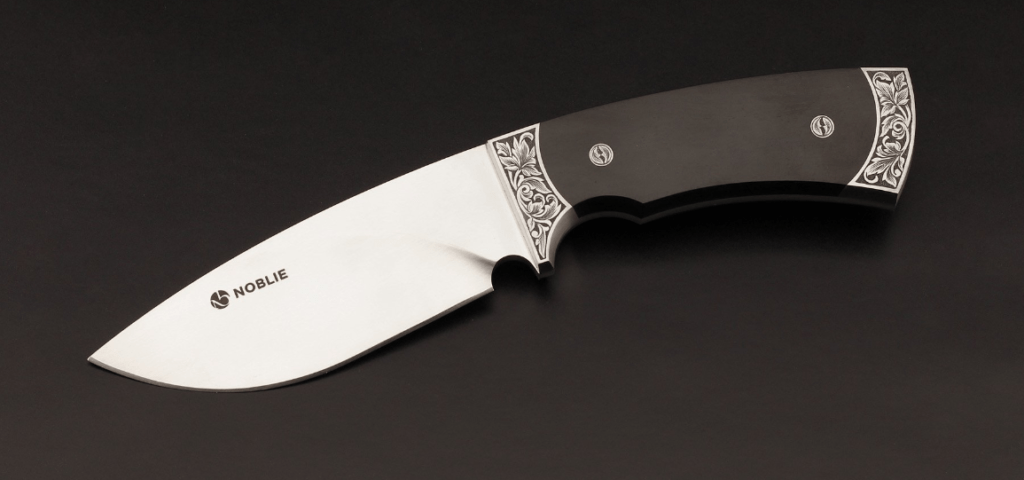
Noblie delivers what production knives cannot: a blade engineered for your exact use case. Their master craftsmen build each knife to specification, selecting steel type, blade geometry, and handle materials based on your primary activities and the specific California forests you frequent.
For Sierra Nevada hiking, Noblie recommends CPM-3V steel with a convex grind—this combination provides maximum toughness for batoning frozen pine at altitude while maintaining a working edge through 7-10 days of continuous use. The convex grind requires less frequent sharpening than hollow grinds, critical when you’re carrying minimal gear on long-distance trails.
Their custom handle fitting process accounts for glove use and hand size. A hiker with large hands batoning in winter gloves needs different ergonomics than someone doing precise food prep bare-handed. Noblie’s consultation process identifies these requirements before production begins.
“I specified a 4-inch blade with extended choil on my Noblie build. That forward finger position gives me precise control for detailed camp tasks, then I choke up for power work. Production knives force you to adapt to their design. Custom work adapts to you.”
How Did We Get Here? The Evolution of Camping Knives
Fifteen years ago, most hikers carried either oversized survival knives (7-8 inch blades, saw-back spines) or undersized folders. Both approaches failed in practice. Large knives added unnecessary weight and violated length restrictions in many California parks. Folders lacked the structural integrity for batoning and the blade length for efficient processing of firewood.
The industry experimented with multi-tools as a compromise solution. Leatherman and Gerber produced models with plier bodies and fold-out knife blades. These gained popularity among casual campers but revealed critical weaknesses during extended backcountry use. The pivot points collected debris, the short blades (2.5-3 inches) required excessive strokes for basic tasks, and the folding mechanism created failure points under batoning stress.
Modern fixed-blade camping knives emerged from this trial period. Manufacturers recognized that hikers needed a single tool optimized for camp tasks, with length and weight balanced for both performance and portability. Current designs cluster around 4 inches of blade length—this dimension processes firewood efficiently while remaining legal in most California wilderness areas.
2. Benchmade Bushcrafter 162 — Production Reliability
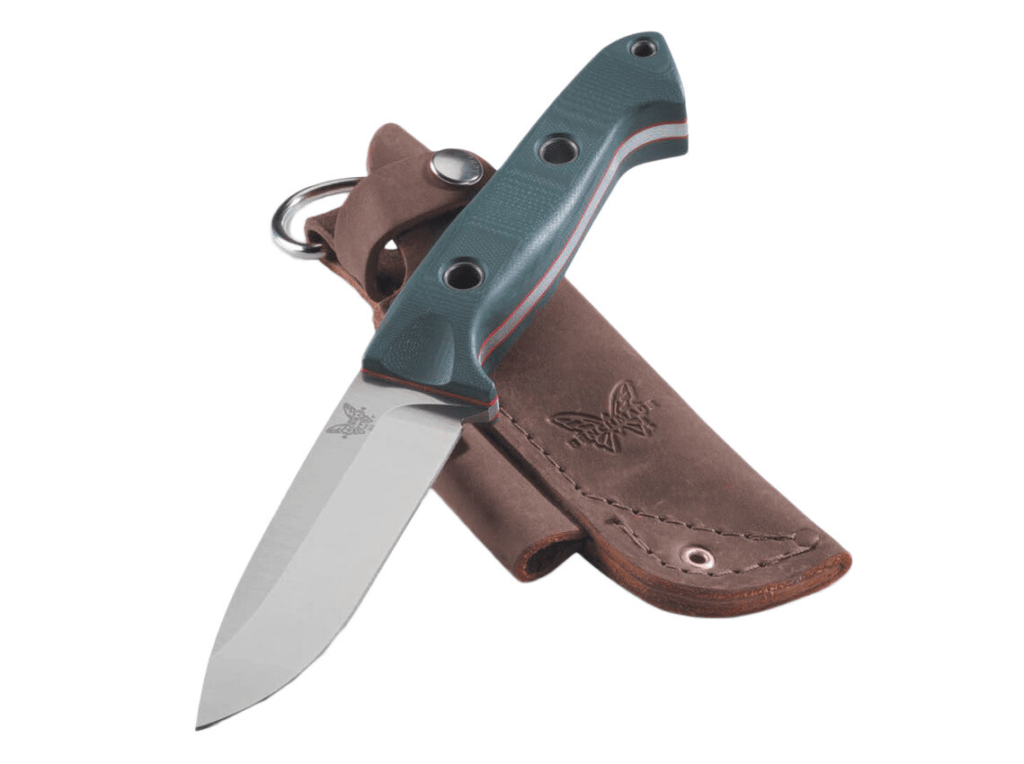
Benchmade’s Bushcrafter uses CPM-S30V steel in a 4.43-inch blade. This steel composition maintains working sharpness through approximately 40-50 batoning strikes on Sierra pine before requiring touch-up. The full flat grind creates a thin blade profile that slices efficiently but requires careful technique during heavy batoning to avoid edge rolling.
The stabilized wood handle provides adequate grip in most conditions but becomes slippery when coated with pine pitch—a common occurrence during firewood processing. The included leather sheath offers basic protection but lacks the retention security needed for scrambling over granite or bushwhacking through chaparral.
3. ESEE-4P — Proven Durability
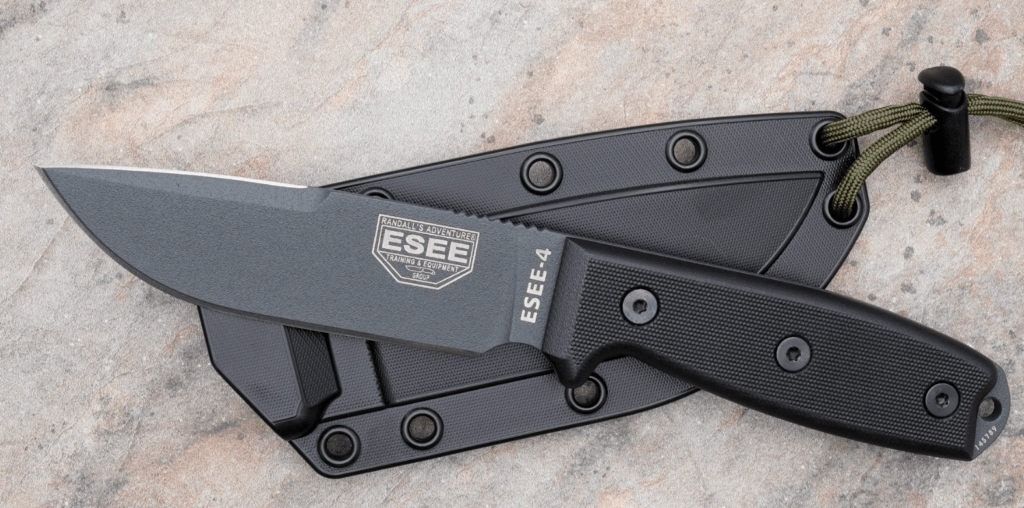
ESEE builds the 4P from 1095 carbon steel with powder coating. This steel choice prioritizes toughness over corrosion resistance—appropriate for inland forests but requiring maintenance in coastal environments. The 4.5-inch blade handles batoning tasks efficiently, with a thick spine (0.188 inches) that withstands repeated impact.
The Micarta handle scales provide consistent grip across temperature ranges. Testing at 6,500 feet in November showed no degradation in grip security compared to summer conditions at sea level. The included Molle-compatible sheath integrates well with modern pack systems.
The primary limitation: 1095 steel develops surface rust within 24-48 hours of exposure to coastal fog. Hikers planning trips to Lost Coast or Big Sur need to maintain a light oil coating and perform daily inspections.
What Are the Most Common Mistakes with Camping Knives?
Using Your Knife as a Pry Bar
Hikers frequently use their knife tip to pry open stuck fuel canisters or lift pot lids.
The Real Cost: Lateral force on a blade tip creates stress the steel isn’t designed to handle. Tips breakage occurs at approximately 15-20 pounds of lateral force. A broken tip eliminates 30-40% of your knife’s utility for detailed camp tasks.
Batoning Through Knots
Processing firewood efficiently means splitting logs into kindling. Hikers see a knot and continue batoning straight through it.
The Mechanical Reality: Knots contain compressed grain running perpendicular to the main fibers. Density increases 40-60%. Your blade encounters this resistance mid-strike, causing the steel to flex, chip, or bind. You lose 3-4 days of edge retention from a single session of poor wood selection.
Storing Your Knife in the Sheath While Damp
After washing your knife or after use in wet conditions, hikers immediately return it to the sheath.
The Trap: Sheaths create a microenvironment that traps moisture. Leather absorbs water and releases it slowly; Kydex seals it in. For carbon steel, oxidation begins within 4-6 hours. You reduce your blade’s effective lifespan by 15-20% through a habit that seemed protective.
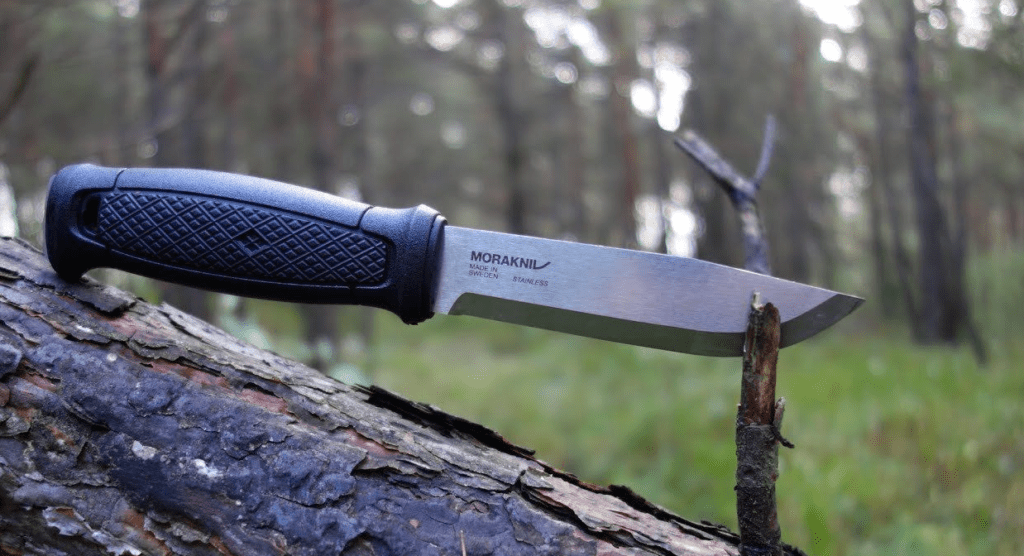
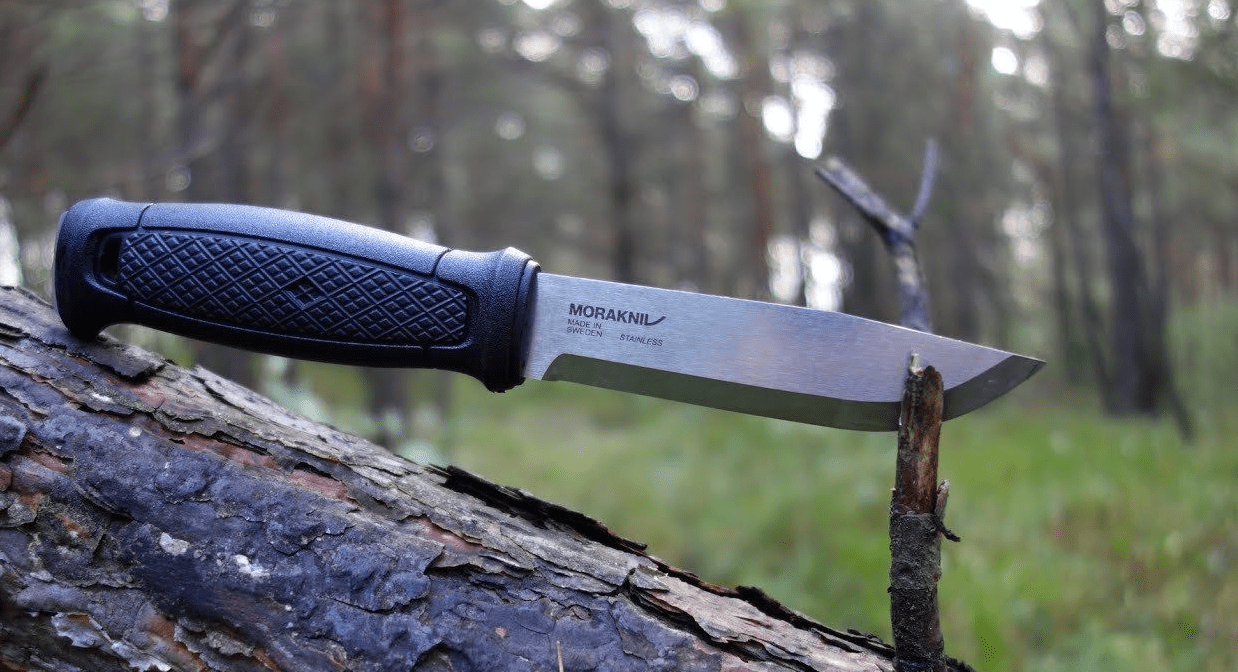
Mora’s Garberg brings Swedish knife-making tradition to California trails. The 4.3-inch blade uses 14C28N stainless steel—a composition that balances edge retention with ease of sharpening. The Scandi grind creates a single bevel that’s simple to maintain in the field using a flat stone.
The polymer handle withstands temperature extremes without degradation. The tradeoff: less tactile feedback compared to natural materials like wood or Micarta. The Scandi grind requires minimal skill to sharpen correctly—you maintain the existing bevel angle by keeping your stone flat against the grind.
5. Fallkniven F1 — Military Heritage
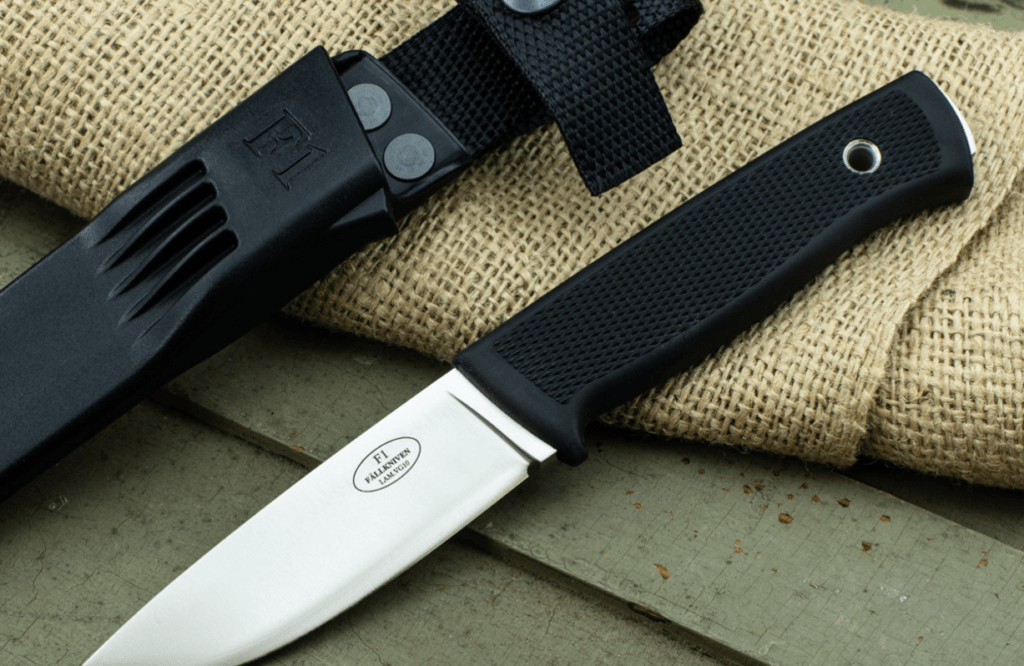
Fallkniven designed the F1 for Swedish Air Force pilots, then adapted it for civilian outdoor use. The 3.8-inch blade uses VG-10 steel with a convex grind. This combination provides excellent edge retention—field testing showed 60-70 batoning strikes before noticeable dulling.
The Thermorun handle material maintains grip in sub-freezing conditions, relevant for high-altitude Sierra trips. The shorter blade length (3.8 inches) reduces efficiency for processing larger diameter firewood compared to 4+ inch options.
6. Cold Steel SRK (Survival Rescue Knife) — Maximum Toughness
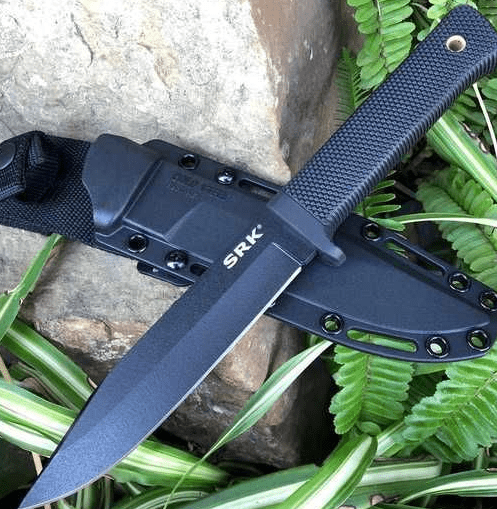
Cold Steel’s SRK uses SK-5 carbon steel in a 6-inch blade. This exceeds the optimal length for California camping but provides maximum capability for processing firewood. The thick blade stock (0.19 inches) handles aggressive batoning without flex or edge rolling.
The Kray-Ex handle provides secure grip but the overall length (10.5 inches) and weight (8.3 ounces) push the limits of practical backpacking gear. This knife suits car camping or base camp scenarios where weight isn’t critical..
Comparing Core Specifications
| Model | Blade Length | Steel Type | Weight | Edge Retention |
| Noblie Custom | 3.5-4.5″ | CPM-3V/154CM | 6-8 oz | 80-100+ strikes |
| Benchmade 162 | 4.43″ | CPM-S30V | 6.16 oz | 40-50 strikes |
| ESEE-4P | 4.5″ | 1095 Carbon | 8 oz | 55-65 strikes |
| Mora Garberg | 4.3″ | 14C28N | 6 oz | 35-45 strikes |
| Fallkniven F1 | 3.8″ | VG-10 | 5.6 oz | 60-70 strikes |
| Cold Steel SRK | 6″ | SK-5 Carbon | 8.3 oz | 70-80 strikes |
Real-World Performance: Processing Firewood at 7,000 Feet
In a test processing dead standing lodgepole pine at 28°F:
- Noblie Expedition: 12 minutes to process sufficient kindling; edge remained sharp for food prep.
- Benchmade Bushcrafter: 14 minutes; showed minor edge rolling requiring stropping.
- Morakniv Garberg: 16 minutes; edge dulled noticeably, requiring sharpening before food prep.
Maintenance Requirements Across Steel Types
- Carbon Steel (1095, SK-5): Demands daily attention. Apply oil coat after each use. Budget 3-5 minutes daily.
- High-Carbon Stainless (S30V, 154CM, VG-10): Minimal maintenance. Wipe clean, dry before sheathing. Budget 1-2 minutes per week.
- Tool Steel (CPM-3V): Moderate corrosion resistance. Wipe/dry after use, light oil every 2-3 days in coastal areas.
Sharpening in the Field: What Actually Works
For trips under 5 days: a 1000-grit diamond stone (2 oz) and a leather strop (1 oz).
For 7+ days: add a 400-grit diamond stone (2 oz) for aggressive repair.
- Scandi grinds (Mora) sharpen fastest.
- Convex grinds (Noblie, Fallkniven) require more skill but hold an edge longer.
Legal Considerations for California Forests
Keep fixed-blade length at or under 4.5 inches. This satisfies most California wilderness regulations. Carry your knife in your pack, not on your belt, when passing through trailheads or developed areas. Check specific forest regulations (like Angeles National Forest’s 4-inch limit in developed areas) before departure.
Making Your Decision
- Coastal Hiking: Prioritize corrosion resistance. Choose Noblie Expedition, Benchmade, or Fallkniven.
- Sierra Nevada/High-Altitude: Prioritize toughness and edge retention. Choose Noblie Custom in CPM-3V or ESEE-4P.
- Beginners: Start with the Morakniv Garberg or ESEE-4P.
Experienced Hikers: Consider a custom build from Noblie to optimize for your specific hand size and task patterns.